 Mount Vernon
 Why Downtown Mount Vernon Homes Are Tougher on Siding Than People Expect
Mount Vernon sits at the heart of Skagit County, close enough to Puget Sound that marine air is a regular visitor and low enough in the Skagit River valley that fog, mist, and standing damp linger longer than they do a few hundred feet higher up. Downtown Mount Vernon adds its own wrinkle: many of the homes here are older, built in eras before house wrap, rainscreen gaps, and modern flashing details were standard practice, and many sit on lots with mature trees and tighter spacing between houses. That combination of shade, moisture, and older construction methods is exactly the environment where siding fails early if it isn't matched to the conditions.
None of this means Downtown Mount Vernon is a bad place to own a home — it means the siding on that home has a harder job than siding on a newer build in a sunnier, more open part of the county. Replacement here isn't just a cosmetic upgrade. Done right, it's a chance to correct decades-old moisture problems that older siding never solved in the first place.
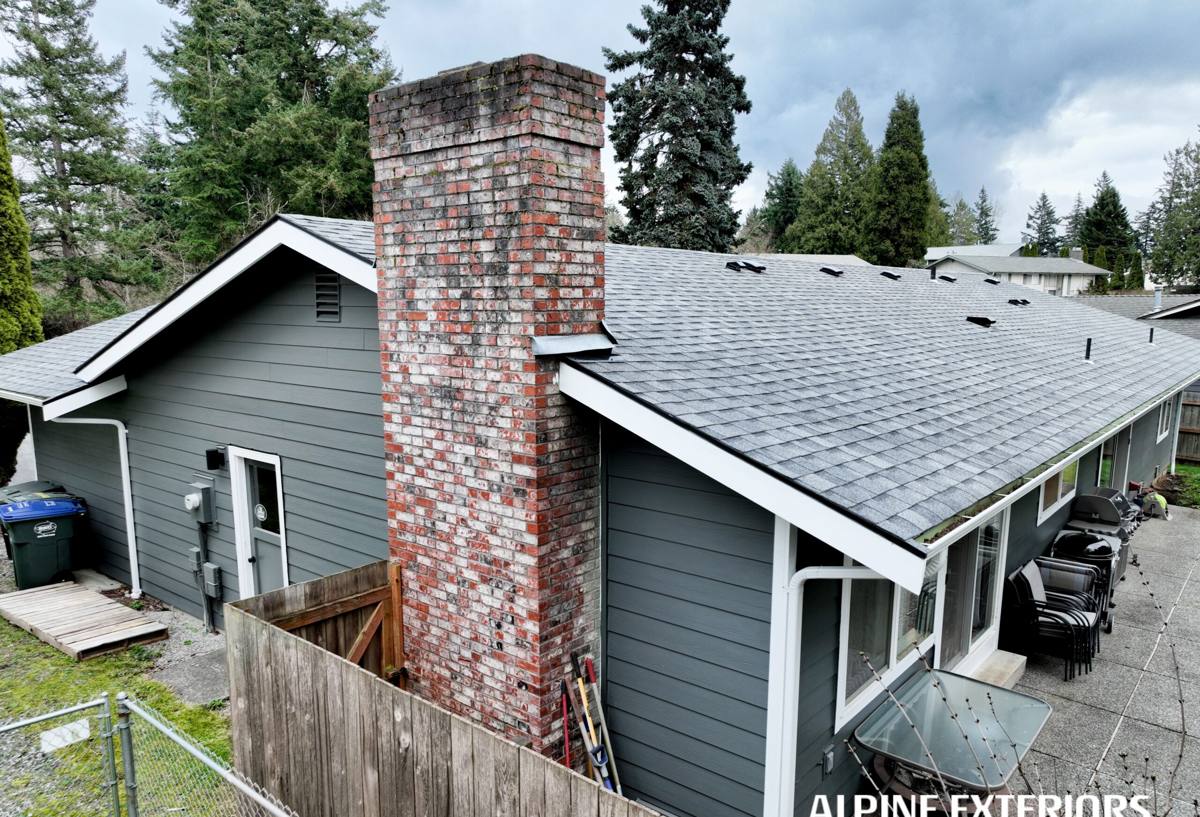
What Salt Air, Driving Rain, and Moss Actually Do to Siding
Salt Air
Even at Mount Vernon's inland distance from the Sound, salt-laden marine air moves through the valley on prevailing winds. Salt is hygroscopic — it pulls moisture out of the air and holds it against whatever surface it lands on. On untreated wood siding, that means paint fails faster and bare wood underneath stays damp longer than it should. On metal fasteners and trim, it accelerates corrosion, which is often the real reason old siding starts showing rust streaks or loose panels.
Driving Rain
Western Washington's rain doesn't just fall — a good share of it arrives sideways, driven by wind off the Sound and funneled through the valley. Driving rain finds every gap in old lap siding, every under-caulked seam, and every spot where flashing was skipped. Once water gets behind siding, it doesn't dry out quickly in this climate — it sits, and that's when sheathing rot and mold start, often invisibly, for years before a homeowner sees a problem on the surface.
Moss Season
Skagit County's wet season runs long, and shaded, north-facing walls common on tighter downtown lots barely get a chance to dry between storms. Moss and algae take hold on siding that stays damp, and once established they hold even more moisture against the surface, feeding the exact rot cycle driving rain starts. Moss growth on siding is a visible symptom — the real damage is usually happening in the wood or substrate underneath it.
Signs a Downtown Mount Vernon Home Needs Siding Replacement
- Soft or spongy spots when you press on siding, especially near the bottom courses or under windows
- Persistent moss or dark streaking that comes back within weeks of cleaning
- Paint that's bubbling, peeling, or needing repainting more often than every few years
- Visible gaps, warping, or cupped boards, particularly on north- and west-facing walls
- Rust bleeding from nail heads or corner trim
- Rising energy bills with no other explanation, which can point to moisture-damaged insulation behind the siding
- Musty smell in a room along an exterior wall, even with no visible interior damage yet
Any one of these on its own might just mean a repair. Several together, especially on an older downtown home, usually means the siding system as a whole has reached the end of its useful life.
What a Correct Siding Replacement Involves
Replacing siding well is mostly about what happens before the new material ever goes up. On older Downtown Mount Vernon homes, that prep work matters more than usual because of what's typically found underneath the old siding.
Tear-Off and Inspection
Full removal of the old siding is the only way to actually see the sheathing, framing, and any water damage that's accumulated over the years. This is where hidden rot from long-term moisture exposure gets found and dealt with — patching over it just buries the problem under new material.
Water-Resistive Barrier and Flashing
A correctly installed weather-resistive barrier, properly lapped and sealed, along with new flashing at windows, doors, and any wall penetrations, is what actually keeps driving rain out. This layer does more of the real waterproofing work than the siding itself.
Ventilation Gap
A rainscreen gap between the barrier and the siding gives any moisture that does get through a path to drain and dry out, instead of sitting trapped against the wall — a meaningful upgrade over how a lot of older homes were originally built.
Correct Fastening and Clearances
Fasteners, joint treatment, and clearances from grade, decks, and roof lines all need to follow the manufacturer's installation specifications exactly. This is also where warranties are made or broken — most siding warranties are voided by incorrect installation, not by the product itself failing.
Why We Install Only James Hardie Fiber Cement
We don't install vinyl, LP SmartSide, primed wood, cedar, or other fiber cement brands. That's a deliberate standard, not a limitation of what we're capable of installing.
Vinyl softens and warps under sustained heat and can crack in hard cold snaps, and it's a poor match for a climate where wind-driven rain needs somewhere to go rather than a surface that traps it. Wood and wood-composite products need consistent maintenance — repainting, sealing, moss treatment — to hold up in a valley climate that barely gives siding time to dry between storms, and even diligent upkeep struggles to keep pace with Skagit County's wet season.
James Hardie fiber cement is engineered specifically for this. It's non-combustible, dimensionally stable so it won't warp or swell with moisture cycles the way wood-based products can, and its HZ5 product line is formulated for the kind of freeze-thaw and moisture exposure the Pacific Northwest delivers. The factory-applied ColorPlus finish resists fading and holds up to salt air and UV far longer than field-applied paint, and it comes backed by a strong, transferable warranty — which only holds up if the installation behind it is done to spec. That's the whole reason we standardized on one product line: we can guarantee the installation quality that makes the warranty and the material's real-world performance mean something.
Our Siding Replacement Process
- Assessment — We walk the home, check every elevation for moisture and damage patterns, and pay particular attention to shaded, north-facing, and street-facing walls where moss and driving rain do the most damage.
- Proposal — A clear, written scope covering tear-off, any sheathing repair anticipated, barrier and flashing details, Hardie product line and color, and timeline.
- Tear-off and repair — Old siding comes off, damaged sheathing or framing gets repaired or replaced, and we document anything unexpected before covering it back up.
- Weather barrier and flashing installation — The layer that does the real waterproofing work, installed and lapped correctly at every penetration.
- Hardie installation — Installed to manufacturer spec, including fastening, clearances, and joint treatment, to keep the warranty intact.
- Final walkthrough — We review the finished work with you before calling the job done.
What Drives the Cost of a Siding Replacement
| Factor | Why It Matters |
|---|---|
| Home size and number of stories | More surface area and more difficult access both add labor time |
| Extent of hidden damage found at tear-off | Older downtown homes with long-term moisture exposure often need sheathing or framing repair before new siding goes up |
| Siding profile and trim complexity | Detailed trim, multiple gables, and dormers take more time than a simple rectangular wall |
| Hardie product line selected | HZ5 boards, panel styles, and factory finish options vary in material cost |
| Site access | Tighter downtown lots with less clearance for staging materials can add labor time |
We give a firm, itemized estimate after the in-person assessment — not a ballpark over the phone — because on older homes, the tear-off is genuinely the only reliable way to know what a job actually involves.
Why Hiring a Crew That Already Works Downtown Mount Vernon Matters
A contractor who works Skagit County regularly already knows what to expect when they pull siding off a downtown Mount Vernon home built decades ago — where moisture tends to collect, which wall orientations take the worst of the driving rain, and how much drainage and ventilation an older structure actually needs to perform in this climate. That familiarity shows up in fewer surprises mid-project and a system that's built for the specific conditions of this valley, not a generic install pulled from a manufacturer's minimum spec sheet.
Get a Free, No-Pressure Estimate
If your Downtown Mount Vernon home is showing moss that won't quit, paint that won't hold, or siding that's simply reached the end of its life, we're happy to take a look. The estimate is free, there's no pressure, and you'll walk away with a clear, honest picture of what your home actually needs — use the form below to get started.