 Mount Vernon
 Why Downtown Mount Vernon Roofs Wear Differently
Downtown Mount Vernon sits where the Skagit River valley meets the tail end of Puget Sound's marine air, and that combination is hard on a roof. Homes here deal with three things at once: salt-tinged moisture riding in off the water, long stretches of driving rain that push water sideways into laps and flashing, and a moss season that can run from fall through spring. None of these three problems is dramatic on its own. Together, over ten or fifteen years, they shorten the life of a roof that was never built or installed with this climate in mind.
Older homes in the downtown core often have roofs that were replaced decades ago with whatever was standard at the time — usually a basic 3-tab shingle with minimal underlayment and no real moss strategy. That approach can still get twenty years out of a roof in a drier inland climate. In Skagit County, it usually doesn't, and the failure mode is rarely a dramatic leak. It's slow: granule loss, soft decking under moss mats, and flashing that corrodes quietly until a wet winter finds the gap.
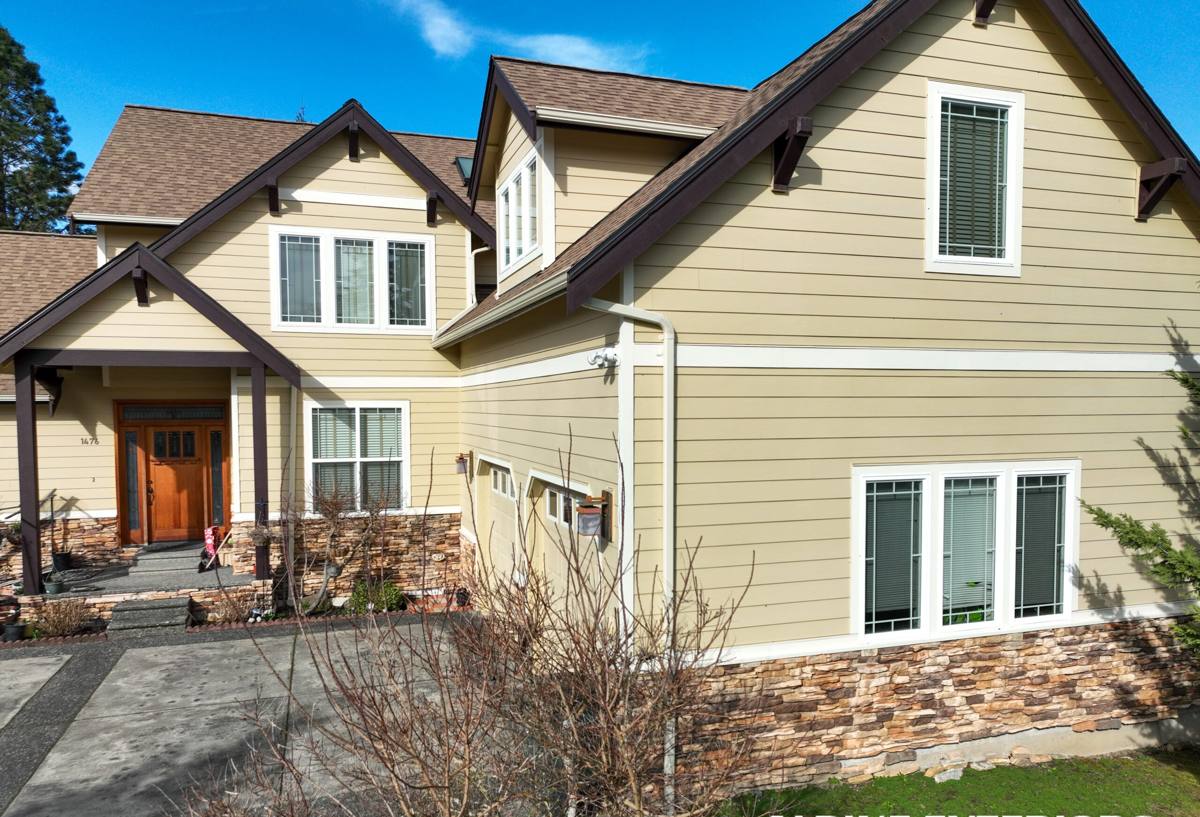
Signs a Downtown Mount Vernon Roof Needs Replacement, Not Repair
Not every roofing issue means a full tear-off. But there's a point where patching becomes a waste of money, and it's worth knowing where that line is before you call anyone.
- Moss has established itself in mats rather than a light surface film, especially on north-facing slopes that stay shaded and damp most of the year
- Shingles are cupping, curling at the edges, or shedding granules heavily when you look at the gutters after a rain
- You've had two or more localized leak repairs in the last few years, which usually means the underlayment and decking are failing broadly, not just at one spot
- The roof is original to a home built before the 1990s and has never had a full tear-off replacement
- Daylight or staining is visible in the attic along the roof plane, particularly near valleys or chimney flashing
- Flashing around vents, skylights, or the chimney is rusted, lifted, or was never step-flashed correctly to begin with
If you're only seeing one or two of these and the roof is under fifteen years old, a repair or a moss treatment plan may genuinely be the right call. We'll tell you that directly rather than push a replacement you don't need yet.
What a Correct Roof Replacement Actually Involves
A roof replacement done right is not just stripping old shingles and nailing down new ones. In this climate, the layers underneath matter as much as what's visible from the street.
Tear-off and deck inspection
Every layer comes off down to the decking, and the decking gets inspected board by board. Any wood that's soft, delaminated, or stained from long-term moisture gets replaced before anything new goes down. Roofing over compromised decking is one of the most common shortcuts we see, and it guarantees problems within a few years.
Underlayment built for wind-driven rain
Standard felt underlayment is not enough for a roof exposed to Skagit Valley's sideways rain. We use synthetic underlayment across the field and self-adhered ice-and-water membrane at the vulnerable points — eaves, valleys, around penetrations, and along walls where roof meets siding. That membrane is what stops water that gets past the shingle layer from ever reaching the deck.
Flashing done as metalwork, not an afterthought
Chimneys, skylights, dormers, and sidewalls all need properly formed and step-flashed metal, not just caulk and hope. Caulk fails; correctly lapped metal doesn't need to rely on a sealant bead to keep water out.
Ventilation that actually balances
Intake at the eaves and exhaust at the ridge need to work together. A roof with plenty of ridge vent but blocked or insufficient soffit intake doesn't ventilate — it just moves moist attic air around, which shortens shingle life from underneath and feeds moss growth on the surface.
Material Options for This Climate
There's no single "best" roofing material for Downtown Mount Vernon — the right choice depends on your budget, how long you plan to stay in the home, and how much maintenance you want to sign up for. Here's how the common options actually compare in a marine, moss-prone climate like Skagit County's.
| Material | Typical Lifespan Here | Moss & Moisture Behavior | Maintenance |
|---|---|---|---|
| Architectural asphalt shingle (algae-resistant) | 25–30 years | Good with proper ventilation and periodic cleaning; copper or zinc strips help slow moss regrowth | Moderate — benefits from a moss check every year or two |
| Standard 3-tab shingle | 15–20 years | More prone to moss colonization and granule loss in constant damp shade | Higher — shorter service life overall |
| Metal (standing seam or exposed fastener) | 40–50+ years | Excellent — moss struggles to grip a smooth metal surface, water sheds fast | Low, but higher upfront cost and requires an installer experienced with it |
| Synthetic/composite shingle | 30–40 years | Good moisture resistance; performance varies more by manufacturer | Moderate; product-specific warranty terms matter |
We install architectural asphalt and metal most often on Downtown Mount Vernon homes because they hold up honestly in this climate without asking the homeowner for constant upkeep. We're generally cautious about wood shake and cedar shingle roofing here — it can look great, but it demands a level of ongoing moisture and moss management that most owners don't want to keep up with in a valley that stays damp this much of the year. That's a maintenance-burden call on our part, not a knock on the material itself.
Our Roof Replacement Process
- On-site assessment. We walk the roof, check the attic, and look at the decking condition before quoting anything — not just a drive-by estimate.
- Written scope and pricing. You get a clear breakdown of material, underlayment, flashing, and ventilation work, so there's no ambiguity about what's included.
- Material selection. We talk through the trade-offs on the table above based on your budget and how long you're planning to stay in the home.
- Tear-off and deck repair. Old roofing comes off, decking is inspected and repaired as needed, and the site is protected for landscaping and gutters.
- Underlayment, flashing, and roofing installation. Installed in the sequence that actually sheds Skagit Valley's driving rain, not just to code minimums.
- Final walkthrough. We go over the finished roof with you, including ventilation and any moss-prevention measures installed.
- Cleanup and haul-away. Nail sweep, debris removal, and the yard left the way we found it.
Ventilation and Moisture — the Part Homeowners Rarely See
Most roof failures we investigate in this area trace back to moisture that never had a way out, not to bad shingles. An attic that's under-ventilated stays warmer and damper than it should, which accelerates shingle aging from below and gives moss more to work with from above. When we replace a roof, we check whether the existing intake and exhaust venting was ever balanced correctly — often it wasn't, even on newer homes — and correct it as part of the job rather than treating it as an upsell.
Cost Factors for a Downtown Mount Vernon Roof Replacement
Roof replacement pricing varies by roof size, pitch, number of layers to remove, decking condition, and material choice, so we don't quote sight-unseen numbers. In general terms, a straightforward asphalt shingle replacement on a typical single-family home runs in the low-to-mid five figures, with metal roofing costing meaningfully more upfront in exchange for a much longer service life and lower long-term maintenance. Steep or complex rooflines, extensive deck repair, or multiple layer tear-offs all add cost. We'll walk you through exactly what's driving your number rather than handing you a total with no explanation.
Why a Crew That Already Works Downtown Mount Vernon Matters
A roof replacement isn't just a product installation — it's a judgment call on flashing details, ventilation balance, and moss strategy that depend on knowing how this specific climate treats a roof over time. A crew that works Skagit County regularly has already seen how a given underlayment, flashing detail, or shingle line performs here after five or ten winters, not just on a spec sheet. That experience shows up in the small decisions — how deep the ice-and-water membrane extends at the eaves, how sidewall flashing is lapped, whether ridge vent alone is enough or intake needs correcting first — that determine whether a roof is still performing well in year fifteen or already showing problems.
If your Downtown Mount Vernon roof is showing moss buildup, curling shingles, or you're just not sure whether it's a repair or a replacement, we're happy to take a look and give you a straight answer. Fill out the form below for a free, no-pressure estimate — we'll tell you what we actually see, not just what sells a job.