 Mount Vernon
 Building a Deck That Actually Holds Up in Downtown Mount Vernon
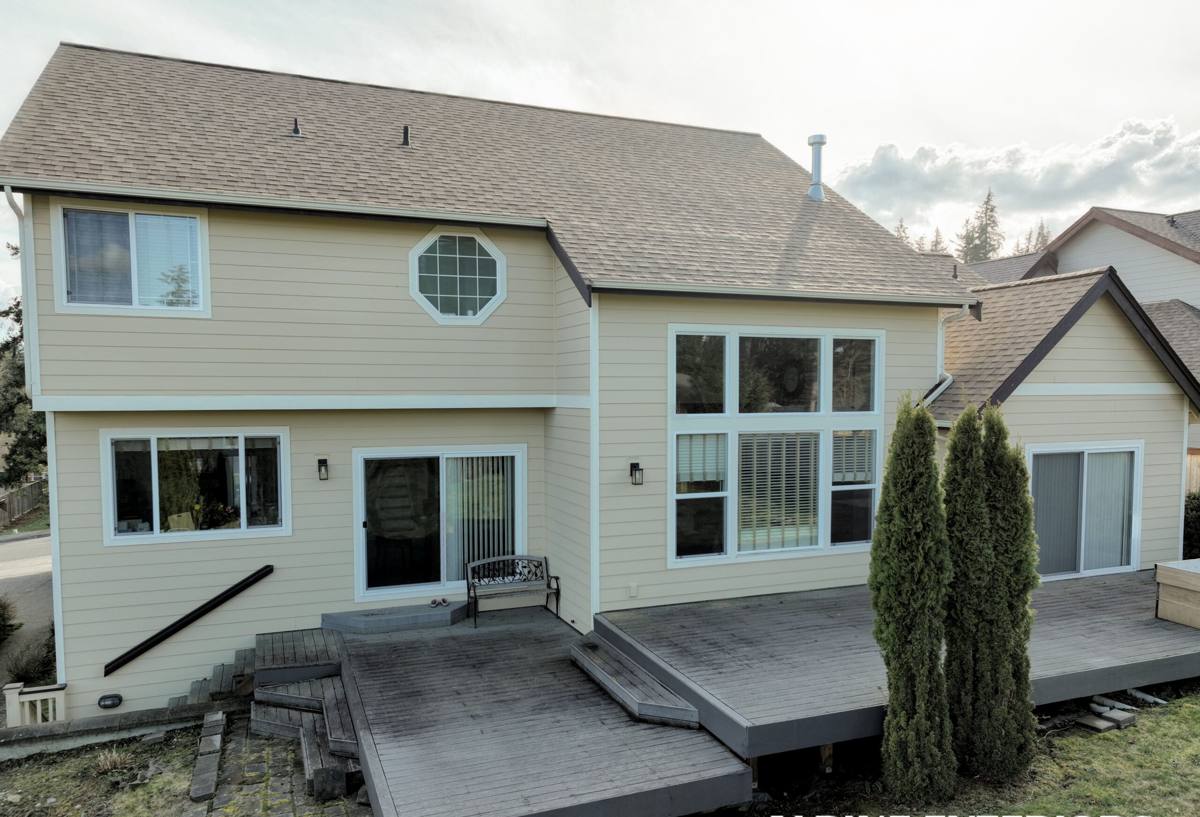
A deck in Downtown Mount Vernon lives a harder life than the glossy photos in a decking catalog suggest. Between the salt-tinged air coming off the Skagit River delta, long stretches of driving rain through fall and winter, and a moss season that can stretch from October well into spring, this is not a climate that forgives shortcuts. We build and rebuild custom decks for homes in this area, and almost every repair call we get traces back to the same root cause: a deck that was built for a dry-climate spec sheet instead of for Skagit County weather.
This page is about one thing — custom deck construction for homes in and around Downtown Mount Vernon — and what it actually takes to get one right here, not in general.
What This Climate Does to a Deck
Three things drive almost every decision we make on a Mount Vernon deck project:
Constant Moisture
Long rainy seasons mean a deck's structure spends months at a time damp, not just wet during a storm and dry the next day. Framing lumber, fasteners, and any hidden connection point need to be chosen and installed with that reality in mind, not just rated for "outdoor use."
Moss and Algae Growth
Shade, moisture, and mild temperatures are exactly what moss wants. On a deck, moss isn't just cosmetic — it holds water against the surface, makes boards slick and dangerous underfoot, and on the wrong material it can work into the surface and accelerate wear. A deck built without moss in mind will look tired within a couple of seasons, regardless of what it's made of.
Salt-Influenced Air
Mount Vernon sits near the Skagit River delta and isn't far from Puget Sound, so homes here get some salt influence in the air, especially closer to the water. That accelerates corrosion on lower-grade fasteners and hardware, which is a slow, invisible failure mode until a board or railing suddenly isn't secure anymore.
What a Correctly Built Deck Needs Here
None of this means a deck in Downtown Mount Vernon has to be over-engineered or unusually expensive — it means a handful of decisions have to be made correctly instead of defaulted to whatever is cheapest or fastest.
- Corrosion-resistant fasteners and hardware throughout, not just at visible connections
- Proper flashing at the ledger board where the deck attaches to the house — this is the single most common source of hidden rot we find
- Adequate airflow beneath the deck so framing can dry out between rain events instead of staying saturated
- Decking material matched to sun exposure — a heavily shaded deck under mature trees needs a different material strategy than one that gets full afternoon sun
- Footings set below frost depth and sized for our soil conditions, not just poured to the minimum
- Drainage planning so water sheds away from the house foundation, not just off the deck surface
Choosing the Right Decking Material
There's no single "best" decking material — there's a best material for a given deck's sun exposure, your maintenance appetite, and your budget. Here's how the common options actually compare for a Downtown Mount Vernon home:
| Material | How It Handles Our Climate | Maintenance | Typical Lifespan |
|---|---|---|---|
| Pressure-treated wood | Affordable, but needs consistent sealing to resist our rain and moss season | Annual cleaning and re-sealing recommended | 10-15 years with upkeep |
| Cedar | Naturally moisture and insect resistant, ages to a silver-gray if left untreated | Periodic cleaning; sealing optional but extends life | 15-20 years |
| Capped composite | Excellent moisture resistance, resists moss staining better than wood | Occasional washing, no sealing or staining | 25-30+ years |
| PVC decking | Fully synthetic, handles constant moisture without absorption | Lowest maintenance of the group | 25-30+ years |
We're honest with clients about the trade-off: wood costs less up front but demands real annual maintenance to survive our wet seasons, while composite and PVC cost more initially but largely remove moisture and moss from the maintenance conversation. Neither is "wrong" — it depends on whether you'd rather spend money once or spend a weekend each spring on upkeep.
A Note on Uncapped Composite
Older-style uncapped composite decking is still out there and still sold. Our standard is to steer clients toward capped composite or PVC instead, because uncapped boards can absorb moisture at the surface over time in a climate this wet, which shows up as staining and softening years down the line. It's not that uncapped composite is unusable — it's that in a market with this much rain and shade, we think the capped and PVC products are the better long-term value for most homeowners.
Framing and Structural Considerations for Downtown Lots
Downtown Mount Vernon has a mix of older homes and established lots, which brings a few recurring structural realities:
Ledger attachment on older homes sometimes means dealing with siding, sheathing, or framing that wasn't built with a modern deck connection in mind. We open it up, inspect what's actually there, and flash it correctly rather than attaching over questionable wood and hoping. Tighter lot spacing in some downtown areas can also mean less room to work, which affects how we sequence footings, framing, and material staging on site.
Grade and drainage matter more here than in a drier climate. If the ground around your home already holds water after a storm, we factor that into footing placement and under-deck drainage so the new structure isn't sitting in standing water for weeks at a time.
Our Process for a Custom Deck Build
- On-site assessment — we look at sun exposure, drainage, existing structure (for replacements), and how the space will actually be used
- Design and material selection — sized and laid out for your home and yard, with material recommendations based on shade and maintenance preference
- Permitting — we handle the paperwork with the City of Mount Vernon where a permit applies
- Framing and structural work — footings, ledger flashing, joists, and connections built to hold up in our climate, not just pass initial inspection
- Decking, railing, and finish work — installed per the manufacturer's spec so warranties stay intact
- Final walkthrough — we go over care and maintenance specific to whatever material you chose
Permits and Local Requirements
Most new decks and many significant deck replacements in Mount Vernon require a building permit, and requirements can shift based on deck height, size, and proximity to property lines. Rather than guess or skip the step, we pull the correct permit for your specific project and build to what it requires. This protects you at resale and keeps your homeowner's insurance and any manufacturer warranty valid — skipping permits is one of the most common ways a deck project turns into a problem later.
Living With Your Deck: Moss Season Maintenance
Whatever material you choose, a little seasonal attention goes a long way in this climate. Before moss season sets in each fall, and again as it lifts in spring, here's what we recommend:
- Sweep debris (leaves, needles, seed pods) off the deck regularly — trapped organic material is what feeds moss growth
- Rinse or wash the surface periodically rather than letting green buildup set in over winter
- Check railings and stair connections annually for any looseness — a sign hardware may be corroding
- Inspect the ledger board area at the house each fall for any signs of water intrusion
- For wood decks, plan on re-sealing on the manufacturer's recommended schedule, typically every 1-2 years
- Trim back overhanging branches where practical to reduce shade and debris buildup
Why Local Experience Matters for This Job
A deck built from a generic national spec sheet will often look fine the day it's finished. The difference shows up two, five, and ten years later — in whether the ledger flashing actually kept water out through a real Skagit County winter, whether the fasteners are still solid instead of rust-streaked, and whether the decking surface is holding up to shade and moss instead of going slick and green. We work on homes in Downtown Mount Vernon regularly, so these aren't hypothetical conditions to us — they're what we plan for on every project from the first design conversation.
If you're considering a new custom deck or need to replace one that's showing its age, we're happy to take a look and talk through what makes sense for your specific home and yard. Reach out for a free, no-pressure estimate using the form below.