 Mount Vernon
 Building Decks for West Mount Vernon's Climate
West Mount Vernon sits close enough to the Skagit River delta and the Salish Sea that homeowners here deal with a specific combination most inland Washington towns don't: salt-tinged air moving up off the water, long stretches of driving rain through fall and winter, and a moss season that can run eight months or more if a deck never sees direct sun. A deck built to a generic spec sheet will survive that environment for a while. A deck built for it will still look and perform the way it should ten and fifteen years out.
We work on decks throughout Mount Vernon, but West Mount Vernon properties tend to share a few traits — tree cover that shades parts of the yard most of the day, older homes with ledger connections that were never flashed properly to begin with, and soil that stays damp well into late spring. All three change how we approach a deck build here compared to a drier, more open lot on the east side of town.
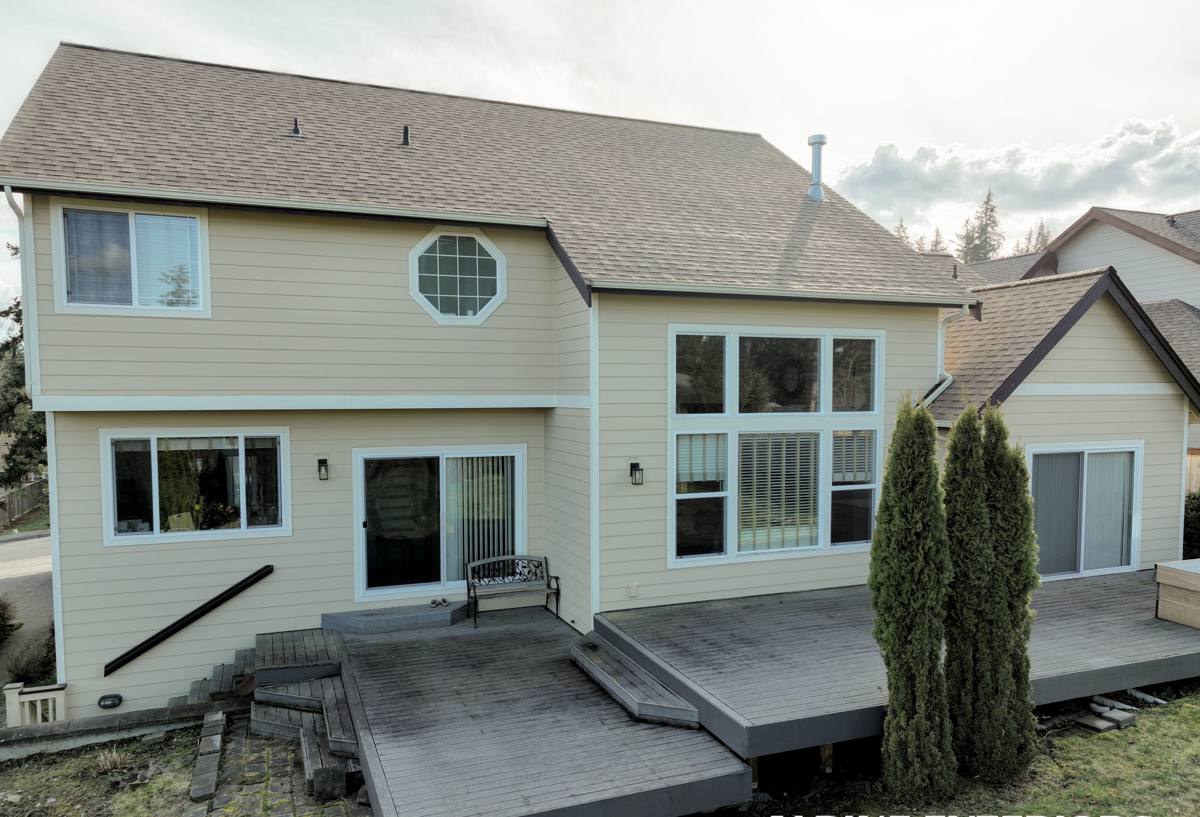
What the Local Climate Actually Does to a Deck
Moss and Algae Growth
Shaded, north-facing, or tree-covered sections of a deck in this part of Skagit County stay damp longer than the rest of the structure. That moisture holds moss and algae spores against the wood or composite surface, and over time that growth traps even more water at the deck's surface. On wood decking, that's a direct path to rot. On composite decking, it's mostly a cosmetic and slip-hazard issue, but it still needs airflow and drainage to manage.
Salt-Influenced Air
Mount Vernon isn't a beach town, but the proximity to Puget Sound and the tidal reaches of the Skagit River means fasteners, flashing, and any exposed metal hardware are working in a slightly more corrosive environment than you'd find further inland. Standard hot-dip galvanized hardware holds up fine for most applications, but anything load-bearing near grade or in a consistently damp area benefits from stainless or heavier-coated fasteners.
Driving Rain and Wind-Driven Moisture
Storms here don't always come straight down. Wind-driven rain gets pushed sideways into ledger boards, under rail caps, and into any gap where flashing was skipped or done poorly. This is the single biggest cause of the deck failures we get called out to inspect — not old age, but water finding a way behind the house band board because the original ledger flashing was never installed or was installed wrong.
What a Correctly Built Deck Needs Here
- Proper ledger flashing with a drip edge that directs water away from the house band board, not into it
- Joist tape or a comparable moisture barrier on every joist top, especially under composite decking where trapped moisture isn't visible
- Stainless steel or heavy-coated structural screws and hangers in any area that stays damp longer than the rest of the yard
- Adequate gap spacing between boards for drainage and airflow, sized correctly for the decking material chosen
- Footings set below frost depth and sized for our clay-heavy Skagit Valley soil, which holds water and shifts more than sandy or well-drained soil
- Under-deck airflow — skirting or lattice that closes in the space without sealing it, so moisture can still escape
Decking Material Choices for West Mount Vernon Lots
There's no single "best" decking material — the right call depends on how much sun and shade the specific deck location gets, how much maintenance the homeowner wants to do, and budget. Here's how the common options actually perform in our climate, not just on paper.
| Material | How It Handles Our Moss/Rain Climate | Maintenance | Typical Lifespan Here |
|---|---|---|---|
| Pressure-treated wood | Needs sealing regularly or moss and mildew take hold fast in shaded areas | Annual cleaning, re-sealing every 1-2 years | 10-15 years with upkeep |
| Cedar | Naturally more rot-resistant but still needs sealing to prevent graying and moss in shade | Sealing every 1-2 years, periodic cleaning | 15-20 years with upkeep |
| Composite decking | Won't rot; still needs regular cleaning where moss and algae can grow on the surface | Periodic washing, no sealing needed | 25-30+ years |
| PVC decking | Fully moisture-resistant, best option for consistently shaded or damp yard sections | Occasional washing | 25-30+ years |
For West Mount Vernon lots with heavy tree cover or a north-facing deck location, we lean toward composite or PVC in those specific zones — not because wood is a bad product, but because a shaded deck asks more of a wood finish than most homeowners want to keep up with every year. On sunnier, more open sections of the same property, cedar or treated wood is often a perfectly reasonable and more budget-friendly choice.
Structure Comes Before Decking Material
We see a lot of deck problems that have nothing to do with the surface material and everything to do with what's underneath it. A composite deck laid over an under-built or poorly flashed frame will still fail — it'll just take longer to show it, and by the time it does, the damage is hidden under the boards. Our approach starts with the substructure: correct footing depth and spacing for the load, ledger flashing done right the first time, joist protection, and hardware rated for how wet this area actually gets. The decking material goes on top of a frame that's already built to last, not the other way around.
Our Process for a West Mount Vernon Deck Build
- On-site assessment: we walk the specific area of the yard, checking sun exposure, drainage, soil, and how the deck will tie into the house
- Design and material discussion: honest conversation about what fits the shade pattern, budget, and how much upkeep you actually want to do
- Permitting: we handle the permit process with the City of Mount Vernon or Skagit County, depending on the property location
- Footings and framing: footings set to proper depth, ledger flashed correctly, joists protected before anything else goes on
- Decking, railing, and finish details: installed with attention to drainage gaps, fastener placement, and clean edge work
- Final walkthrough: we go over care and maintenance specific to the material you chose and the deck's sun/shade exposure
Why a Local Crew Matters for This Job
Deck building isn't exotic work, but building one that holds up in this specific stretch of the Skagit Valley means knowing how the local weather actually behaves — not just what a manufacturer's spec sheet says for a generalized Pacific Northwest climate. We've worked on enough properties around Mount Vernon to know which yards hold moisture longest, which fastener choices actually make sense given the air here, and where homeowners get burned by shortcuts on ledger flashing that don't show up as a problem until two or three winters later. A crew that's local and already doing this work in the area isn't guessing at any of that.
We also know the local permitting process, which saves time compared to a contractor working here for the first time. Permitting requirements and setback rules can differ depending on whether a property falls under City of Mount Vernon jurisdiction or unincorporated Skagit County, and we handle that as part of the job rather than leaving it for the homeowner to sort out.
Maintaining Your Deck After It's Built
Whatever material you choose, a little seasonal attention goes a long way in this climate. A basic checklist for West Mount Vernon deck owners:
- Sweep or blow off leaves and debris regularly through fall — trapped organic matter is what feeds moss growth
- Rinse or scrub shaded areas at least once a season where moss and algae are most likely to establish
- Check railing and stair connections annually for looseness, which can indicate moisture getting into a joint
- Reseal wood decking on the schedule appropriate for the product — don't wait until it looks gray and worn
- Keep gutters and downspouts near the deck clear so runoff isn't dumping extra water onto or under the structure
- Trim back overhanging branches where practical to reduce shade and speed up drying after rain
Getting Started
If you're planning a new deck in West Mount Vernon or dealing with an existing one that's showing signs of moisture damage or moss buildup, we're happy to come take a look. We'll give you a straightforward read on what your specific yard and sun exposure call for, walk through material options that make sense for your budget and maintenance preference, and put together a free, no-pressure estimate — no obligation, just honest information to help you decide.