 Mount Vernon
 Windows Built for How Clear Lake Actually Weather
Clear Lake sits in a part of Skagit County that gets the full range of what Western Washington weather can do — long stretches of low, driving rain off the water, humid stretches where moss and mildew get a foothold on anything that stays damp, and enough marine influence drifting in from the Puget Sound side of the county that salt-tinged air is a real factor even this far inland. None of that is dramatic on its own. It's the accumulation, year after year, that finds every weak point in a window: a dried-out seal, a flashing detail that was never quite right, a sill that holds water instead of shedding it.
Custom windows aren't about fancy shapes or showroom looks. For most Clear Lake homes, "custom" simply means the window is built and installed to fit that specific opening, in that specific house, correctly — not squeezed into a stock size or patched around with extra trim and caulk to make it work. Get that right and a window can go decades without trouble. Get it wrong and you're chasing drafts, fogged glass, or soft framing within a few years, no matter how good the window itself was.
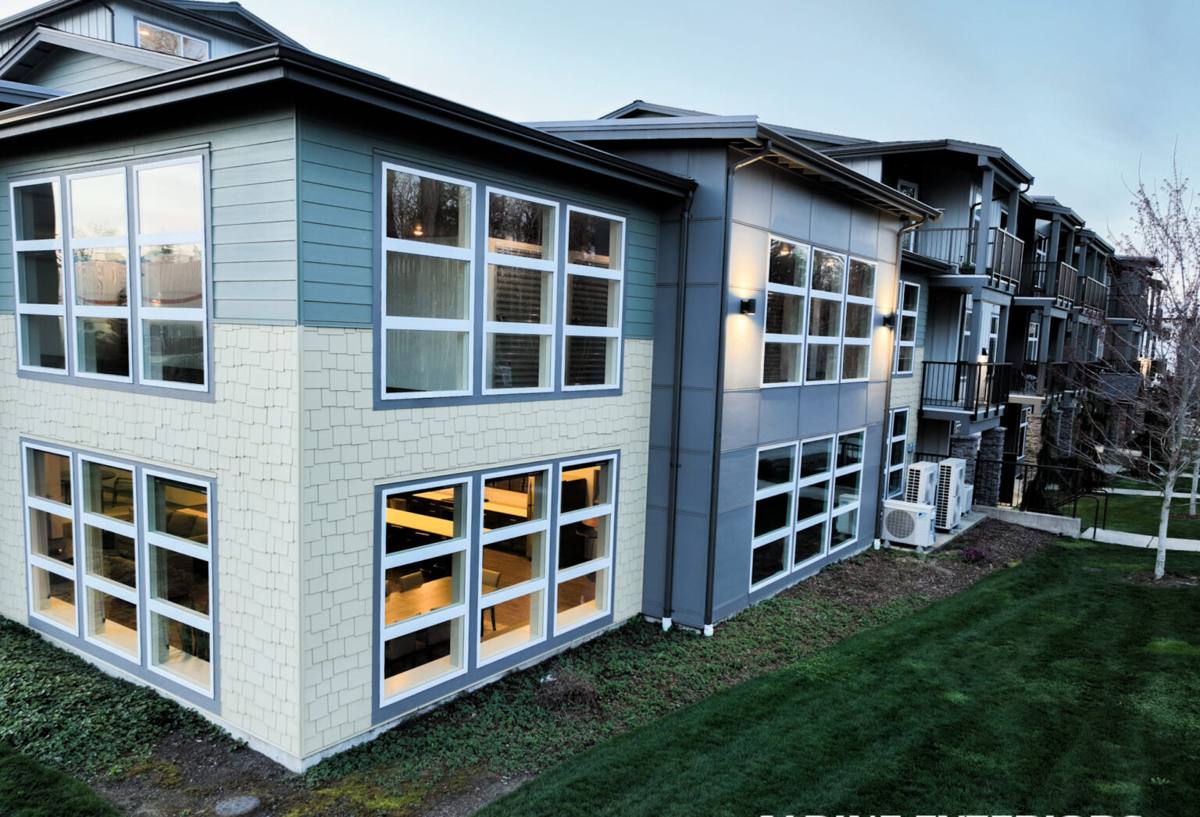
What Goes Wrong With Windows in This Climate
We see the same handful of failure patterns on homes around Clear Lake and the rest of Skagit County, and almost all of them trace back to moisture management rather than the window unit itself.
- Failed seals from repeated wet-dry cycling. Rain, brief sun, rain again — that cycle stresses caulk and weatherstripping faster than a drier climate would.
- Rot at the sill and bottom corners. This is almost always a flashing or drainage problem, not a "the window was bad" problem — water got behind the frame and had nowhere to go.
- Moss and green growth on horizontal trim and sills. Anything flat that stays shaded and damp through fall and winter is a candidate, and once moss holds moisture against wood or composite trim, it accelerates decay underneath.
- Condensation and fogging between panes. A sign the seal on a double- or triple-pane unit has failed — common on older aluminum-frame windows that were never a great match for this climate to begin with.
- Sticking or swelling sashes. Wood and some composite frames absorb moisture over a wet season and don't always return to their original dimension, especially if the finish has worn thin.
Custom-fit installation addresses the first three directly. The right frame material choice addresses the last two.
Choosing the Right Frame Material for a Clear Lake Home
There's no single "best" window material — there's a best match for your house, your budget, and how much upkeep you want to sign up for. Here's how the common options actually compare for a home in this climate.
| Frame Material | Moisture Behavior | Maintenance | Typical Cost Position |
|---|---|---|---|
| Vinyl | Won't rot; handles constant damp well | Low — occasional cleaning | Most economical |
| Fiberglass | Excellent — very stable, resists warping in wet/dry cycles | Low | Mid to upper-mid |
| Wood-clad | Good if the cladding stays intact; interior wood needs protection from condensation | Moderate — finish and seals need periodic attention | Higher |
| Aluminum | Poor thermal and moisture performance in this climate; prone to condensation | Low physical upkeep, but performance issues are hard to fix after the fact | Varies |
For most Clear Lake homes, we steer people toward vinyl or fiberglass for the bulk of their windows — both hold up well against driving rain and humidity without asking for regular maintenance. Wood-clad windows still have a place, especially where a homeowner wants a wood interior look on an older or higher-end home, but we're upfront that they carry a real maintenance commitment in this climate, and we'll tell you that plainly rather than sell around it. We don't install bare aluminum-frame windows as a general practice here — not because aluminum is inherently bad, but because it performs poorly against condensation and heat loss in a climate this wet and cool, and there are better options at similar price points.
Single-Hung, Double-Hung, Casement, or Slider
Style matters for weather performance too. Casement windows seal by compressing against the frame when cranked shut, which tends to resist wind-driven rain better than a slider that seals by friction along a track. Double-hung windows are a good middle ground and match the look of a lot of homes in this area. We'll talk through what makes sense room by room rather than pushing one style across the whole house.
What Correct Installation Actually Involves
The window unit itself is maybe half the equation. The other half is how it gets tied into the wall, and this is where a lot of window problems actually start — often from a previous installation, not the product.
- Opening inspection. Before anything goes in, we check the existing sill, framing, and sheathing for hidden rot or soft spots. Skipping this step is how new windows end up installed over old problems.
- Proper flashing and drainage path. Water that reaches the wall assembly needs a designed path back out — sill pans, correctly lapped flashing tape, and weep paths that aren't blocked by sealant. This is the single biggest factor in whether a window stays dry over the next twenty years.
- Air-seal and insulation at the rough opening. The gap between the window frame and the framing needs to be sealed and insulated correctly — not just stuffed with fiberglass, which does little against air movement and moisture.
- Level, plumb, square set. A window that's out of square stresses its own seals and hardware from day one, which shows up later as operating problems or leaks at the corners.
- Exterior trim and sealant detail. The visible finish work also does functional work — it's the last line of defense against driving rain, and it needs to be done with the right sealant for the substrate, not whatever's on the truck.
Any one of these done wrong can undo the benefit of an otherwise good window. We treat the flashing and drainage detail as non-negotiable, because that's the piece that determines whether you're back here in five years dealing with rot instead of just enjoying quieter, more efficient windows.
Keeping Moss and Growth From Taking Hold
Moss doesn't damage a window frame directly, but it holds moisture against surfaces that would otherwise dry out between rain events, and that constant dampness is what eventually causes trouble — swollen wood trim, degraded caulk, or a foothold for mildew on sills and tracks. A few things help:
- Choosing frame and trim materials that don't feed organic growth the way bare wood can.
- Making sure sills and horizontal trim are pitched to shed water rather than pool it.
- Keeping nearby vegetation trimmed back so shaded, damp pockets don't form right against the window.
- An occasional rinse-down of sills and tracks during the wetter months, especially on the north and west-facing sides of the house that stay shaded longest.
Energy Performance That Matches This Climate
Skagit County doesn't see extreme heat, but it does see long cool, damp stretches where a home is working to hold heat in and keep condensation off the glass. Low-E coatings and the right gas fill between panes make a real difference here — less about blocking summer sun and more about slowing heat loss and keeping interior glass surfaces warm enough that they don't fog or sweat on a cold, wet morning. We'll help you pick glass packages based on which rooms actually need it, rather than upselling triple-pane everywhere it isn't warranted.
Our Process, Start to Finish
We keep the process straightforward because a clear process is how a project stays on schedule and on budget.
- On-site assessment. We look at every opening being replaced, check for hidden moisture or framing issues, and take real measurements — not estimates.
- Product and material walkthrough. We go through frame material, glass package, and style options with the honest trade-offs for your home and budget, no pressure toward the most expensive option.
- Written estimate. Clear scope, clear pricing, no surprise line items added later.
- Install. Old windows out, opening inspected and corrected if needed, new units set, flashed, sealed, and trimmed properly.
- Walkthrough and cleanup. We check operation on every window before we call the job done and leave the site clean.
Why It Matters That We Already Work in Clear Lake
A crew that's worked this specific area knows what tends to show up when you pull old trim off a Clear Lake home — the typical age of construction, the common flashing shortcuts from past decades, how the local moisture and moss patterns actually behave through a full year rather than a single season. That familiarity shortens the surprises during a project and means the flashing and drainage decisions are based on what actually works here, not a generic install method pulled from a drier climate. It also means callbacks are simple — we're not driving in from out of the area if something needs a look after the fact.
A Quick Checklist Before You Hire Anyone
- Do they inspect the rough opening for hidden rot before quoting, or just measure the visible frame?
- Do they explain their flashing and drainage approach, or just talk about the window brand?
- Is the estimate written and itemized, with material and labor separated?
- Do they give straight answers about maintenance trade-offs for wood or wood-clad options, rather than only pushing the highest-margin product?
- Do they stand behind both the product warranty and their own installation work?
- Have they worked in Skagit County long enough to know how local homes actually hold up over time?
If you're weighing custom window replacement for a Clear Lake home, we're glad to walk the property, look at what's actually going on with your current windows, and put together a straightforward, no-pressure estimate.