 Mount Vernon
 Why Burlington Roofs Wear Differently
Burlington sits close enough to Puget Sound and the Skagit River delta that homes here deal with a specific combination of conditions: salt-tinged air moving in off the water, long stretches of driving rain from fall through spring, and shaded, damp yards that keep roof surfaces wet far longer than homes east of the mountains. None of these things alone is unusual for Western Washington. Together, over years, they add up to a roofing environment that's harder on materials than most manufacturers' warranty testing accounts for.
We see the same failure patterns over and over on Burlington roofs: metal fasteners and flashing corroding faster than expected, moss colonizing north-facing slopes and shaded valleys within a couple of years of a new roof going on, and granule loss on asphalt shingles accelerating in spots where runoff sits or wind-driven rain hits at an angle. A roof replacement done right here isn't just "put new shingles on" — it's picking materials and details that specifically resist what this climate does.
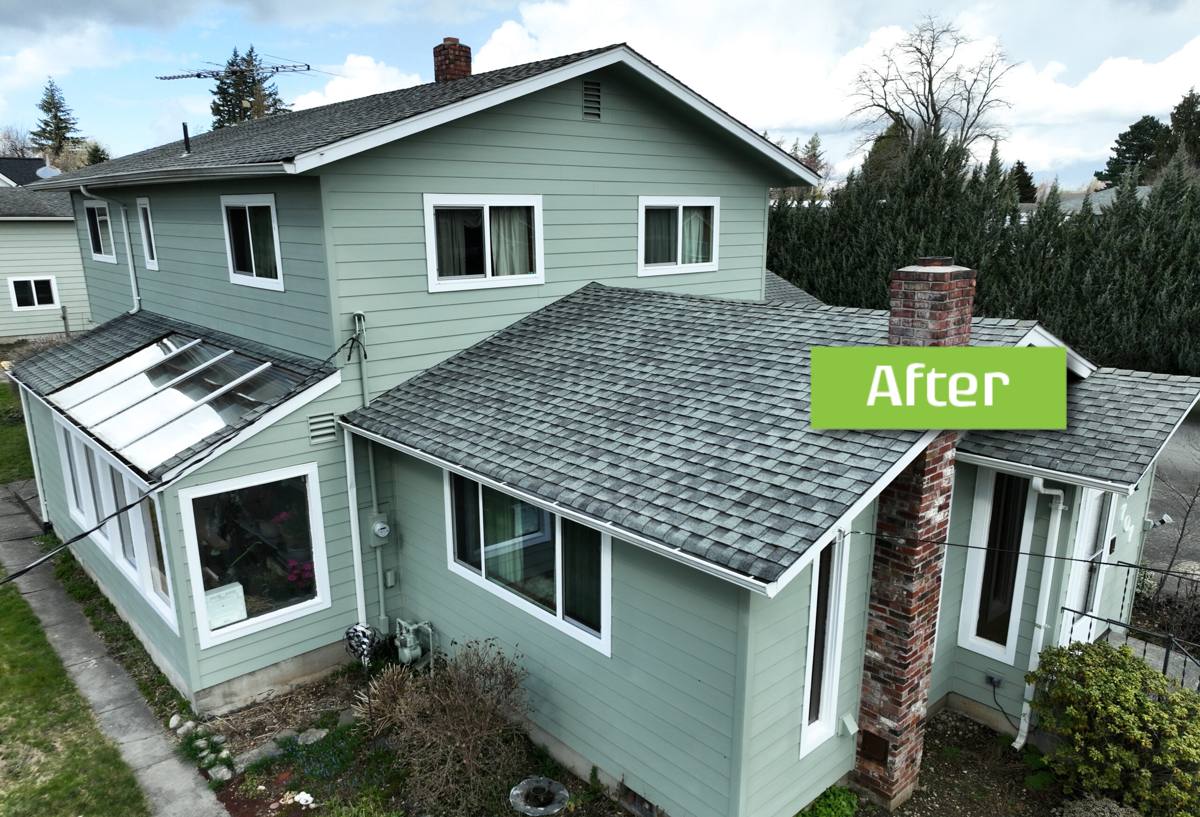
What a Correct Roof Replacement Involves
A roof replacement is more than swapping old shingles for new ones. The parts of the job that don't show from the ground are usually what determine whether a roof lasts 15 years or 30.
Tear-Off and Deck Inspection
We remove the old roofing down to the deck rather than layering over it. That's the only way to find soft spots, rot, or old leaks that have been hiding under the existing shingles — common on homes that have gone through a few Skagit County winters without attention. Any damaged sheathing gets replaced before anything new goes down; skipping this step is the single most common reason a "new" roof fails early.
Underlayment and Ice/Water Protection
Given how much sustained rain this area gets, we don't treat underlayment as an afterthought. Synthetic underlayment with self-adhering membrane at eaves, valleys, and roof penetrations gives the deck a real second line of defense if wind-driven rain gets under the shingles — which it will, eventually, on any roof exposed to Pacific storms.
Flashing and Metal Details
Chimneys, skylights, vent pipes, and roof-to-wall transitions are where most leaks actually start, not the open field of shingles. In a salt-influenced coastal-adjacent climate like Burlington's, we pay close attention to flashing metal choice and fastener compatibility to avoid galvanic corrosion between dissimilar metals.
Ventilation
Proper intake and exhaust ventilation keeps the attic dry and temperature-balanced, which does two things: it protects the deck and insulation from moisture damage, and it reduces the ice-dam and condensation risk that comes with our damp, mild-but-wet winters.
Moss: The Slow-Motion Roof Killer Here
Skagit County's moss season is long — shaded, moisture-retentive roof sections can stay damp for weeks at a stretch during fall and winter. Moss isn't just a cosmetic issue. Its root structure lifts shingle edges, holds water against the roofing material, and accelerates granule loss, which shortens the life of an asphalt roof significantly.
- We install zinc or copper strips at the ridge on new asphalt roofs, which release trace metal ions with rain to inhibit moss and algae growth over time
- We recommend keeping overhanging branches trimmed back to let roof sections dry between rain events
- We point clients toward gentle, roof-safe cleaning methods rather than pressure washing, which strips granules and shortens shingle life
- On heavily shaded roofs, we'll talk through material options that resist moss better than standard three-tab shingles
Choosing Materials for This Climate
There's no single "best" roofing material — the right choice depends on the home's exposure, budget, and how much shade and salt air it deals with. Here's how the common options stack up for a Burlington property specifically.
| Material | Moisture/Moss Resistance | Typical Lifespan Here | Considerations |
|---|---|---|---|
| Architectural asphalt shingle | Good with zinc strips and proper ventilation | 20–30 years | Best value; wide color range; needs occasional moss maintenance |
| Standing seam metal | Excellent | 40–50+ years | Higher upfront cost; fastener and flashing metal must be matched to avoid corrosion |
| Synthetic/composite shingle | Very good | 30–50 years | Mimics cedar or slate look; good impact and moisture resistance |
| Cedar shake | Fair — requires upkeep | 20–30 years with maintenance | High maintenance burden in a damp climate; needs regular treatment to resist rot |
We don't push cedar shake as a first recommendation for shaded, damp Burlington lots — not because it's a bad product, but because its maintenance schedule (regular cleaning and treatment to stay ahead of moisture and rot) is a real ongoing commitment that not every homeowner wants to sign up for. If you already have cedar and love the look, we can talk through what upkeep it actually needs versus what a lower-maintenance alternative would look like on your home.
How We Approach a Burlington Roof Replacement
1. On-Site Assessment
We walk the roof (or inspect from a lift when pitch or condition makes that safer), check the attic for ventilation and moisture signs, and look at drainage patterns around the home — including how close trees sit and which slopes stay shaded longest.
2. Straight Options, No Pressure
We'll lay out material and budget options honestly, including trade-offs, rather than steering you toward the highest-margin product. If a mid-range shingle with good ventilation and moss protection is the right call for your home, that's what we'll say.
3. Scheduling Around Weather
Skagit County's wet season narrows the practical roofing window. We plan tear-off and dry-in carefully so your home isn't exposed to open weather any longer than necessary, and we watch forecasts closely once a start date is set.
4. Clean Tear-Off and Installation
Full deck inspection, repair of any damaged sheathing, correct underlayment and flashing detail work, and a ventilation check — every step above happens as standard practice, not an upsell.
5. Final Walkthrough
We walk the finished roof and property with you, confirm cleanup (magnetic sweep for nails, debris removal), and go over what warranty coverage applies and what basic maintenance — like moss checks — will keep it performing.
Why Local Experience on This Specific Job Matters
A roofing crew that already works Burlington and greater Mount Vernon knows things a crew unfamiliar with the area has to learn on your roof: which neighborhoods sit in enough shade to need extra moss protection, how the wind off the delta drives rain into valleys and flashing details, and which fastener and flashing metals hold up against the area's air quality over decades rather than years. That experience shows up in fewer callbacks and a roof that's built for the conditions it will actually face, not generic textbook conditions.
Signs Your Burlington Roof May Need Replacement, Not Repair
- Shingles that are cupping, cracking, or losing granules across large sections rather than one isolated spot
- Moss or algae covering more than a small portion of the roof despite cleaning attempts
- Daylight visible through the attic roof deck, or damp insulation after storms
- Multiple past repairs in different areas — a sign the roof system as a whole is aging out
- Roof age approaching or past the expected lifespan for its material, especially with heavy moss history
- Visible sagging anywhere on the roofline, which can indicate deck or structural issues
If you're only seeing one or two of these and the roof is otherwise sound, a repair may genuinely be the smarter call — we'll tell you that if it's true rather than selling a full replacement you don't need yet.
Cost Factors Worth Understanding Upfront
Every roof is priced based on its own specifics, but the factors that move the number the most are consistent:
| Factor | Why It Matters |
|---|---|
| Roof size and complexity | More valleys, penetrations, and roof planes mean more flashing work and labor time |
| Existing deck condition | Rot or damage found at tear-off requires sheathing replacement before install |
| Material choice | Asphalt, metal, and composite options span a wide cost range |
| Pitch and access | Steep or hard-to-access roofs take longer and may require added safety equipment |
| Ventilation upgrades | Adding or correcting intake/exhaust venting is worth the modest added cost long-term |
We provide written estimates that break these factors down so you know exactly what you're paying for, not just a lump-sum number.
Get a Free Estimate for Your Burlington Roof
If your roof is showing wear, dealing with persistent moss, or simply approaching the end of its expected life, we're happy to take a look and give you an honest assessment — no pressure, no obligation. Fill out the form below to schedule a free estimate for your Burlington roof replacement.