 Mount Vernon
 Burlington's Exterior Problem Isn't Just Rain
Burlington sits close enough to Skagit Bay and the Samish flats that homes here deal with more than ordinary Pacific Northwest rainfall. Salt-laden air moves inland on marine winds, settling on siding, trim, and fasteners year-round. Combine that with the long stretches of overcast, damp weather that keep north-facing walls and shaded siding runs wet for days at a time, and you get a climate that's genuinely hard on exterior materials. Add in moss and algae growth that can start as early as October and not fully die back until June, and it's clear why so many Burlington homes show premature siding failure well before the material should be due for replacement.
This isn't a generic "Pacific Northwest weather is tough" page. It's specific to what happens on homes in and around Burlington: salt-air corrosion on fasteners and trim, moisture intrusion behind poorly flashed siding, and moss colonies that hold water against the wall assembly long after a storm has passed. Any siding job done here needs to be engineered around those three things, not just installed to a general spec.
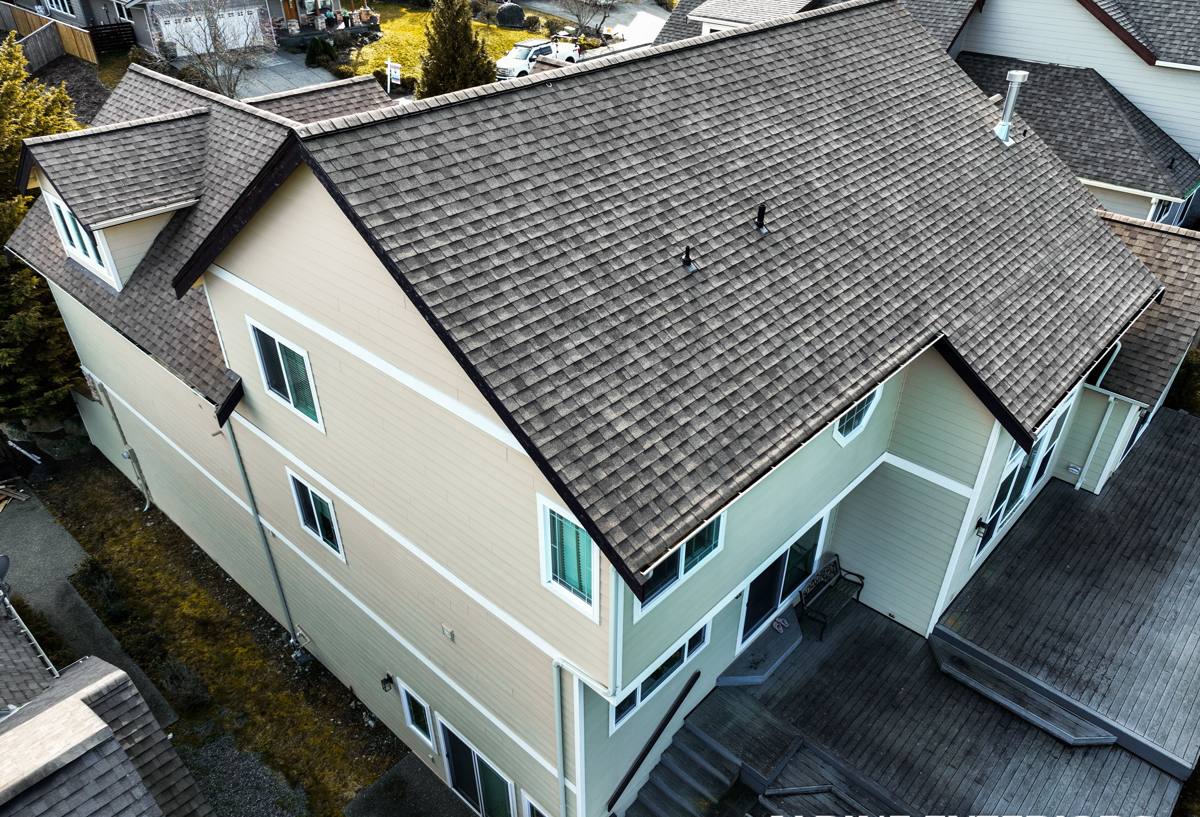
Why Fiber Cement Is the Right Material for This Climate
Wood-based products — cedar, primed spruce, and engineered wood siding like LP SmartSide — all share one vulnerability: they're organic material, and organic material is what moss, algae, and rot feed on. In a climate with Burlington's moisture load, that vulnerability shows up faster than it would in a drier region. Vinyl siding handles moisture fine on its own, but it doesn't hold paint, flexes with temperature swings, and can crack or bow under Skagit County's wind-driven rain events over time.
James Hardie fiber cement siding is made from sand, cement, and cellulose fiber, cured under pressure. It doesn't rot, it isn't a food source for moss or fungus, and it holds a factory-applied finish far longer than field-applied paint on wood. That's why we install James Hardie exclusively — not vinyl, not LP SmartSide, not primed wood, not other fiber cement brands. We've made a professional judgment that Hardie's product engineering and finish system are the best match for what Burlington's climate does to a house over 20-plus years, and we stand behind that with our installation work.
What Fiber Cement Doesn't Solve on Its Own
It's worth being honest here: fiber cement siding is only as good as the installation behind it. The material resists moisture and organic growth, but a poorly flashed window, a missing weep path, or caulk used where it shouldn't be still lets water into the wall assembly. Most siding failures we see on fiber cement homes in this area trace back to installation shortcuts, not the product itself.
What a Correct Installation Involves in Burlington
A proper fiber cement install here follows James Hardie's published installation specifications closely, because those specs are what keep the manufacturer's warranty valid — and because they're genuinely the right way to build a wall assembly in this climate. The pieces that matter most locally:
- Rainscreen gap or proper drainage plane: a small air gap behind the siding lets bulk water drain and the wall assembly dry out between storms, instead of trapping moisture against the sheathing.
- Correct fastener placement and type: Hardie specifies fastener type, spacing, and embedment depth precisely. Salt air accelerates corrosion on the wrong fastener, so we use fasteners rated for the exposure.
- Flashing at every horizontal joint, window, and door: this is where most water intrusion actually starts. Kick-out flashing at roof-wall intersections and proper head flashing above openings matter more than the siding material itself.
- Factory-cut and factory-primed edges kept sealed: any field cut needs to be sealed per spec, or that cut edge becomes a moisture entry point.
- Caulk used only where Hardie's details call for it — not as a substitute for proper flashing, which is a shortcut that traps water rather than shedding it.
None of this is unusual or exotic. It's the standard James Hardie installation method, applied carefully and checked at each stage. The difference between a siding job that lasts and one that fails early in Burlington almost always comes down to whether these steps were actually followed.
James Hardie Product Lines and What Fits Burlington
James Hardie makes climate-engineered product lines, and choosing the right one for a Burlington home is a real decision, not a formality.
| Product Line | Engineered For | Relevance to Burlington |
|---|---|---|
| HZ5 (HardieZone 5) | Cold, wet, freeze-thaw climates | Matches Skagit County's damp winters and marine exposure |
| HardiePlank lap siding | Traditional horizontal lap look | Most common choice; wide color and texture range |
| HardiePanel vertical siding | Modern vertical lines, board-and-batten | Popular on accent walls and contemporary remodels |
| HardieShingle | Staggered or straight-edge shingle look | Used for accent gables without the moisture risk of real wood shingles |
| ColorPlus finish | Factory-baked, multi-coat color | Resists fading and holds up to salt air far better than field-applied paint |
ColorPlus finish matters more here than in drier climates. A field-painted surface is more porous and more likely to show early wear where salt air and moss are constantly working on it. The factory finish process bakes on multiple coats under controlled conditions, which is a meaningfully different level of durability.
Our Process for Burlington Siding Projects
- On-site assessment: we look at moisture history on the home — moss buildup patterns, existing water staining, condition of trim and flashing — before ever quoting a product line.
- Sheathing and moisture barrier check: once old siding comes off, we inspect the sheathing for hidden rot or water damage before installing anything new. This step gets skipped by crews trying to move fast, and it's where problems get caught early or missed entirely.
- Drainage plane and flashing install: proper house wrap or equivalent, plus flashing at every penetration, before a single piece of siding goes up.
- Fiber cement installation to Hardie spec: correct fastener schedule, gapping, and cut-edge sealing throughout.
- Final inspection and cleanup: we walk the whole exterior, check caulk lines and flashing details, and clear the site.
Cost Factors for a Burlington Fiber Cement Project
Every home is different, but the main variables that move a project's cost here are consistent enough to lay out honestly:
| Factor | Why It Matters Locally |
|---|---|
| Sheathing condition | Homes with hidden moisture damage from prior siding failures need repair before new siding goes on |
| Home size and wall complexity | More corners, dormers, and roof intersections mean more flashing detail work |
| Product line and profile | Lap vs. panel vs. shingle accents affect material and labor differently |
| Trim and accent scope | Full trim replacement adds cost but improves long-term water management |
| Access and site conditions | Tight lots, mature landscaping, or steep grades affect staging and labor time |
We give straightforward, itemized estimates rather than a single lump number, so homeowners can see exactly where the cost is going and where they have real choices.
Living With Fiber Cement Siding in a Moss-Prone Climate
Fiber cement doesn't feed moss the way wood does, but moss and algae can still grow on any exterior surface that stays damp, including the surface of Hardie siding, especially on shaded north walls or under overhangs. The good news is that maintenance is simple and infrequent compared to wood siding upkeep.
- Rinse siding annually with a garden hose and soft brush attachment — avoid pressure washers set too high, which can force water behind panels at seams
- Keep gutters clear so overflow doesn't run down the wall face and feed moss growth
- Trim back vegetation and tree limbs that keep siding shaded and damp
- Check caulk lines around windows and trim every couple of years and touch up as needed
- Address any soft spots, staining, or bubbling paint promptly rather than waiting
None of this requires the seasonal staining, sealing, or re-caulking that wood siding demands in this climate. That reduced maintenance burden is a large part of why fiber cement pencils out over the life of the siding, even though the upfront cost is higher than vinyl.
Why a Crew That Already Works Burlington Matters
Siding installation quality depends heavily on understanding local conditions before the first piece goes up. A crew that already works Skagit County homes knows to check for salt-air fastener corrosion patterns, knows which wall orientations in this area collect moss fastest, and knows how driving rain off the Bay behaves against a wall that isn't flashed correctly. That local pattern recognition is what keeps small installation details from becoming five-year callbacks. It also means faster response if something needs a warranty check or a maintenance question comes up later — you're not waiting on a crew that has to drive in from out of the area.
Get a Straightforward Estimate
If you're weighing a siding replacement on a Burlington home, we're glad to walk the exterior with you, look at what your current siding and trim are telling us about moisture history, and give you a clear, no-pressure estimate for a James Hardie installation built for this climate. There's no obligation — just a straight answer about what your home needs.