 Mount Vernon
 Why Burlington's Climate Is Hard on Asphalt Shingle Roofs
Burlington sits in a stretch of Skagit County where three things work against a roof at the same time: salt-laden air moving in off Skagit Bay and Puget Sound, long stretches of driving rain through fall and winter, and a moss and algae season that barely takes a break. None of these are dramatic on their own, but together they shorten the useful life of a shingle roof that wasn't installed with this specific climate in mind. A roof system that would hold up fine in a dry inland climate can start showing problems here in half the time.
Salt Air and Metal Corrosion
Homes closer to the bay and the lower Skagit valley get a steady dose of salt-carrying moisture in the air. That doesn't hurt the shingles themselves much, but it accelerates corrosion on exposed metal — nail heads, flashing, vent stacks, and gutter hardware. Once flashing starts to rust and pit, water finds a way underneath it long before the shingles above look worn.
Driving Rain and Wind-Driven Water
Storms coming off the water regularly push rain sideways instead of straight down. That matters because a shingle roof isn't just shedding water downhill — in a wind event, water can be forced up and under shingle edges, into valleys, and around anything that penetrates the roof deck. A roof that's only built to handle vertical rainfall will leak here eventually, usually at the same handful of predictable spots.
Moss, Algae, and the Long Wet Season
Skagit County's mild, wet winters and shaded, tree-lined lots around Burlington are close to ideal growing conditions for moss and algae. Moss doesn't just look bad — it holds moisture against the shingle surface, lifts shingle edges as it grows, and works its way under tabs and flashing. Algae streaking is mostly cosmetic, but it's a sign that the roof is staying damp longer than it should between rains.
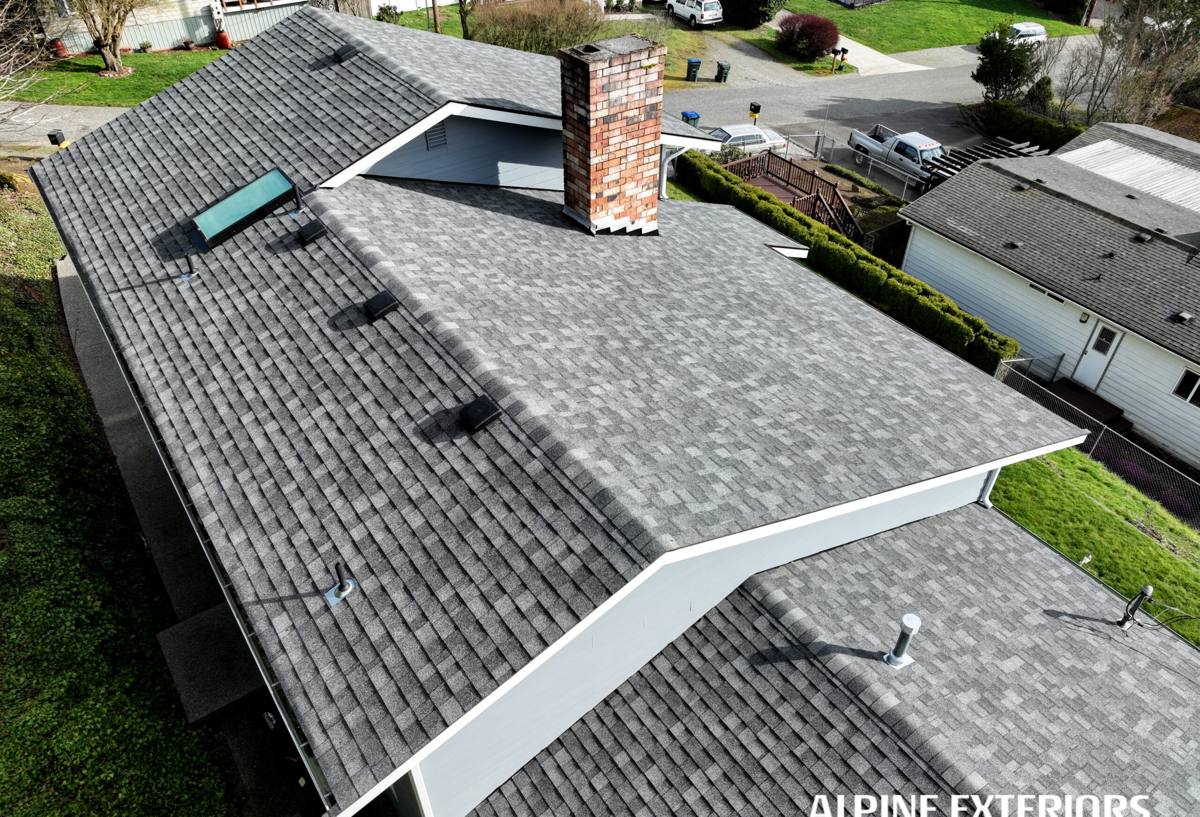
Signs a Burlington Roof Needs Attention
Most shingle roof failures don't happen suddenly — they show warning signs for months or years first. Homeowners in this area should watch for:
- Granules collecting in gutters or at the base of downspouts
- Shingle edges curling, cupping, or lifting, especially on south- and west-facing slopes
- Dark streaking (algae) or thick green-black growth (moss) on the roof surface
- Rust staining below nail heads or around flashing and vent pipes
- Soft spots or sagging when walked on, which usually means deck damage underneath
- Daylight visible through the roof deck from inside the attic
- Water stains on interior ceilings, especially near chimneys, skylights, or wall-roof junctions
- A roof approaching or past 20-25 years old with no major work done
Any one of these on its own might just mean a repair. Several at once usually means the roof is past the point where patching makes sense.
What a Correct Asphalt Shingle Installation Involves
Asphalt shingle roofing looks simple from the ground, but most of the leaks we get called out for trace back to shortcuts in the layers homeowners never see. A roof built for Burlington's conditions needs more attention in a few specific places.
Tear-Off and Deck Inspection
We remove the old roofing down to the deck rather than layering over it. That's the only way to actually see what condition the plywood or plank decking is in. Given how much moisture this area sees, it's common to find a section of deck that's gone soft or delaminated near a valley, chimney, or old repair — that gets replaced before anything new goes down, not covered up.
Underlayment and Ice-and-Water Shield
A synthetic underlayment goes down across the full roof as the primary water barrier, but the critical upgrade for this climate is self-adhering ice-and-water shield membrane at the eaves, valleys, and around every penetration — chimneys, skylights, pipe boots. These are the spots where wind-driven rain and moss-related backups cause the most damage, so they get a membrane that seals around nail penetrations instead of just shedding water.
Flashing That's Built to Last, Not Just Pass Inspection
Flashing at walls, chimneys, and valleys is where salt-air corrosion does the most damage over time. We use flashing material and fasteners chosen to hold up to that exposure rather than the cheapest option that meets code, and we form and step-flash it correctly rather than relying on caulk or roof cement to make up the difference.
Ventilation That Actually Balances
Intake at the soffits and exhaust at the ridge need to work together, not just exist. Poor ventilation traps humid attic air against the underside of the deck, which speeds up rot and, on the outside, keeps the roof surface cooler and damper — which is exactly what moss wants. We check and correct the intake/exhaust balance as part of every full roof job.
Shingle Selection for This Specific Climate
Not every shingle is a good fit for Burlington. We steer toward algae-resistant (AR-rated) architectural shingles with copper- or zinc-infused granules, which slow algae growth at the surface, along with wind ratings appropriate for exposed or open lots. A shingle chosen only on price, without those features, tends to show streaking and granule loss noticeably sooner here than it would in a drier climate.
Comparing Shingle Options for a Burlington Home
| Shingle Type | Typical Lifespan Here | Moss/Algae Resistance | Wind Performance |
|---|---|---|---|
| Standard 3-tab | Lower end of range, shorter in this climate | Poor unless AR-rated | Lower wind rating |
| Architectural (dimensional) | Longer, more durable | Good if AR-rated | Higher wind rating, better in gusty exposure |
| Algae-resistant (AR) upgrade | Same base lifespan, holds appearance longer | Best available in asphalt | Depends on base shingle line |
For most Burlington homes — especially anything within a few miles of open water or under mature trees — the combination of architectural profile plus AR granules is worth the modest upfront difference. It's the shingle least likely to need moss treatment or premature replacement.
What Affects the Cost of a Shingle Roof in Burlington
| Factor | Why It Matters Here |
|---|---|
| Number of existing layers | More tear-off labor and disposal, and it's the only way to inspect the deck underneath |
| Deck condition | Moisture exposure in this area means deck repair is common on older roofs, not the exception |
| Roof pitch and access | Steeper or harder-to-reach roofs take longer and need more safety setup |
| Valleys, chimneys, skylights | Each one needs proper flashing and ice-and-water membrane, adding material and labor |
| Ventilation corrections | Adding or rebalancing soffit and ridge venting if the current setup is inadequate |
| Shingle grade chosen | AR-rated architectural shingles cost more than basic 3-tab but hold up longer against moss and algae |
We break these out on every estimate so a homeowner can see exactly what's driving the number, rather than getting a single lump figure.
Our Process, Start to Finish
- Inspection and estimate — we get on the roof, check the deck where accessible, look at flashing, ventilation, and current shingle condition, and give a written estimate that breaks out the work involved.
- Material selection — we walk through shingle and color options with the climate factors above in mind, not just what's cheapest.
- Tear-off and deck check — full removal of old roofing, deck inspected and repaired as needed before anything new is installed.
- Underlayment, ice-and-water shield, and flashing — installed at eaves, valleys, and every penetration.
- Shingle installation — installed to manufacturer nailing specs, which matters as much for wind performance as the shingle itself.
- Ventilation check and correction — confirming intake and exhaust are balanced before we close the job out.
- Cleanup and final walkthrough — magnetic sweep for nails, debris hauled off, and a walkthrough of the finished roof and any warranty paperwork.
Keeping Moss and Algae From Coming Back
Even a well-built roof in this climate benefits from a little ongoing attention. A few habits go a long way in Burlington specifically:
- Keep overhanging branches trimmed back to let sunlight and airflow reach the roof surface
- Clear gutters and valleys of debris before the fall rains set in, so water isn't sitting against the shingles
- Have moss physically removed rather than pressure-washed, which can strip granules and shorten shingle life
- Consider zinc or copper strips near the ridge on shade-prone roofs, which release trace metals that help suppress regrowth
- Schedule a periodic roof check rather than waiting for a leak to find a problem
Why a Crew That Already Works in Burlington Makes a Difference
A lot of what separates a roof that lasts from one that doesn't comes down to details that are specific to this area — knowing which streets and lots sit exposed to bay wind, which older Burlington homes are more likely to have undersized ventilation, and which roof details tend to fail first given the local moss and salt-air combination. A crew that works Skagit County regularly also knows how to plan around the rainy season realistically, rather than promising a tear-off schedule that gets blown out by the first storm system. That local familiarity shows up in fewer callbacks and a roof that's actually built for the conditions it has to survive, not a generic install dropped into a different climate.
If you're dealing with a roof showing its age, storm damage, or persistent moss, we're happy to take a look and put together a straightforward, no-pressure estimate. There's no cost to find out what condition your roof is really in — just fill out the form below and we'll get in touch.