 Mount Vernon
 Bow sits along the water in Skagit County, out where farmland, tidal shoreline, and forested hillside meet Samish Bay. It's a beautiful place to have a roof over your head — and a demanding one. When a windstorm rolls through off the water, Bow roofs take it more directly than homes tucked into a town grid with other rooflines to break the wind. We repair storm-damaged roofs throughout the Bow area, and this page covers what that actually involves: what the storms here do to a roof, how to tell if yours needs attention, and how we approach the repair so it holds up through the next one.
Why Storm Damage Hits Differently in Bow
A storm doesn't have to be a named event to do real damage to a roof out here. Sustained wind off Samish Bay, gusts funneling down from the Chuckanut foothills, and the driving rain that comes with both are a regular part of the weather cycle in this part of Skagit County — not a rare occurrence. Add in the salt-laden air that travels further inland than most people expect during winter storms, and you've got a combination that stresses a roof in more ways than a simple rain total would suggest.
Wind, Not Just Rain
Wind is usually the first thing to find a roof's weak point. Shingles that are already lifting slightly at the tab, flashing with a loosened fastener, or a ridge cap that wasn't sealed quite right — a strong gust turns any of those into an open door for water. Because Bow properties tend to sit more exposed than homes in denser neighborhoods nearby, roofs here often take wind loads that a more sheltered house never would.
Driving Rain and Salt Air
Wind-driven rain hits a roof at an angle instead of falling straight down, which means it can work its way under shingle edges and around flashing that would shed a normal rainstorm just fine. Salt air adds a second, slower problem on top of that: it accelerates corrosion at nail heads, flashing seams, and any exposed metal, which is exactly the hardware a roof depends on to stay watertight after a storm has already stressed it.
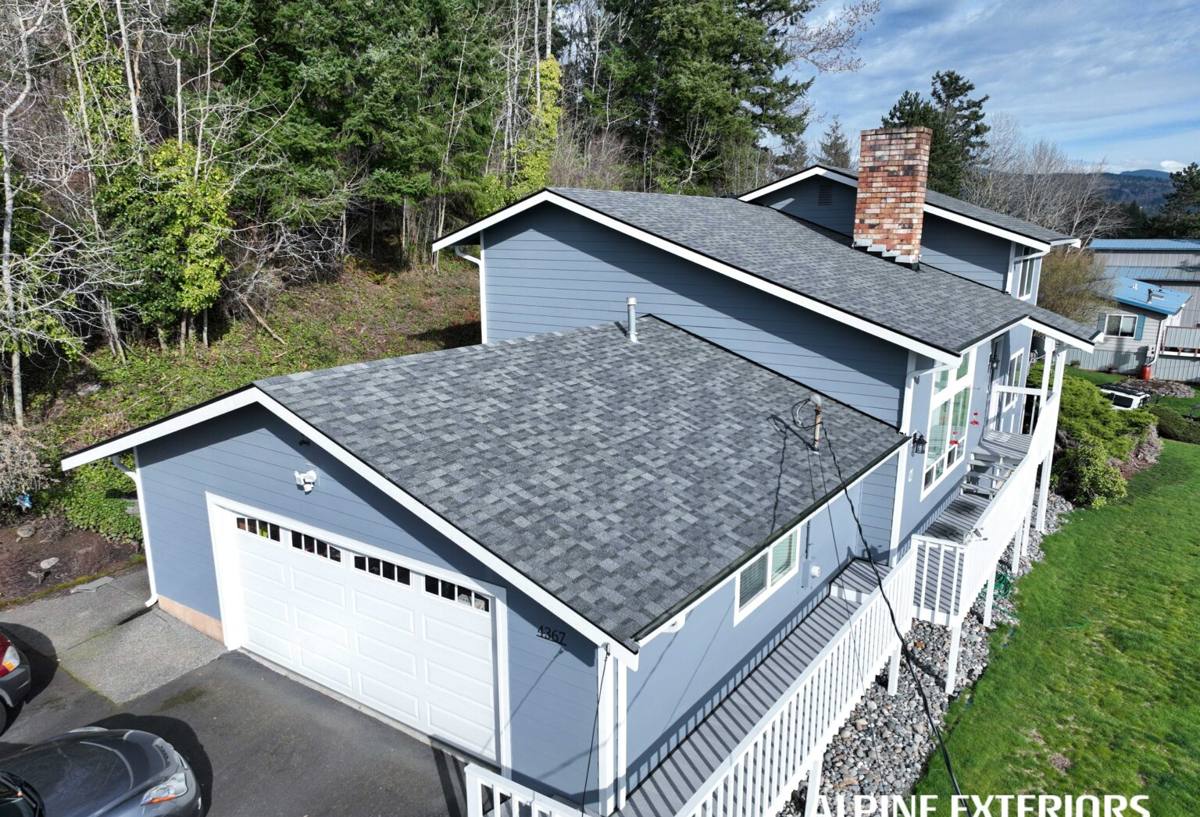
What Counts as Storm Damage
Storm damage isn't always a dramatic hole in the roof. Some of the most common issues we find after a wind event in Bow are easy to miss from the ground:
- Missing, cracked, or creased shingles, especially on the side of the roof that faced the wind
- Lifted or loosened flashing around chimneys, vent pipes, and skylights
- Debris strikes from falling branches, which can puncture roofing or knock granules loose without an obvious hole
- Fascia, gutters, or ridge caps pulled loose or bent by wind uplift
- Soft or spongy decking under a section that's been quietly leaking since a storm weeks or months earlier
That last one is the reason we don't recommend waiting to see if a leak "shows up" inside the house. By the time water reaches the ceiling, it's usually been getting into the roof deck for a while.
Our Storm Damage Repair Process
We keep this straightforward, because a stressful situation doesn't need extra complexity layered on top of it.
1. Inspection
We get on the roof (or use a close visual inspection when conditions don't allow safe roof access) and check every likely failure point: shingle condition across all slopes, flashing at every penetration, valleys, ridge lines, and the underlayment where it's exposed. We also check the attic side when we can, since interior signs of moisture often tell us more than what's visible from outside.
2. Honest Assessment
We'll tell you plainly whether you're looking at a targeted repair or something more extensive. Not every storm-damaged roof needs full replacement, and we're not going to sell you one if a proper repair will hold. We'll also flag it clearly if we think the damage is significant enough that a full section, or the whole roof, is the more sensible long-term call.
3. Documentation
If you're planning to file an insurance claim, we document what we find with photos and a written scope of the damage before we touch anything, so there's a clear record of what the storm actually did versus what was pre-existing wear.
4. The Repair Itself
We match materials as closely as possible to what's already on the roof, rebuild flashing details correctly rather than just resealing what's there, and check that ventilation and underlayment in the repaired area meet the same standard we'd use on a new install. A patch that doesn't address why the original spot failed just sets up a repeat visit.
Repair vs. Replacement: How We Decide
| Factor | Favors Repair | Favors Replacement |
|---|---|---|
| Extent of damage | Isolated to one slope or a few sections | Spread across multiple slopes or the whole roof |
| Roof age | Well within its expected service life | Already near the end of its typical lifespan |
| Decking condition | Solid, dry, no soft spots found | Soft, delaminating, or water-stained decking present |
| Prior repair history | First significant issue on this roof | Repeated leaks or patches in different areas over time |
| Material availability | Matching shingle or panel still available | Discontinued product, visible mismatch likely |
Most storm calls we get in Bow end up being repairs. But a roof that's already older, or one that's been patched in a few places over the years, is a different conversation — and we'll have that conversation honestly rather than defaulting to whichever answer is easier to sell.
Common Problems We See on Bow Roofs After a Storm
A few patterns show up often enough on this stretch of coastline that they're worth calling out specifically.
Flashing Failures at Chimneys and Skylights
Flashing is metal, and metal exposed to salt air corrodes faster here than it would inland. A flashing seal that's been quietly degrading for a couple of seasons often gives way in the same storm that would have left a fresher installation untouched.
Valley Damage
Valleys carry more water than any other part of a roof, and wind-driven rain concentrates in them. If the valley flashing or underlayment underneath was installed to a minimum standard rather than built for this kind of exposure, it tends to be one of the first places to fail.
Moss-Related Weakness
Bow's long moss season doesn't cause storm damage directly, but it sets the stage for it. Moss holds moisture against roofing material and can work under shingle edges over time, weakening the seal in exactly the spots that wind and rain will find first when a storm comes through.
Working With Your Insurance Claim
We're not an insurance company and we won't promise a specific claim outcome, but we can make the process easier on you. We provide a clear, photo-documented scope of the storm damage that you can hand to your adjuster, and we're happy to be on-site or available by phone if the adjuster has questions about what they're looking at. A well-documented claim tends to move faster and get evaluated more accurately than one built on guesswork.
Why a Crew That Already Works in Bow Matters
Bow isn't a uniform subdivision — it's a mix of farmhouses, waterfront homes, and houses tucked against the tree line, each catching wind and rain differently depending on how they sit relative to the bay and the hillside. A crew that repairs roofs in this specific area regularly develops a feel for which slopes take the worst of a storm, which flashing details actually hold up here versus which ones are just code minimum, and how fast moss and salt air turn a small problem into a bigger one if it's ignored. That's not something a contractor who occasionally drives out from somewhere else picks up quickly.
What to Check Before Hiring a Storm Repair Contractor
- Ask whether they've worked on roofs in Bow or the surrounding Samish Bay area specifically, not just the region generally
- Confirm they document damage with photos before starting work, which matters for insurance claims
- Ask how they handle flashing repair, not just shingle replacement — that's where most storm leaks originate
- Get a clear, written scope of what's being repaired and why, not a vague verbal estimate
- Verify they're licensed, bonded, and insured to perform roofing work in Washington State
What This Means for Your Roof
Every storm-damaged roof in Bow is a little different, depending on the home's age, roofing material, and exactly how the storm hit it. We're not going to recommend a full replacement when a proper, correctly detailed repair will do the job, and we're not going to patch over a problem that's likely to come back with the next storm. If a recent windstorm has you wondering whether your roof needs a closer look, we'd rather you find out now than after the next one.
If you'd like an honest assessment of your roof after a storm, reach out for a free, no-pressure estimate. We'll take a look, walk you through what we find, and lay out your options clearly — no pressure either way.