 Mount Vernon
 Blanchard's Roofs Work Harder Than Most
Blanchard sits close enough to the water that salt air is a real, daily factor on every roof in the area, not an occasional nuisance. Add in the wind-driven rain that comes through the lowlands off Samish Bay and the surrounding hills, plus the long stretch of wet, shaded months that Skagit County sees every year, and you have a climate that is genuinely tougher on roofing than what homes see even a few miles inland. We repair roofs across this stretch of the county regularly, and the failure patterns we see in Blanchard are consistent enough that we can usually tell a homeowner what we're likely to find before we ever get a ladder on the house.
This page is specifically about roof repair for homes in and around Blanchard. It's not a general roofing overview — it's what we've learned about keeping roofs sound in this particular pocket of Skagit County, and what a repair here needs to actually hold up.
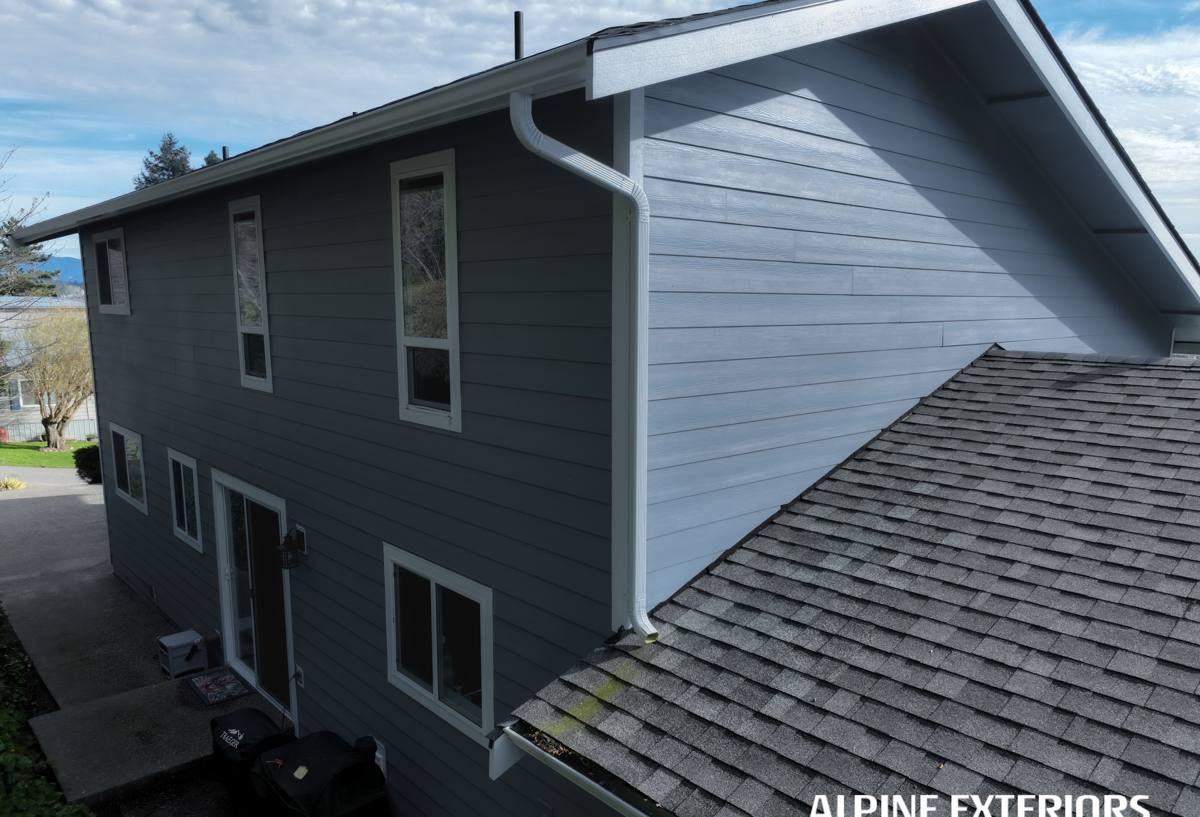
Why Salt Air, Rain, and Moss Hit Blanchard Roofs So Hard
Salt Air and Metal Components
Homes closer to the water deal with airborne salt that settles on roofing metal — flashing, fasteners, gutter hardware, vent caps — and speeds up corrosion. Standard, unprotected steel fasteners and thin flashing can start showing rust and pitting years before they would inland. It's not that these materials are bad; it's that they need to be matched to the exposure they'll actually face.
Driving Rain
Rain in this part of Washington doesn't always fall straight down. Storms coming off the water push rain sideways, which means it finds its way into gaps that would never leak in a calm, vertical rain. Valleys, chimney flashing, skylight curbs, and anywhere two roof planes meet are the areas most exposed to this kind of wind-driven intrusion.
Moss Season
Blanchard's tree cover and the region's long wet season give moss months to establish itself on roofs that don't get much direct sun. Moss holds moisture against the roofing surface far longer than open air would, and as it grows under shingle edges and around granules, it lifts material and creates channels for water to travel where it shouldn't. A roof that looks fine from the ground can already have moss doing quiet damage underneath.
The Roof Problems We Most Often Find in Blanchard
- Moss growth on north-facing and shaded slopes, especially under tree cover, that has started lifting shingle tabs
- Corroded or failing flashing around chimneys, skylights, and roof-to-wall intersections, often from age combined with salt exposure
- Wind-driven leaks at valleys where water is pushed uphill under shingles during storms
- Granule loss and cracked shingles from years of freeze-thaw cycling and constant damp-dry swings
- Clogged or sagging gutters from needle and leaf debris, causing water to back up under the roof edge
- Nail pops and fastener corrosion that create small entry points long before a homeowner sees an active leak
What a Correct Roof Repair Actually Involves
Finding the Real Source of a Leak
Water rarely enters a roof at the same spot where it shows up on a ceiling. It can travel along rafters, sheathing, or underlayment before dripping somewhere visible, which means a repair that only patches the stain location often misses the actual problem. Doing this correctly means tracing the path — checking flashing, fastener lines, valleys, and penetrations upslope of the damage — before any material comes off or goes back on.
Matching Materials and Fasteners for Coastal Exposure
Given the salt air in Blanchard, we pay close attention to what flashing and fastener materials we use in a repair. Cheaper, uncoated fasteners might look fine on installation day but corrode faster in this environment, which can undo an otherwise good repair within a few years. We match materials to the exposure the roof actually sees, not just to what's fastest to install.
Not Just Patching the Surface
A shingle can be replaced on top while the underlayment or decking beneath it is already compromised. Part of doing a repair right is checking what's underneath the visible damage — soft or delaminating sheathing, saturated underlayment, or rot at a rafter tail — so the fix addresses the actual condition of the roof, not just its appearance.
Our Roof Repair Process
- Inspection and diagnosis. We get on the roof (weather permitting) and check the interior where relevant, tracing the leak path rather than guessing from the stain location.
- Honest assessment. We tell you what we found, what's causing it, and whether a repair is the right call or whether the roof's age and condition point toward replacement instead.
- Written scope and estimate. You know what work is being done, what materials are being used, and roughly what it will cost before we start.
- The repair itself. Removing damaged material, addressing the source (not just the symptom), and rebuilding the flashing, underlayment, and shingle detail correctly for this climate.
- Cleanup and check. Debris removed, gutters cleared if they were part of the problem, and a final look to confirm the fix addresses what we diagnosed.
Repair or Replace? How We Help You Decide
Not every roof problem in Blanchard needs a full replacement, and not every leak is fixable with a simple patch. Here's how we generally weigh it:
| Factor | Points Toward Repair | Points Toward Replacement |
|---|---|---|
| Age of roofing | Under roughly 12-15 years, good remaining shingle life | Near or past manufacturer's expected lifespan |
| Extent of damage | Isolated to one area — a valley, a flashing detail, a section of shingles | Widespread granule loss, multiple leak points, or damage across several slopes |
| Decking condition | Solid, dry sheathing found under the damaged area | Soft, delaminating, or rotted decking in multiple spots |
| Moss and staining | Surface growth without lifted shingles | Moss has lifted shingle tabs or damaged granule coverage broadly |
| Cost over time | Repair cost is well below a fraction of full replacement | Repeated repairs are adding up without solving the underlying issue |
We'll walk you through where your roof falls on these factors rather than defaulting to whichever option is more profitable for us. Plenty of Blanchard roofs just need a solid, correctly done repair to get years more life out of them.
Materials and Fasteners: Our Standard for This Area
Because of the salt exposure and rain patterns around Blanchard, we hold to a few standards on repair work here:
- Corrosion-resistant flashing and fasteners appropriate for coastal exposure, not the minimum-grade hardware
- Underlayment that performs well under prolonged damp conditions, not just against occasional rain
- Shingle or roofing material matched as closely as possible to the existing roof's color, profile, and age so repairs blend rather than stand out as an obvious patch
- Sealants and adhesives rated for the temperature swings and moisture cycling typical of this climate
We're upfront that some lower-cost materials carry real trade-offs in an environment like this — faster fastener corrosion, more maintenance, or a shorter service life — and we'd rather explain that honestly than install something that fails early and reflects poorly on the work.
Moss and Debris: Prevention Built Into the Repair
A repair that doesn't address why the roof got damaged in the first place is only a temporary fix. Where moss or debris buildup contributed to the problem, we talk through what ongoing maintenance actually helps in Blanchard's climate:
- Clearing overhanging branches where practical to reduce shade and debris buildup on the roof
- Keeping gutters clear so water isn't backing up under roof edges, especially during fall and winter storms
- Addressing moss while it's still light growth, before it lifts shingle edges or damages granule coverage
- Periodic visual checks after major windstorms, since displaced flashing or shingles are easiest to catch and fix early
- Watching for granule buildup in gutters, which is often an early sign of shingle wear worth having looked at
Why a Crew That Already Works Blanchard Matters
Roof repair done by a crew unfamiliar with this specific stretch of Skagit County can miss things that aren't obvious unless you've seen the pattern before — how far salt air travel affects fastener choice, which roof orientations in Blanchard hold moss longest, or how wind-driven rain tends to move through valleys in this terrain. We've worked on homes throughout the Mount Vernon area and the surrounding communities, and that local pattern recognition is part of what makes a repair actually hold up rather than needing to be redone in two years.
It also means faster, more honest estimates. We're not guessing at what Blanchard's climate does to a roof — we've seen it directly, repeatedly, on homes like yours.
Get a Straightforward Look at Your Roof
If you've got a leak, staining, moss buildup, or just want a second opinion on whether a roof problem in your Blanchard home needs a repair or something bigger, we're happy to take a look. Fill out the form below for a free, no-pressure estimate — we'll tell you honestly what we find and what it would take to fix it right.