 Mount Vernon
 Asphalt Shingle Roofing Built for Alger's Coastal Climate
Alger sits close enough to Samish Bay and the open water of Skagit County that homes here take a different kind of weather beating than roofs further inland. Salt-laden air moves through on a regular basis, rain doesn't just fall here — it drives sideways off the water during winter storms, and the tree cover that makes this area beautiful also keeps roofs shaded and damp for long stretches of the year. Asphalt shingle roofing remains one of the most practical, cost-effective choices for this environment, but only when it's installed with those specific conditions in mind. A shingle roof that was built for a dry inland subdivision won't hold up the same way out here, and the difference shows up in moss growth, granule loss, and premature flashing failures within just a few years.
This page covers what an asphalt shingle roof needs to actually perform in Alger's climate, what a correct installation looks like, and how our process works from the first inspection to the final walkthrough.
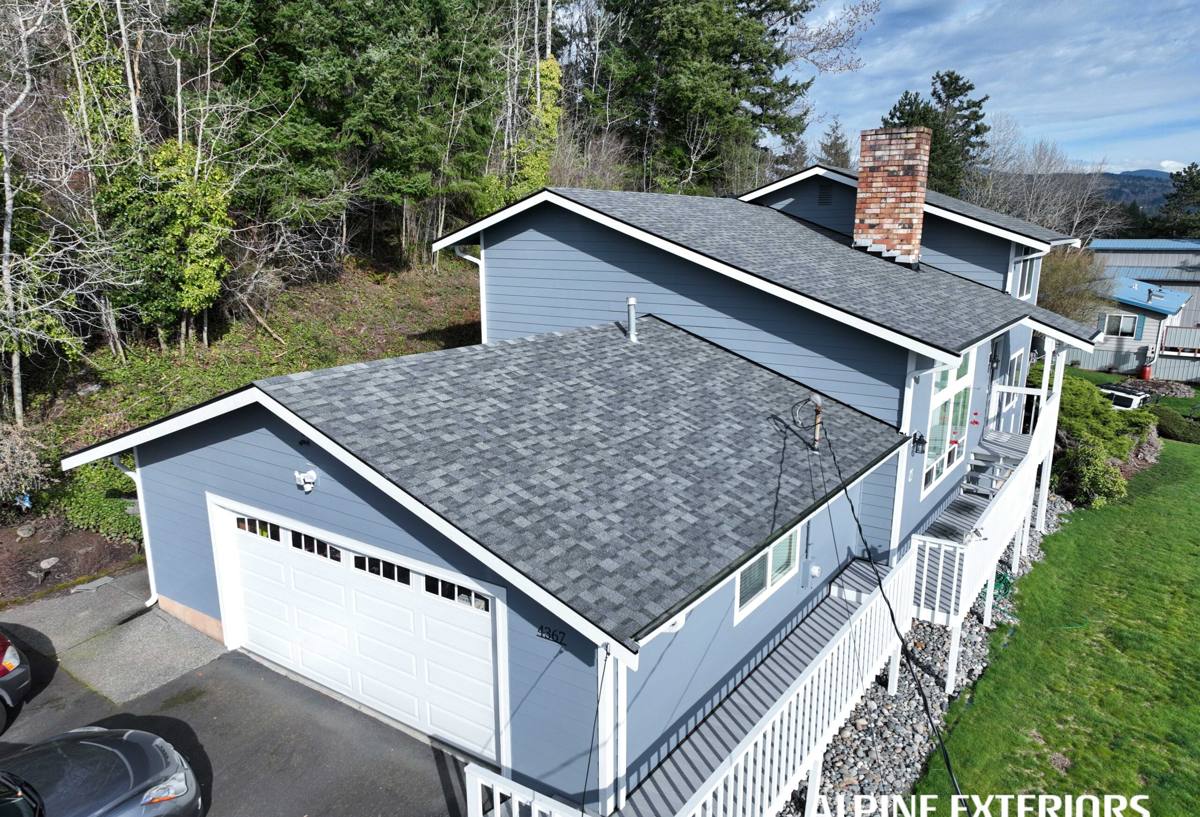
What Alger's Climate Actually Does to a Roof
Salt Air and Metal Components
Homes within a few miles of Samish Bay and the Salish Sea shoreline deal with airborne salt that accelerates corrosion on any exposed metal — flashing, drip edge, roofing nails, and vent stacks. Standard galvanized fasteners and thin flashing can start showing rust streaks and pitting years before they would inland. This doesn't mean asphalt shingles are a bad choice near the water; it means the metal components paired with them need to be selected and installed with corrosion resistance in mind.
Driving Rain and Wind-Driven Water
Skagit County storms coming off the water frequently push rain sideways rather than straight down. That changes how water moves across a roof deck — it can work its way up under shingle tabs, around chimney and skylight flashing, and along valleys where standard installation shortcuts tend to show up first. A roof built for calmer inland weather often skips underlayment coverage or flashing detail that becomes essential here.
The Long Moss Season
Between tree cover, persistent shade, and a long wet season, north-facing slopes and shaded roof planes in Alger stay damp for months at a time. That's exactly the environment moss and algae need to take hold. Once moss establishes itself in shingle mat and granule layers, it holds moisture against the roof surface long after the rest of the roof has dried, which shortens the lifespan of the shingles underneath it and can lift tabs enough to let water in.
Choosing the Right Shingle Tier for This Location
Not every asphalt shingle product is built the same way, and the differences matter more in a climate like this than they would somewhere drier. The table below is a general comparison to help frame the conversation — actual product lines and warranty terms vary by manufacturer.
| Shingle Type | Typical Lifespan | Algae/Moss Resistance | Best Fit For |
|---|---|---|---|
| Standard 3-tab | 15–20 years | Low unless treated | Budget-focused projects on sun-exposed roof planes |
| Architectural (dimensional) | 25–30 years | Moderate; better with algae-resistant granules | Most Alger homes — better wind and impact performance |
| Algae-resistant / copper-granule lines | 25–30+ years | Higher — granules resist algae staining and organic growth | Shaded, north-facing, or tree-covered roof sections |
| Impact-rated / high-wind rated | 30+ years | Varies by product | Exposed sites with more direct wind and storm exposure |
For most homes in Alger, we lean toward architectural shingles with algae-resistant granules on shaded or north-facing planes, since the moss and staining problem is more persistent here than the wind problem. That said, the right call depends on your roof's exposure, slope, and how much shade it sits under — which is something we assess on-site rather than guessing from a satellite photo.
What a Correct Asphalt Shingle Installation Actually Involves
Deck Inspection and Repair
Before any new shingle goes down, the roof deck underneath needs to be sound. In a climate this wet, we specifically check for soft spots, delamination, or rot around penetrations and eaves — areas where past leaks or ice damming may have gone unnoticed under old shingles. Skipping this step is one of the most common corners cut in roof replacement, and it's the one that causes the most expensive problems later.
Underlayment Coverage
Given how often wind-driven rain pushes water up under shingle tabs here, underlayment coverage matters more in Alger than it would in a drier climate. We pay particular attention to ice-and-water shield coverage at eaves, valleys, and around roof penetrations — the areas most exposed to wind-driven moisture — rather than relying on standard felt alone across the whole deck.
Flashing Details
Flashing around chimneys, skylights, sidewalls, and valleys is where most roof leaks actually originate, not in the open field of shingles. Given the salt air in this area, we favor corrosion-resistant flashing materials and proper step-flashing technique over relying on sealant alone, since sealant breaks down and needs maintenance while correctly formed flashing doesn't.
Nailing Pattern and Fastening
Manufacturer nailing specifications exist for a reason, and they change based on roof pitch and local wind exposure. Under-nailing or high-nailing shingles is a common shortcut that doesn't show up as a problem until a windstorm lifts tabs that should have held. We follow manufacturer specs for the specific product and pitch, which also matters for keeping any manufacturer warranty valid.
Ventilation
A shingle roof's lifespan depends heavily on attic ventilation, not just the shingles themselves. Poor ventilation traps heat and moisture underneath the roof deck, which accelerates shingle aging from below at the same time moss and algae are working on it from above. Balanced intake and exhaust ventilation is part of a correct installation, not an optional add-on.
Our Process, From Estimate to Cleanup
1. On-Site Inspection
We start with a physical inspection of your roof — not just a look from the ground. That means checking the deck condition where accessible, current flashing, ventilation, and the specific exposure your roof planes get to shade, wind, and water.
2. Straightforward Proposal
You get a written proposal that spells out the shingle product, underlayment approach, flashing plan, and ventilation work — not just a single lump-sum number with no detail behind it. If there are trade-offs between options (cost versus algae resistance, for example), we explain them plainly.
3. Installation Day
Tear-off, deck inspection and any needed repair, underlayment, flashing, shingle installation, and ventilation work happen in sequence, with attention paid to weather timing so exposed decking isn't left open to a Skagit County downpour longer than necessary.
4. Cleanup and Walkthrough
We clean the site, including magnetic sweeps for nails around the house and driveway, and walk the finished roof with you so you know what was done and what to watch for going forward.
Maintenance That Actually Matters in a Moss-Prone Climate
A correctly installed asphalt shingle roof in Alger still needs some seasonal attention because of how much shade and moisture this area gets. This isn't about constant upkeep — it's a short list of things that make a real difference over the life of the roof.
- Keep gutters clear of needles and leaf debris so water isn't backing up under the shingle edge during heavy rain
- Trim back tree limbs that keep roof sections in constant shade, since sunlight exposure is one of the simplest ways to slow moss growth
- Have moss physically removed rather than just treated when it establishes on shaded slopes — chemical treatment alone doesn't undo growth that's already lifted granules or tabs
- Check attic ventilation isn't blocked by insulation or debris, since blocked vents trap moisture that accelerates shingle aging from underneath
- Have flashing and sealant points around chimneys and skylights checked periodically, since these fail before the shingle field usually does
- After major windstorms, do a visual check for lifted or missing tabs rather than waiting until a leak shows up inside the house
Why a Crew That Already Works in Alger Matters
A lot of what determines whether an asphalt shingle roof holds up in this area isn't the shingle brand — it's whether the underlayment coverage, flashing detail, and ventilation were handled with this specific climate in mind. A crew that regularly works roofs in Alger and the surrounding Skagit County communities already knows which roof orientations tend to hold moss, which flashing details tend to fail first in wind-driven rain, and how local permitting and inspection processes work. That local familiarity translates into fewer surprises during the project and a roof that's built for the conditions it will actually face, not generic conditions from a training manual written somewhere drier.
Get a Straightforward, No-Pressure Estimate
If your Alger home's roof is showing moss buildup, granule loss, or you're just planning ahead for a replacement, we're glad to take a look and give you an honest assessment — no pressure, no inflated urgency. Use the form below to request a free estimate, and we'll walk your roof and talk through what it actually needs.