 Mount Vernon
 Siding Repair for Avon Homes: Why Location Changes the Job
Avon sits close enough to the Skagit River and the tidal influence of Skagit Bay that homes here deal with a specific mix of weather stress: salt-tinged air moving up from the Sound, long stretches of driving rain off the water, and a moss season that can run from fall through spring. None of that is unique to any one house — it's the baseline for exterior materials anywhere in this stretch of Skagit County. But it does mean that a siding repair here has to account for more than just patching a hole or replacing a cracked board. The repair has to hold up under the same conditions that caused the original damage, or it's just a temporary fix.
We work Mount Vernon and the surrounding communities, including Avon, regularly enough that we're not guessing at how siding fails out here. We're looking at the same moisture patterns, the same moss buildup on north-facing walls, and the same salt-air corrosion on fasteners and trim job after job.
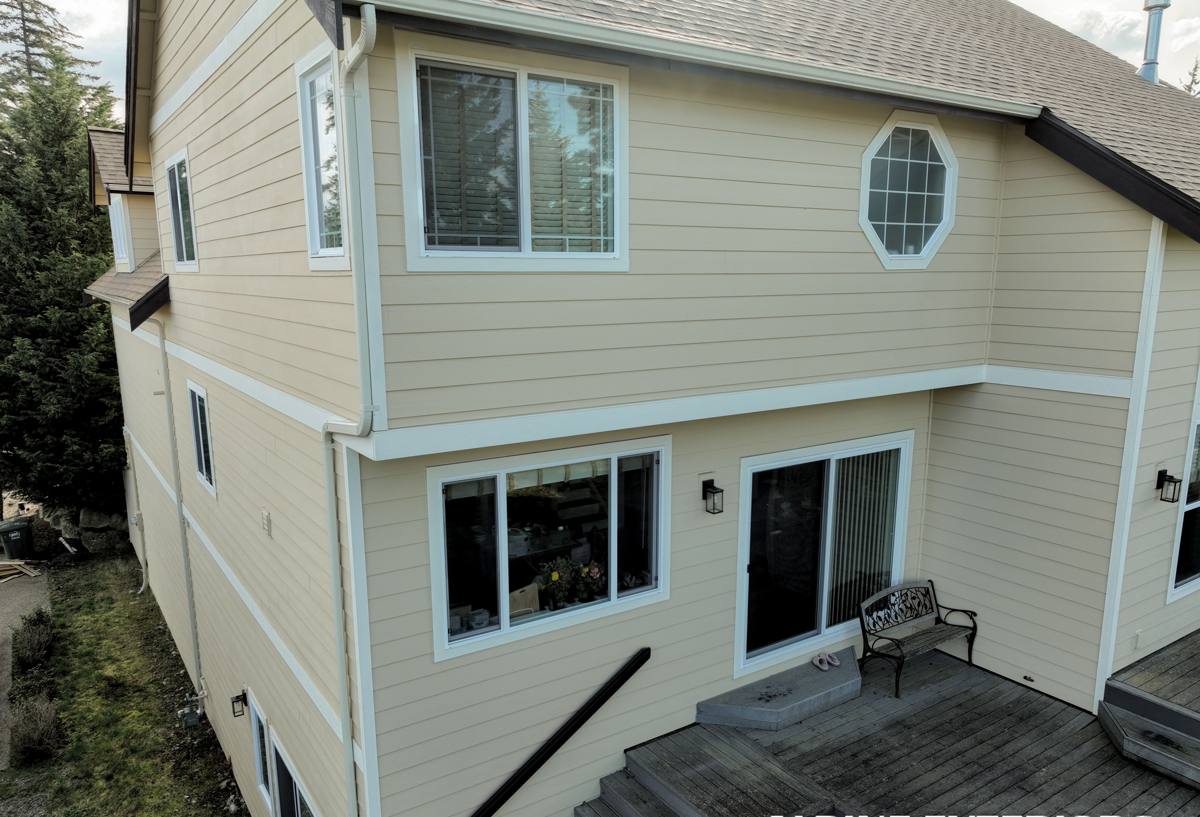
What Avon's Climate Actually Does to Siding
Salt Air and Metal Fasteners
Proximity to Skagit Bay means airborne salt is a real factor, even a few miles inland. Salt-laden moisture accelerates corrosion on exposed nail heads, flashing, and any hardware that isn't rated for coastal exposure. Once fasteners start corroding, they weaken their grip on the siding board, and you get movement, gaps, and eventually water intrusion behind the cladding.
Driving Rain and Wind-Driven Moisture
Rain in this part of Washington doesn't always fall straight down. Wind off the water pushes it sideways into wall assemblies, which puts real pressure on seams, butt joints, and anywhere caulking or flashing has started to fail. A siding system that isn't detailed correctly at those transition points will let water in long before the siding itself looks obviously damaged.
Moss, Algae, and Trapped Moisture
Shaded walls, tree cover, and the region's extended damp season all favor moss and algae growth. Beyond the cosmetic issue, moss holds moisture against the siding surface for extended periods, which is exactly the condition that causes rot in wood-based products and finish breakdown in lower-quality siding materials.
Signs an Avon Home Needs Siding Repair
Most siding failures give warning signs well before they become structural problems. Homeowners in Avon should watch for:
- Soft or spongy spots when you press on the siding, especially near the bottom of walls or under windows
- Visible gaps at seams, corners, or where siding meets trim, window frames, or the foundation
- Persistent moss or algae staining that keeps coming back after cleaning
- Bubbling, peeling, or chalky paint that suggests moisture is trapped underneath
- Rust streaks running down from nail heads or metal flashing
- Warping, cupping, or visible board separation, particularly on walls facing prevailing wind and rain
- Interior signs like musty odors, peeling interior paint, or damp drywall on an exterior wall
Any one of these on its own might be minor. Several together, especially on the same wall, usually mean water has already gotten behind the siding and the repair needs to address more than the visible surface.
What a Correct Siding Repair Actually Involves
A repair that just replaces the damaged board and moves on is a patch, not a fix. Done correctly, siding repair in a climate like this means:
Finding the Real Cause
Damaged siding is usually a symptom. Before we replace anything, we look at what let water or moisture reach that spot — failed caulking, a flashing gap, poor drainage at grade, a clogged gutter dumping water onto the wall, or a chronically damp, shaded area that never fully dries between rain events.
Checking What's Behind the Siding
Once boards are pulled, we check the house wrap or building paper, the sheathing, and the framing underneath for rot or hidden moisture damage. Replacing siding over compromised sheathing just hides a bigger problem — it doesn't solve it.
Correct Flashing and Water Management
Every seam, joint, window head, and penetration needs proper flashing and sealant detail so water sheds outward instead of finding its way behind the cladding. This is the step that gets rushed in a low-cost patch job, and it's usually why the same spot fails again within a year or two.
Matching Material and Finish
Repairs should match the existing siding's profile, exposure, and finish as closely as possible. With factory-finished fiber cement, that also means matching color and texture correctly so the repair doesn't stand out as an obvious patch.
Repair or Replace? What Actually Drives the Decision
Not every damaged section needs a full re-side, and not every repair is worth doing on its own. The right call depends on a few honest factors:
| Factor | Repair Usually Makes Sense | Replacement Usually Makes Sense |
|---|---|---|
| Extent of damage | Isolated to one or two sections or walls | Widespread across multiple walls or the whole house |
| Underlying material | Sound sheathing and framing behind the damage | Rot or moisture damage found behind multiple boards |
| Siding material | Fiber cement or another durable product still in good general condition | Original material is a lower-durability product reaching the end of its life |
| Age of siding | Well within expected service life | Approaching or past the material's realistic lifespan |
| Root cause | A fixable, localized water-entry point | A systemic drainage, ventilation, or flashing problem affecting the whole wall system |
We'll tell you honestly which category your home falls into. A repair that's likely to fail again within a couple of seasons isn't a good use of anyone's money, and we'd rather say that upfront than sell a patch we don't believe in.
Why We Only Repair With James Hardie Fiber Cement
When a repair calls for new siding material — whether it's a few boards or a full section — we use James Hardie fiber cement exclusively. We don't stock or install vinyl, LP SmartSide, cedar, primed spruce, or other fiber cement brands, and that's a deliberate standard, not a limitation of what we can source.
Fiber cement is non-combustible and doesn't feed moisture the way wood-based siding can, which matters directly in a climate with a long wet season and persistent shade-driven moss growth. James Hardie's ColorPlus factory finish is baked on under controlled conditions, which gives a more consistent, longer-lasting color match than field-applied paint — a real advantage when you're trying to blend a repair into existing siding. Hardie also engineers specific product lines (their HZ5 line, for example) for regions with more moisture exposure, which lines up with what Avon and the rest of Skagit County deal with. And the transferable warranty backing the product gives homeowners real recourse if something goes wrong down the line, which matters more with siding than almost any other exterior product because failures are often invisible until they're expensive.
Other siding products have real strengths — vinyl is inexpensive and low-maintenance in mild climates, cedar has a natural look many homeowners love, and engineered wood products have improved over the years. But when we weigh moisture behavior, long-term maintenance, and how a product performs specifically in a wet coastal climate, fiber cement is what we're willing to put our name behind. That's why it's the only material we repair or install with.
Our Siding Repair Process for Avon Homes
- On-site inspection: We look at the visible damage and check surrounding areas — gutters, grade slope, downspout placement, and shaded zones — for contributing causes.
- Diagnosis, not just a quote: We explain what's actually happening to your siding and why, so you understand the recommendation before we talk price.
- Removal and inspection behind the siding: Damaged boards come off, and we check the wrap, sheathing, and framing underneath before anything new goes up.
- Correct water management detailing: Flashing, house wrap integration, and sealant get done to spec, not just cosmetically closed up.
- Matched Hardie material installation: New fiber cement is installed to match existing profile and ColorPlus finish as closely as the product line allows.
- Final walk-through: We show you what was done and what to watch for going forward.
Why a Crew That Already Works Avon Matters
Siding repair isn't just about swapping boards — it's about understanding how a specific area's exposure, drainage, and weather patterns interact with a specific house. A crew that's worked repeatedly in and around Mount Vernon and Avon has already seen how salt air, driving rain, and moss behave on homes with similar orientation, similar tree cover, and similar age. That local pattern recognition shortens the diagnosis step and reduces the chance of missing a contributing cause that isn't obvious from the surface. It also means straightforward scheduling and follow-up — we're not driving in from out of the area for a callback if something needs a second look.
After Your Repair: A Simple Maintenance Checklist
- Rinse siding annually to remove moss, algae, and salt residue buildup, especially on shaded or north-facing walls
- Keep gutters clear so overflow doesn't run down the wall face
- Trim back vegetation and tree limbs that keep siding damp or shaded longer than necessary
- Check caulking at trim, window, and door joints once a year and re-seal if it's cracked or pulling away
- Watch for the same warning signs — soft spots, staining, bubbling paint — even on freshly repaired sections
- Address small issues immediately rather than waiting for the next inspection cycle
If you're seeing early signs of siding damage on an Avon-area home, or you just want an honest read on whether a section needs repair or replacement, we're happy to take a look. Estimates are free, there's no pressure to move forward, and you'll get a straight answer about what your siding actually needs — use the form below to get started.