 Mount Vernon
 Roof Repair Built for Bow's Coastal Climate
Bow sits close enough to Samish Bay and the open water of Skagit County that its roofs live a different life than a roof twenty miles inland. Salt-laden air moves through on the wind, rain comes in sideways more often than straight down, and the low winter sun barely dries out a north-facing slope before the next system rolls in. A roof repair here has to account for all of that, not just patch the spot where water showed up on the ceiling.
We work on homes throughout the Mount Vernon area, and Bow roofs consistently show a specific pattern of wear tied to their exposure. Understanding that pattern is most of the job before a single shingle gets touched.
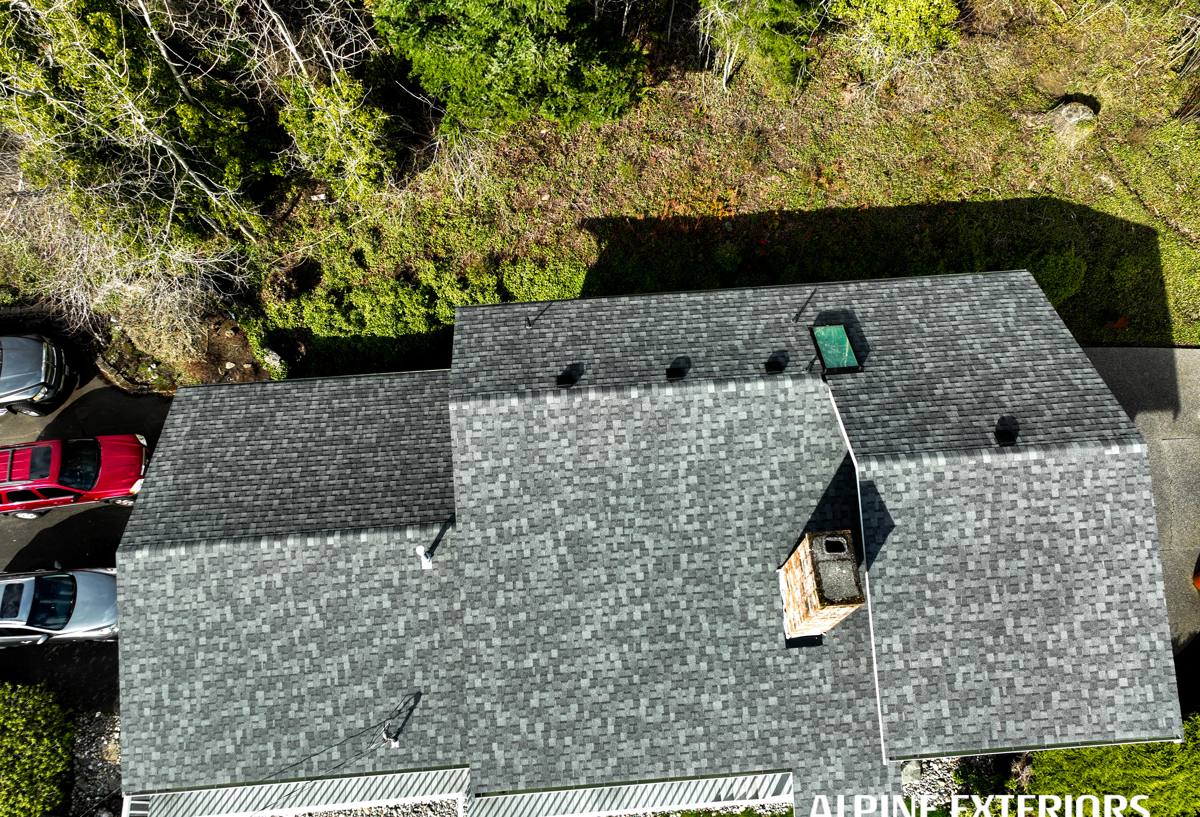
What Bow's Weather Does to a Roof
Salt Air and Metal Fasteners
Airborne salt accelerates corrosion on anything metal on a roof — nail heads, flashing, valley metal, gutter hardware, and the fasteners holding down ridge caps. A fastener that would last decades further inland can start weeping rust streaks or losing holding strength years earlier near the bay. Once a fastener corrodes, the seal around it fails, and that's an entry point for water long before the surrounding shingles look worn.
Driving Rain and Wind-Driven Exposure
Storms coming off the water tend to push rain at an angle instead of straight down. That matters because a roof system relies on overlapping layers shedding water downhill — when rain is driven sideways or even slightly upward under an eave, it can find gaps that would never see moisture in a calmer climate. Flashing laps, exposed nail heads, and low-slope transitions take the brunt of it.
A Long Moss Season
Western Skagit County stays damp and shaded for a good stretch of the year, and Bow's tree cover and marine humidity extend that window further. Moss and algae don't just look bad — moss holds moisture against the roofing material, lifts shingle edges as it grows, and works into nail penetrations. A roof that's carrying a heavy moss mat is usually holding water longer than one that's been kept clear, even if the shingles themselves still have life left.
Common Roof Problems We See in Bow
- Corroded or backed-out fasteners around ridge caps and along exposed edges
- Flashing failures at chimneys, skylights, and roof-to-wall transitions where wind-driven rain gets pushed uphill
- Moss colonies along the north slope and shaded valleys that have lifted shingle tabs
- Granule loss and shingle brittleness from repeated wet-dry cycling
- Gutter and downspout blockages from needle drop and moss debris, backing water up under the eave edge
- Soft or discolored roof decking found only once a repair opens up the area
What a Correct Roof Repair Actually Involves
Not every repair is the same, and the difference between a quick patch and a proper repair shows up within a season or two, especially in this climate. Here's how we draw that line.
| Quick Patch Approach | Proper Repair Approach |
|---|---|
| Seals the visible leak point only | Traces the leak back to its actual source, which is often several feet from where water appeared inside |
| Reuses existing flashing if it looks intact | Inspects flashing for corrosion and hidden gaps, especially at valleys and wall transitions |
| Caulk or sealant over a fastener or seam | Replaces failed fasteners with corrosion-resistant hardware and re-laps the surrounding material correctly |
| Leaves moss and debris in place around the repair | Clears moss and debris so the fix isn't undermined by trapped moisture within a year |
| Doesn't check the decking underneath | Checks for soft or damaged decking before closing the repair back up |
Sealant-over-a-symptom repairs are common because they're fast and cheap in the moment. In a marine climate they tend to fail again within a wet season or two, and by then the underlying leak has usually done more damage than it started with.
Our Roof Repair Process
- Inspection first. We look at the roof from the ground and, where it's safe and useful, up close — checking flashing, fastener condition, moss coverage, granule wear, and the areas most exposed to wind-driven rain.
- Trace the actual leak path. Water doesn't always travel straight down from where it enters to where it shows up inside. We follow the path rather than assuming the ceiling stain marks the source.
- Explain what we find, plainly. You get a straight answer on what's wrong, what's optional, and what shouldn't wait — not a sales pitch dressed up as an inspection.
- Repair with materials suited to salt air exposure. That means corrosion-resistant fasteners and flashing choices that hold up against the marine environment, not just whatever matches the existing roof.
- Clear moss and debris from the work area and, where it's the root cause, recommend a broader cleaning. A repair done next to an active moss mat doesn't hold as long.
- Check the decking anywhere we open the roofing material, so a hidden soft spot doesn't turn into a bigger problem later.
- Verify the fix. We don't consider a leak repair finished until we're confident water has nowhere left to get in at that spot.
Repair or Replace? What Actually Drives That Decision
Homeowners in Bow often ask whether a leak means the whole roof needs to go. Usually it doesn't — but the honest answer depends on a few factors we weigh together rather than any single one.
| Factor | Leans Toward Repair | Leans Toward Replacement |
|---|---|---|
| Age of roofing material | Well within expected lifespan | Near or past the end of its service life |
| Extent of damage | Isolated to one area (flashing, a section of ridge, a valley) | Widespread granule loss, brittleness, or multiple leak points |
| Decking condition | Solid, no soft spots found | Soft or rotted decking discovered under the roofing |
| Moss and moisture history | Manageable with cleaning and minor repair | Chronic moss buildup that's repeatedly undermined the surface |
| Cost over time | Repair cost is a small fraction of replacement | Repeated repairs are adding up to a meaningful share of replacement cost |
Most of the calls we get from Bow homeowners turn out to be legitimate repairs, not full replacements — but we won't tell you that just to make a sale. If a roof is genuinely near the end of its life, patching it again isn't doing you any favors, and we'll say so.
Why a Crew That Already Works Bow Matters
Bow isn't a large service area, and that's actually an advantage when it comes to roof repair. A crew that's already worked roofs in this specific pocket of Skagit County knows what the salt exposure does to fasteners here, which slopes tend to hold moss the longest given the local tree cover and shade patterns, and how wind off the water typically drives rain into flashing details. That's the kind of judgment that only comes from repeated, direct experience with this exact climate — not from a general roofing checklist applied the same way everywhere.
It also means a faster, more accurate estimate. We're not guessing at what marine exposure does to a roof system from a distance; we're describing what we consistently see on homes near this stretch of Skagit County, including the specifics of Bow's weather patterns.
Between-Visit Maintenance That Actually Helps
A roof repair holds longer when it's not fighting neglect in between visits. These are things a homeowner can reasonably keep an eye on:
- Look at the roof from the ground a few times a year for visible moss patches, especially on shaded, north-facing slopes
- Keep gutters and downspouts clear of needles and debris so water isn't backing up under the eave edge
- Trim back tree limbs that shade the roof and keep it damp longer than it needs to be
- Check attic spaces after heavy storms for any signs of moisture, even faint staining
- Don't pressure-wash a roof — it strips granules and can force water under the shingles; leave moss removal to a method appropriate for the roofing material
- Have any new stain, sag, or soft spot looked at promptly rather than waiting for it to spread
Get an Honest Look at Your Roof
If you're dealing with a leak, moss buildup, or just want a straight assessment of where your roof stands, we're glad to take a look. There's no pressure and no sales script — just a clear read on what's actually going on and what it would take to fix it right. Use the form below to request a free estimate.