 Mount Vernon
 Roofing in Conway: A Different Set of Problems Than Town
Conway sits low, close to the water, and out in the open compared to the more sheltered streets of Mount Vernon proper. That location is part of what makes it a nice place to live, but it also means roofs here take a beating that a roof twenty minutes inland doesn't see in the same way. Salt-tinged air off the nearby saltwater and tidal flats, wind-driven rain with nothing much to break it up, and a moss season that runs longer than most homeowners expect all combine to shorten the life of a roof that wasn't installed with those specific conditions in mind.
We're not going to pretend every roof in Skagit County needs the same treatment. A roof in a dry, shaded, in-town lot can get away with shortcuts that will come back to bite a roof out in Conway within a few years. This page is about what a new roof installation should actually involve when the address is Conway, not a generic rundown of roofing basics.
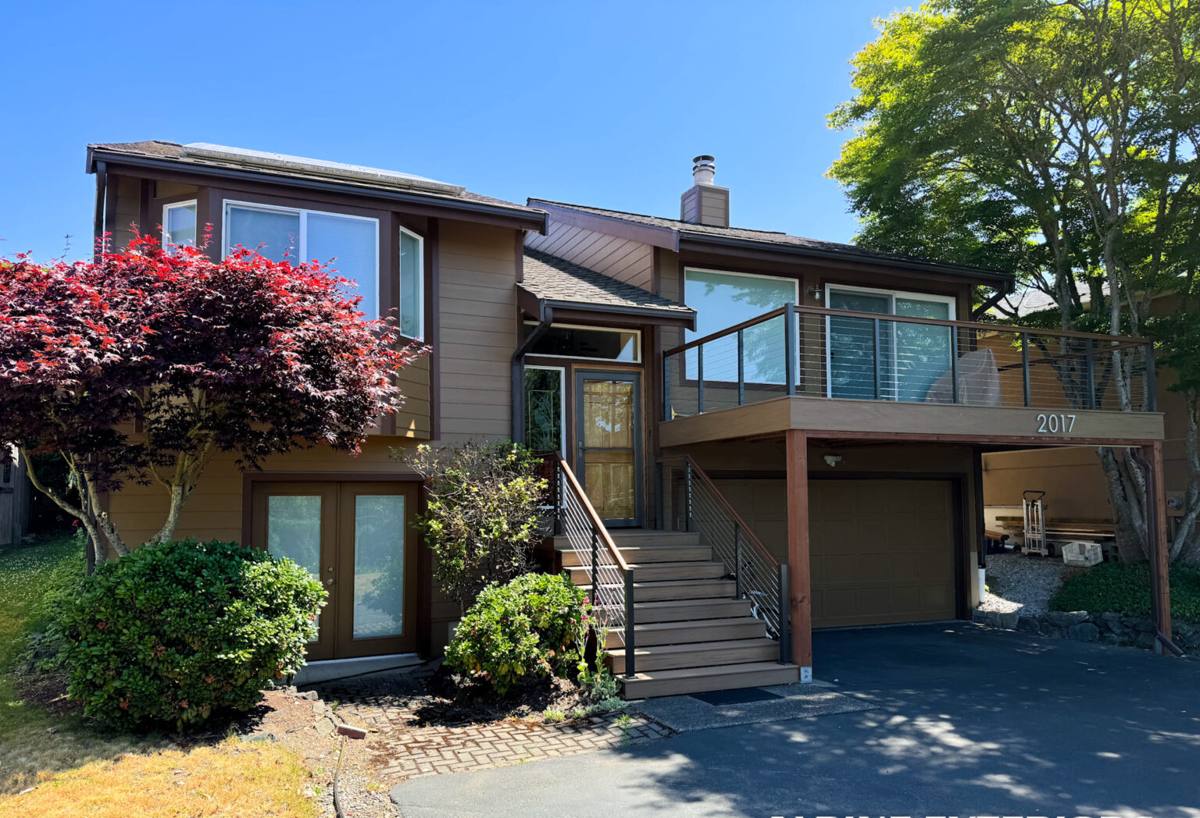
What Conway's Climate Actually Does to a Roof
Salt Air and Corrosion
Homes closer to the water pick up airborne salt that settles on roofing metal — flashing, fasteners, vents, and any exposed hardware. Over years, that salt exposure accelerates corrosion on lower-grade or improperly coated metal. It's not dramatic and it's not fast, but it's steady, and it's the kind of thing that shows up as rust streaks, failing fastener heads, and pinhole leaks at flashing seams well before the shingles themselves are worn out.
Driving Rain
Conway's open exposure means rain doesn't always fall straight down — wind pushes it sideways, up under eaves, and into any gap a roofer left for it. A roof that would perform fine in a calmer, more sheltered setting can leak here simply because the underlayment, flashing laps, or fastening pattern weren't built to handle wind-driven water working its way uphill or sideways instead of just running off.
A Long Moss Season
Damp air, shaded lots, and long stretches of overcast weather all favor moss growth on roofing. Moss isn't just cosmetic — it holds moisture against the roofing material, lifts shingle edges as it grows, and traps organic debris that keeps the surface wet long after the rest of the roof has dried out. In a climate like this, moss isn't a maybe; it's something every new roof should be designed to resist and every homeowner should plan to manage.
What a Correct New Roof Installation Involves Here
A new roof is more than shingles nailed to plywood. In a climate like Conway's, the details underneath and around the visible surface matter more than the surface itself. Here's what we consider non-negotiable on a new roof install in this area:
Tear-Off and Deck Inspection
We remove the old roofing down to the deck rather than layering over it. That's the only way to actually see the condition of the sheathing, catch soft or water-damaged spots, and confirm the deck is sound enough to fasten a new roof to properly. In a damp climate, hidden deck rot under old roofing is common enough that skipping this step is a false economy.
Underlayment Built for Wind-Driven Rain
We use synthetic underlayment as the primary water barrier, with self-adhering ice-and-water membrane at the eaves, valleys, and any low-slope transitions — the spots where wind-driven rain is most likely to find its way underneath the roofing material. This is standard practice for us on every install in this area, not an upgrade we hold back unless asked.
Flashing That Won't Corrode Prematurely
Given the salt exposure, we pay close attention to flashing material and fastener quality around chimneys, skylights, plumbing vents, and roof-to-wall transitions. Cutting corners here is exactly where salt-air corrosion shows up first, and it's one of the more common causes of a "new" roof developing a leak within a few years.
Fastening Pattern for Wind Exposure
Nail placement and pattern matter more on an open, wind-exposed lot than they do somewhere sheltered. We follow manufacturer specifications for wind-rated installation rather than a generic nailing pattern, because under-fastened shingles are one of the most common causes of blow-off damage in this kind of setting.
Ventilation Sized to the Home
Balanced intake and exhaust ventilation keeps the attic dry and temperature-regulated, which matters for shingle life, moisture control, and moss resistance alike. A roof that traps humid air underneath it will show problems — from the underside out — faster than one that breathes properly, regardless of how good the shingles on top are.
Material Choices and Trade-Offs for This Climate
There's no single "best" roofing material for every home — it depends on the roof's pitch, sun exposure, budget, and how much moss and moisture management the homeowner wants to take on. Here's an honest comparison of the main options we install:
| Material | How It Handles This Climate | Trade-Offs |
|---|---|---|
| Architectural asphalt shingles | Good performance when paired with proper underlayment and algae-resistant granules; the most common choice locally | Still needs periodic moss treatment on shaded roofs; lifespan shortened by moss neglect |
| Standing seam metal | Sheds moss and moisture well due to smooth, non-porous surface; strong wind performance | Higher upfront cost; requires marine-grade or properly coated fasteners near saltwater exposure |
| Impact-rated / heavier-weight shingles | Better resistance to wind and debris on exposed lots | Higher material cost; benefit is more about durability than moss or moisture resistance |
We'll walk through these trade-offs honestly during a quote rather than steering every homeowner toward the same product. What's right for a shaded, tree-lined lot in Conway isn't necessarily right for a wide-open one nearby.
Moss Prevention Built Into the Install
Given how much moss factors into roof life here, we build moss resistance into the installation itself rather than treating it as an afterthought:
- Algae- and moss-resistant shingle products where the budget and roof design allow it
- Zinc or copper control strips near the ridge on roofs with heavy shade or moss history, which release trace metal ions that inhibit regrowth as rain washes over them
- Attention to roof design details that create less standing debris and slower drying — valleys, low-slope sections, and areas under overhanging trees
- Honest guidance on trimming back overhanging branches where that's the real long-term fix, not just a roofing product
Our Process, Start to Finish
Homeowners generally want to know two things: what's going to happen, and when. Here's the straightforward version:
- On-site inspection. We look at the existing roof, deck condition where accessible, ventilation setup, and any specific problem spots — moss buildup, past leaks, flashing wear.
- Written estimate. A clear breakdown of material options, scope of work, and price — no vague allowances or surprise add-ons buried in fine print.
- Scheduling around weather. We plan installs with realistic weather windows in mind rather than rushing a tear-off into a forecast that doesn't cooperate — an open roof deck and incoming rain don't mix.
- Tear-off and deck inspection. Old roofing comes off, the deck gets inspected, and any needed repairs are addressed before anything new goes down.
- Installation. Underlayment, flashing, fastening, and final roofing material installed to manufacturer and code specifications.
- Cleanup and walk-through. Site cleaned of debris and nails, and we walk the finished roof with the homeowner before calling the job done.
Why a Crew That Already Works Conway Matters
A roofing crew that mostly works drier, more sheltered parts of Skagit County can still do competent work — but if they don't regularly install roofs out where salt air and wind-driven rain are a daily factor, some of the details that matter most here can get treated as optional upgrades instead of standard practice. Marine-grade fasteners, aggressive flashing laps, and moss-resistant products aren't things we add on request for Conway jobs — they're built into how we approach every roof in this part of the county, because we've seen what happens to roofs that skip them.
Working regularly in this area also means we're not guessing at wind exposure, drainage patterns, or how a particular lot handles moss and moisture — we've seen it firsthand on other roofs nearby.
Signs a Roof in This Area Needs Replacing, Not Just Repairing
Not every roof problem means a full new install. But in a climate this hard on roofing, some signs are worth taking seriously rather than patching repeatedly:
- Granule loss heavy enough to see bare fiberglass mat on shingles
- Recurring leaks in more than one location, especially after wind-driven rain events
- Soft or spongy spots in the roof deck felt from the attic side
- Moss growth that returns quickly after cleaning, especially with visible shingle lifting underneath it
- Rusted or failing flashing and fasteners, particularly near chimneys and vents
- A roof approaching or past its expected material lifespan combined with any of the above
Maintenance After Installation
Even a well-installed roof in this climate benefits from some ongoing attention. Keeping gutters clear so water isn't backing up under eave edges, having moss growth cleaned off before it establishes heavily, and having flashing points checked every few years go a long way toward getting the full expected life out of the investment. We're happy to point out what to watch for on a homeowner's specific roof rather than handing over a generic maintenance flyer.
Get a Straightforward Estimate
If you're weighing a new roof for a home in Conway, we're glad to come take a look and give you a clear, honest estimate — no pressure, no inflated scare tactics about your existing roof. The form below gets you started, and there's no cost or obligation to have us out.