 Mount Vernon
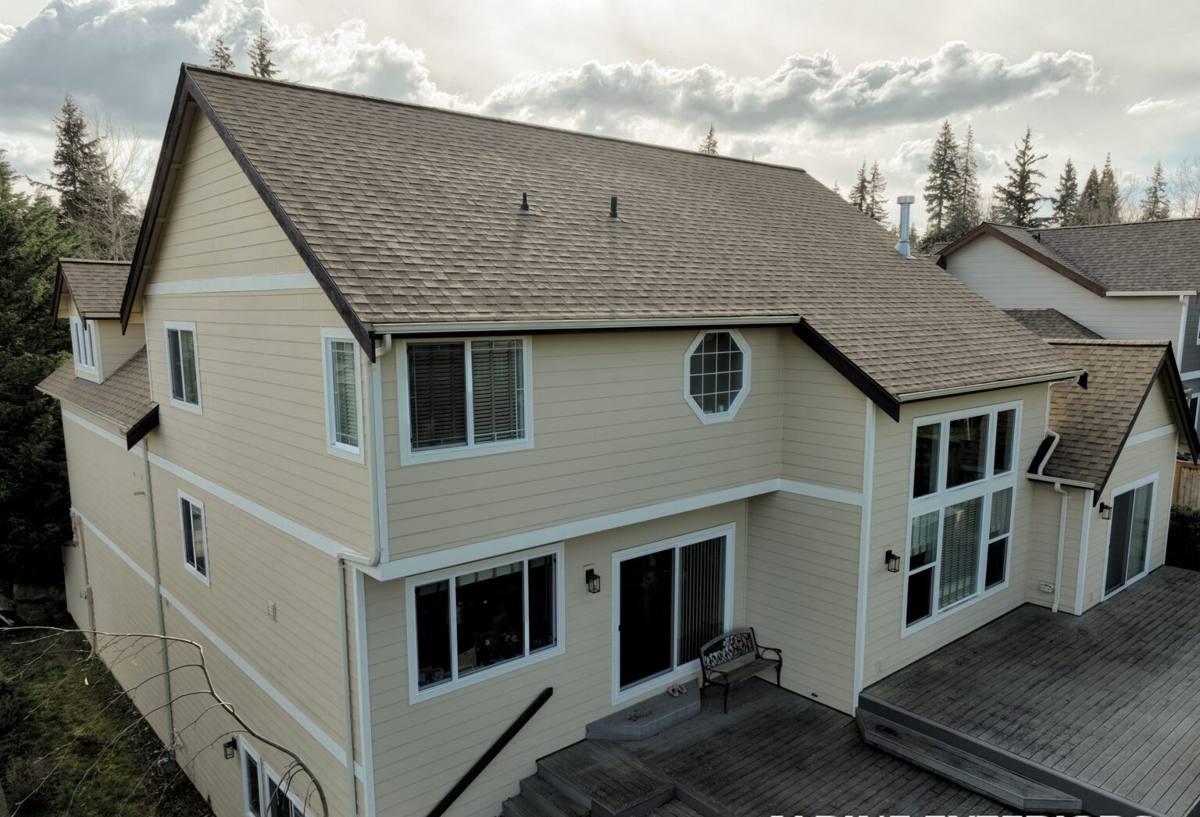
 New Roof Installation for Bow Homes
Bow sits close enough to Samish Bay and the surrounding saltwater shoreline that its roofs take on a different kind of punishment than homes further inland in Skagit County. Salt-laden air corrodes exposed metal faster, wind-driven rain off the water finds every weak lap and fastener, and the shaded, tree-lined lots common in the area keep roofs damp long after a storm has passed. A new roof installation out here needs to be planned around those specifics, not just installed from a generic spec sheet.
We install new roofs for homeowners throughout Bow and the surrounding Mount Vernon area, and we treat this as a coastal Skagit County job every time — different flashing choices, different fastener hardware, and a different eye toward long-term moss and moisture control than a roof going in on a dry inland lot.
What Bow's Climate Actually Demands From a Roof
Salt Air and Corrosion
Proximity to the bay means airborne salt settles on every exposed surface — nails, flashing, gutter hardware, vent caps. Standard electro-galvanized fasteners and trim can start showing rust streaks and pitting years before they would inland. On a new install, this is the single easiest thing to get wrong, because the failure doesn't show up for a few years, by which point it's a warranty argument instead of a five-minute fix during installation.
Driving Rain
Storms coming off the water tend to push rain sideways, not straight down. That matters for a new roof because it means water finds its way under shingles or panels through laps and valleys that would stay dry in a calmer, more sheltered rain event. Underlayment coverage, valley detailing, and how high step flashing runs up a sidewall all matter more here than they would on a roof shielded by other buildings or terrain.
A Long Moss Season
Between the marine moisture, shade from mature trees on many Bow lots, and Western Washington's long wet season, moss has a lot of time to establish itself on a roof. Moss holds water against roofing material, works into laps and granule surfaces, and — left long enough — can lift shingle edges and shorten the life of the roof underneath it. A new roof is the best time to build in the details (ventilation, metal strips at ridges, material choice) that slow moss down rather than fight it after the fact.
What a Correct New Roof Installation Involves
Tear-Off and Deck Inspection
We remove the old roofing down to the deck rather than layering over it. That's the only way to actually see what's underneath — soft spots from long-term moisture, delaminated sheathing, or rot around old flashing penetrations. In a damp climate like this one, hidden deck damage is common enough that skipping this step means installing a new roof over a problem that's still there.
Underlayment
Given the rain pattern here, we use synthetic underlayment with full coverage and pay particular attention to overlap direction and fastening pattern, plus self-adhered membrane in valleys, around penetrations, and at eaves where ice and wind-driven rain are most likely to push water backward under the first course.
Flashing and Fasteners
This is where salt air makes the biggest difference in material selection. We use corrosion-resistant flashing and fastener hardware rated for coastal exposure rather than standard-grade parts, particularly at chimneys, skylights, sidewalls, and any metal-to-metal contact point where galvanic corrosion can start.
Ventilation
Proper intake and exhaust ventilation keeps the underside of the roof deck dry and reduces the moisture load that feeds moss and mildew from below. On a new install this is far easier to get right than retrofitting it later, since it's built into the ridge and soffit work from the start.
Material Selection
We'll walk through options honestly based on your home, budget, and how much moss and moisture exposure your specific lot gets — a heavily shaded, tree-covered property in Bow has different needs than an open, sunnier lot a mile away.
Roofing Material Comparison for Coastal Skagit County Homes
| Material | Moss Resistance | Salt Air Durability | Typical Lifespan | Notes |
|---|---|---|---|---|
| Architectural Asphalt Shingle | Moderate (better with algae-resistant granules) | Good with proper fasteners | 25-30 years | Most common choice; cost-effective and widely serviceable |
| Metal (standing seam) | Good — sheds moisture fast, little for moss to grip | Requires coastal-rated coatings and fasteners | 40-50+ years | Higher upfront cost, low long-term maintenance |
| Composite/Synthetic Shingle | Good | Good | 30-50 years | Impact-resistant, works well for wooded lots |
| Wood Shake | Poor without diligent upkeep | Fair | 20-25 years (with maintenance) | Traditional look; needs the most moisture management |
None of these are wrong choices — the right one depends on how much upkeep you want to do, your budget, and how shaded and moss-prone your particular lot is.
Our Installation Process
- On-site assessment — we look at your current roof, deck condition, ventilation, and how exposed your lot is to wind and salt air off the bay.
- Written estimate — clear scope, material options, and pricing before any work starts.
- Tear-off and deck repair — old roofing removed, deck inspected and repaired as needed.
- Underlayment and flashing — installed with coastal-grade materials and attention to valleys, eaves, and penetrations.
- Roofing material installation — installed to manufacturer spec plus the extra detailing this climate calls for.
- Ventilation check — intake and exhaust confirmed balanced before we call the job done.
- Final walkthrough — we go over the finished roof and warranty paperwork with you directly.
Why It Matters to Hire a Crew That Already Works Bow
Roofing crews that mostly work inland, drier parts of Skagit County or the broader region don't always default to coastal-grade flashing hardware or plan for wind-driven rain angles, because most of their jobs don't need it. A crew that regularly installs roofs in and around Bow already knows which details to upgrade by default — it's not an upsell, it's just what holds up out here.
We also know this area well enough to talk honestly about what your specific lot needs: whether your tree cover means you should budget for moss prevention as part of the job, whether your exposure to the water justifies metal flashing over standard-grade, and what kind of maintenance schedule actually makes sense for your roof once it's installed.
Signs You Need a New Roof, Not a Repair
- Shingles that are curling, cracking, or missing granules across large sections of the roof, not just one spot
- Soft or spongy decking felt from the attic side, especially near valleys or penetrations
- Daylight visible through the roof deck in the attic
- Heavy, established moss growth that's lifted shingle edges rather than just sitting on the surface
- Repeated leaks in different locations after previous repairs
- A roof approaching or past the end of its material's expected lifespan
- Visible rust or corrosion on flashing, vent caps, or fasteners
If you're only seeing one or two of these in a limited area, a repair may still make sense — we'll tell you honestly if that's the case rather than push a full replacement you don't need yet.
Cost Factors for a New Roof in Bow
| Factor | Why It Affects Price |
|---|---|
| Roof size and pitch | More surface area and steeper pitches take more material and labor time |
| Material choice | Asphalt, composite, and metal carry different material and installation costs |
| Deck condition | Rotted or soft sheathing found during tear-off adds repair cost |
| Number of penetrations | Chimneys, skylights, and vents each need individual flashing work |
| Access and layout | Steep lots, mature trees, or limited driveway access can affect labor time |
| Tear-off layers | Removing multiple old roofing layers takes more time than a single layer |
We won't quote a price without seeing the roof — anyone who does is guessing. What we can tell you upfront is that the estimate will be broken down clearly so you know what you're paying for and why.
Maintenance After Installation
A new roof installed correctly for this climate still benefits from some basic upkeep: keeping gutters clear so water doesn't back up under the eaves, trimming back tree branches that keep sections of the roof shaded and damp, and having moss growth addressed before it establishes rather than after. We're happy to talk through a simple maintenance schedule as part of your installation, so the roof performs the way it's built to for its full lifespan.
If you're weighing a new roof for your Bow home, we're glad to come take a look and give you an honest, no-pressure estimate — no obligation, just a clear picture of what your roof needs and what it would cost to do right. Use the form below to get started.