 Mount Vernon
 Building Decks for Anacortes Homes, Not Just Decks in General
Anacortes sits close enough to the water that a deck built the same way you'd build one forty miles inland is going to have problems in a few years — not decades, a few years. Salt-laden air off Fidalgo Bay and the surrounding waterways speeds up corrosion on fasteners and hardware. Driving rain off the water finds every gap in flashing and end-grain. And the long, wet moss season here means any deck surface that doesn't shed water and get sunlight will grow a slick green film that's more than cosmetic — it's a slip hazard and it holds moisture against the wood or composite underneath.
We're a Mount Vernon-based crew and Anacortes is regular territory for us, not a once-a-year drive-out job. That matters for a few practical reasons we'll get into below, but the short version is: we've seen how decks in this specific area actually hold up over time, and we build accordingly from the first plan sketch.
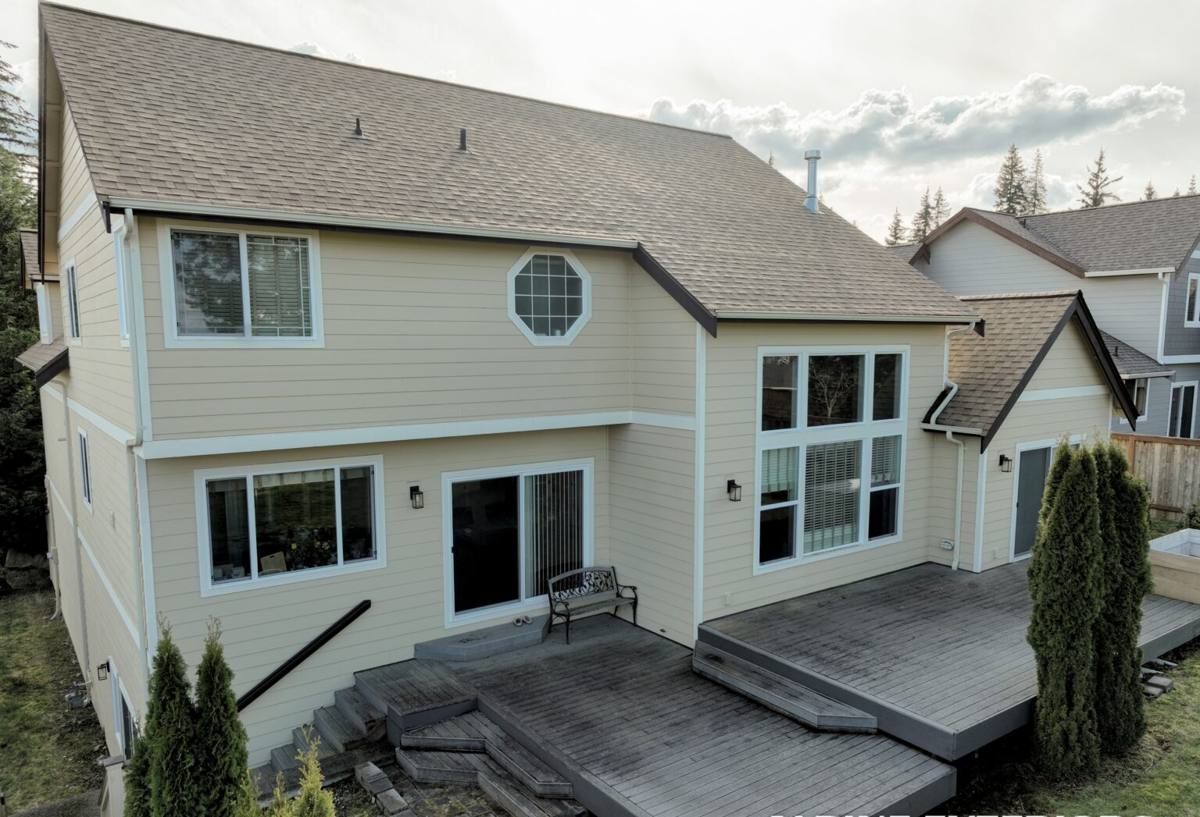
What Anacortes' Climate Actually Does to a Deck
Salt Air and Corrosion
Coastal and near-coastal air in Skagit County carries salt content that ordinary carbon-steel fasteners and cheap hardware don't tolerate well. You'll see rust bleed streaks down deck boards within a year or two on jobs where standard hardware was used. It's not just ugly — corroding fasteners lose holding strength, and a ledger board or joist hanger that's rusting is a structural concern, not a cosmetic one.
Driving Rain
Storms coming off the water tend to drive rain sideways, not straight down. That means ledger connections, stair stringers, and any point where the deck meets the house siding take on more water exposure than a standard rain chart would suggest. Flashing details that would be adequate in a drier inland town aren't always enough here.
Moss and Shade
Many Anacortes lots have mature evergreens and marine-layer cloud cover that keeps decks damp longer through fall, winter, and spring. Moss and algae take hold fast on any surface that stays wet and shaded. Beyond looking bad, a mossy deck surface is genuinely slippery, and trapped moisture under moss accelerates rot in wood decking and can void warranties on some composite products if left unmanaged.
What a Correctly Built Deck Looks Like Out Here
- Fasteners and hardware: stainless steel or high-grade coated fasteners rated for coastal/marine exposure, not standard galvanized hardware store hardware
- Ledger flashing: a proper flashing assembly at the house connection, sealed and layered so wind-driven rain can't work its way behind the board
- Joist hangers and structural connectors: corrosion-resistant rated hangers, installed with matching fasteners — mixing metals here causes galvanic corrosion
- Airflow underneath: proper joist spacing and ground clearance so the underside of the deck can dry out between rain events instead of staying damp
- Surface material chosen for shade and moisture: some decking handles a shaded, damp Anacortes lot better than others — we'll walk you through the real trade-offs, not just what's cheapest to install
- Footings sized for our soil and frost conditions: proper depth and bearing so the structure doesn't shift over wet seasons
Decking Material Options for a Coastal-Influenced Lot
There's no single "best" decking material — there's a best material for your specific lot, sun exposure, and how much upkeep you want to do. Here's how the common options actually compare for an Anacortes-area install.
| Material | How It Handles Shade & Moisture | Maintenance | Typical Lifespan Here |
|---|---|---|---|
| Pressure-treated wood | Needs regular sealing to resist moss and moisture intrusion; shaded lots need more frequent attention | Annual cleaning/sealing recommended | 15-20 years with upkeep |
| Cedar | Naturally more rot- and insect-resistant, but still needs sealing in damp, shaded spots | Periodic staining/sealing | 15-20 years with upkeep |
| Composite decking | Doesn't absorb moisture like wood, but can still grow surface moss/algae in deep shade — needs occasional cleaning | Low — periodic washing, no sealing | 25-30+ years, manufacturer-dependent |
| PVC/capped polymer | Fully moisture-resistant surface; best option for consistently shaded, damp areas of a lot | Lowest — occasional washing | 25-30+ years, manufacturer-dependent |
For lots with heavy tree cover or a north-facing deck that doesn't get much sun to dry itself out, we generally steer clients toward composite or capped polymer decking, since it doesn't wick moisture into the board the way wood does. For sunnier, more exposed lots, a well-maintained wood deck is a perfectly good choice and often the more budget-friendly one. We'll give you an honest read on your specific lot rather than pushing one product line.
Our Process for an Anacortes Deck Project
1. On-Site Walkthrough
We look at sun exposure, tree cover, drainage, existing structure (if it's a rebuild), and how the deck connects to your house. This is where a lot of the material and design decisions actually get made — not in a showroom.
2. Design and Material Discussion
We talk through decking material, railing style, and layout based on how you'll actually use the space, plus the realistic maintenance you're willing to take on. We'll flag anything about the lot — shade, water exposure, existing rot — that should influence the plan.
3. Permitting
Most new decks and many rebuilds in Skagit County require a permit, particularly if the deck is attached to the house or elevated. We handle this as part of the job so you're not chasing paperwork.
4. Structural Work First
Footings, framing, ledger flashing, and joist hangers go in correctly before a single deck board is placed. This is the part of the job that determines whether the deck is still solid in fifteen years, even though it's the part you'll never see again once it's finished.
5. Decking, Railing, and Finish Work
Surface material and railing go in per the plan, with attention to fastener spacing and drainage gaps so water sheds properly instead of pooling.
6. Walkthrough and Care Guidance
We go over what maintenance (if any) your specific material needs and what to watch for given your lot's sun and shade pattern.
New Build vs. Rebuild vs. Repair
Not every Anacortes deck project is a full new build. A lot of what we do out here falls into one of these categories:
- New deck construction: full design and build from footings up
- Deck replacement: keeping a sound structure (if it qualifies) and replacing failing decking, or a full tear-out and rebuild if the frame has moisture damage
- Repair and hardware upgrade: addressing rusting fasteners, soft boards, or a failing ledger connection on an otherwise decent deck
- Railing and stair updates: bringing older railings up to current code, which matters at resale and for insurance
A rebuild is often the more honest answer once a deck's framing has been exposed to years of damp, shaded conditions — patching decking onto a compromised frame just moves the problem down the road. We'll tell you straight which category your project actually falls into.
Why a Crew That Already Works Anacortes Matters
Anacortes isn't identical to Mount Vernon or the rest of Skagit County — the closer proximity to the water, the tree cover on many lots, and the local permitting office's specific requirements are all things you learn by doing the work here repeatedly, not by reading a spec sheet. A crew that regularly works this area already knows which fastener grade holds up, which decking handles the shade patterns on a typical wooded Anacortes lot, and what the permitting process actually requires locally. That translates into fewer surprises and a deck that's built for the conditions it will actually sit in, not generic conditions.
Being local also means we're not disappearing after the job wraps. If a question comes up two years down the line — a squeak, a board that needs attention, a railing that's loosened — we're a short drive away, not a company you have to track down.
What to Ask Before Hiring Anyone for a Coastal Deck Project
- What fastener and hardware grade do you use, and is it rated for coastal exposure?
- How do you flash the ledger board connection to the house?
- Are you pulling the required permit, and who's responsible for that?
- What's your recommendation for my specific lot's sun/shade pattern, and why?
- What warranty applies to the materials, and what applies to your labor?
Any contractor who can't give you clear, specific answers to these — not a canned pitch — is worth a second look before you sign anything.
If you're planning a new deck, a rebuild, or just want an honest opinion on whether your current deck needs repair or replacement, we're glad to come take a look. Use the form below to request a free, no-pressure estimate for your Anacortes property.