 Mount Vernon
 Building New in Blanchard? Get the Windows Right the First Time
New construction is the one chance you get to install windows correctly before drywall, trim, and siding cover up the evidence. In Blanchard, tucked between Mount Vernon and the Chuckanut foothills along Samish Bay, that first chance matters more than it does in a lot of places. This stretch of Skagit County sits close enough to saltwater to catch salty, moisture-laden air off the bay, gets pounded by wind-driven rain rolling in off the water, and stays shaded and damp long enough each year to grow moss on anything that holds moisture. Windows installed sloppy here don't fail in year one. They fail quietly, behind the wall, and you find out in year eight when the trim is soft and the wall cavity is dark with rot.
We install new-construction windows on homes throughout the Mount Vernon area, including Blanchard, and we treat every opening the same way: as a place water is trying to get in, whether it's raining sideways off the bay or just sitting in shade long enough to work its way through a gap.
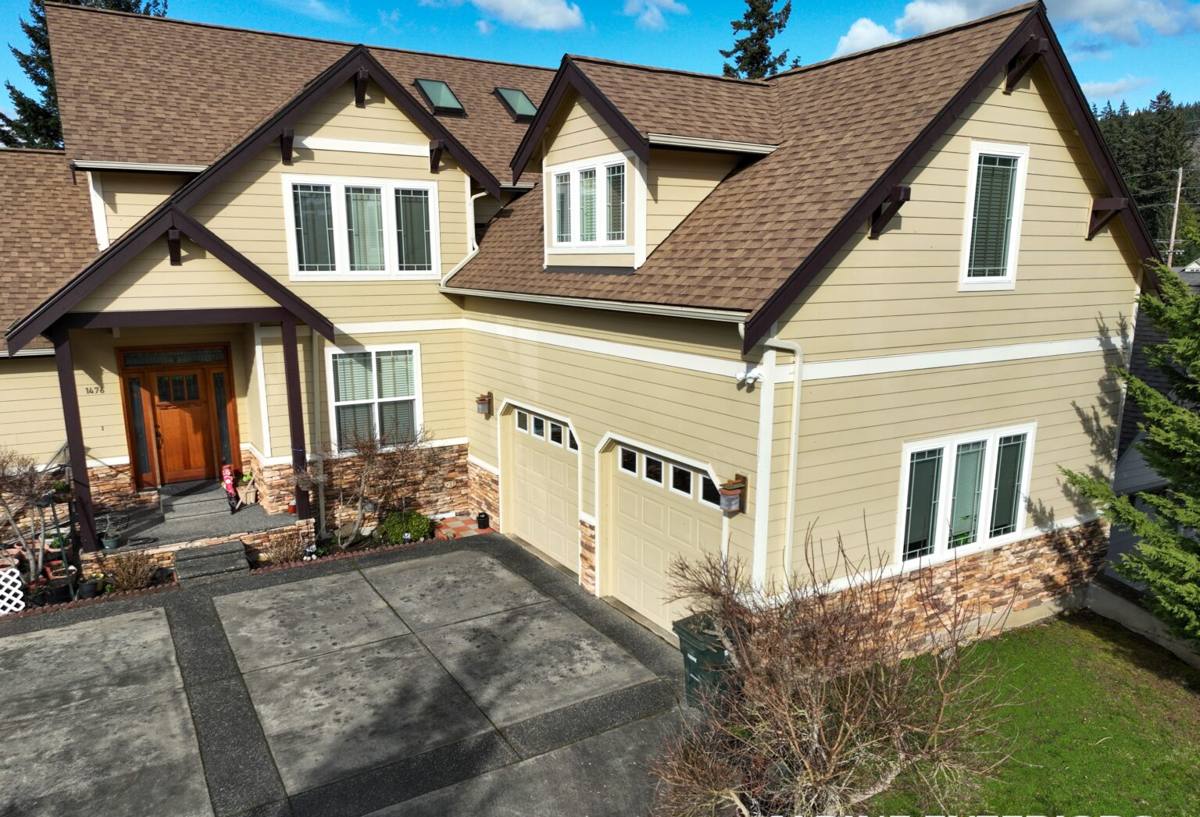
What Blanchard's Climate Actually Does to a Window Opening
Salt Air and Coastal Exposure
Homes closer to Samish Bay and the water get a low-grade dose of salt air more or less constantly. It doesn't corrode vinyl or fiberglass frames the way it does raw metal, but it does accelerate wear on lesser hardware, cheap fasteners, and unprotected metal flashing. Over years, that shows up as pitted or seized hardware and flashing that corrodes faster than it should. It's a reason to spec corrosion-resistant fasteners and flashing components on a coastal-adjacent build, not a reason to panic — just a detail that gets missed on jobs done by crews who don't build out here regularly.
Driving Rain
Blanchard catches wind off the bay that pushes rain sideways into wall assemblies, not just straight down. A window that's watertight in a calm rain can still leak under wind-driven rain if the flashing and water-resistive barrier aren't lapped correctly. This is the single biggest cause of new-construction window leaks we get called out to fix — not a bad window, but a window installed like it only ever rains straight down.
Moss Season
Shaded lots and the long stretch of wet, mild weather from fall through spring mean moss and algae get a foothold on any horizontal or near-horizontal surface that stays damp — including window sills, brickmould, and the top of trim boards. Moss itself doesn't destroy a window, but it holds moisture against wood trim and caulk joints far longer than they're designed to handle, which shortens the life of both.
What a Correct New-Construction Window Install Involves
Flashing and Water-Resistive Barrier Sequencing
On new construction, the window opening is built in a specific order for a reason: sill pan flashing first, then the window, then jamb flashing, then head flashing, all integrated with the house wrap or water-resistive barrier in a shingle-lap sequence — each layer overlapping the one below it so water is always directed outward and down, never trapped behind a layer above. Skip a step or do it out of order and you've built a pocket that holds water instead of shedding it.
Nailing Fin vs. Block Frame Attachment
Most new-construction vinyl and fiberglass windows use a nailing fin that gets integrated directly into the water-resistive barrier system. Some wood and clad-wood units use a block-frame approach set into the rough opening with different flashing details. Both work when installed to spec — the failures we see come from crews using one flashing method on a window designed for the other, or skipping sealant at fin corners where most leaks actually start.
Shimming and Squaring
A window that's out of square binds, doesn't seal against weatherstripping evenly, and stresses the frame over time. Correct shimming at the right points (not just the corners) keeps the sash operating smoothly and the seal consistent for the life of the window.
Choosing the Right Window for a Blanchard Build
There's no single "best" window for every new build — the right choice depends on budget, how exposed the site is, and how much upkeep you want to sign up for. Here's how the common options stack up for a coastal-adjacent, wet-climate build like this one:
| Frame Material | Upfront Cost | Maintenance | Moisture / Salt-Air Behavior |
|---|---|---|---|
| Vinyl | Lowest | Minimal — no painting, no sealing | Handles moisture well; no corrosion risk from salt air |
| Fiberglass | Mid to high | Low — very stable, rarely needs attention | Excellent; dimensionally stable in temperature and moisture swings |
| Wood-clad (aluminum or vinyl exterior) | Highest | Moderate to high — interior wood needs periodic finishing | Good if installed with correct flashing, but interior wood is vulnerable if a seal ever fails |
| Aluminum | Low to mid | Low | Conducts cold and can condense in our damp winters; less common choice here |
For most new builds in this area, we steer homeowners toward vinyl or fiberglass for the balance of upfront cost and long-term maintenance. Wood-clad units look great and perform well, but they add a maintenance obligation that's worth going in with eyes open about, especially on a home that's going to sit in shade and damp air for months at a stretch.
Our Process for New-Construction Window Installation
- Plan review — we check rough opening sizes, window schedule, and flashing details against the actual framing before anything gets ordered.
- Sill pan flashing — installed and sloped to drain outward, before the window ever goes in.
- Window set and shim — leveled, squared, and shimmed at load points, not just the corners.
- Fin or frame integration with the WRB — flashing tape and house wrap lapped in the correct shingle order at jambs and head.
- Sealant at critical points — corners and fin penetrations get sealed per the manufacturer's installation instructions, not a generic bead all the way around.
- Interior air seal — low-expansion foam or backer rod and sealant around the interior perimeter for draft and energy performance.
- Final check — operation, square, and weatherstripping contact confirmed before trim goes on.
Mistakes That Cost More to Fix Later Than to Prevent Now
Most of the new-construction window callbacks we see trace back to a short list of preventable issues:
- Skipping or shortcutting sill pan flashing, so any water that gets past the window sits directly on the framing
- Flashing tape applied out of shingle-lap order, creating a spot that funnels water inward instead of out
- Sealant used as a substitute for correct flashing instead of a backup to it
- Windows set out of square, leading to binding, uneven wear, and inconsistent seals within a few years
- Trim installed tight against the sill with no drainage path, trapping the moisture that moss and algae thrive on
- Fasteners and flashing components not rated for coastal exposure, which corrode faster this close to the bay
Why Hire a Crew That Already Builds in Blanchard
New-construction window installation isn't complicated in theory — it's a sequence, and the sequence works when it's followed. Where it goes wrong is when a crew installs to a generic standard instead of the conditions actually on site. A crew that regularly works Blanchard and the greater Mount Vernon area already knows which lots sit in enough shade to hold moisture longer, which exposures catch the worst of the wind off the bay, and which flashing and fastener details are worth the extra step given how long this region stays wet. That's not a marketing point — it's the difference between an install that's still tight in fifteen years and one that needs trim and flashing repairs in year six.
Cost Factors Worth Understanding
New-construction window pricing depends on more than the sticker price of the units themselves. The factors that actually move the number on a Blanchard build are the frame material you choose, the number and size of openings, whether any units are specialty shapes or oversized, and how exposed the site is to wind and rain (which affects the flashing detail and labor time, not just the window). Getting quotes that separate materials from installation labor makes it much easier to see where your money is actually going and to compare bids on an apples-to-apples basis.
If you're planning a new build in Blanchard and want windows installed to hold up against what this climate actually throws at them, we're happy to walk the plans with you and put together a straightforward, no-pressure estimate — just fill out the form below.