 Mount Vernon
 Metal Roofing Built for Alger's Weather, Not Just Any Weather
Alger sits close enough to Samish Bay and Bellingham Bay that homes here deal with a version of coastal weather that a lot of roofing crews simply aren't set up for. Salt-laden air moves inland on a regular basis, driving rain comes in sideways off the water during winter storms, and the tree cover that makes this part of Skagit County beautiful also means moss has months on end to take hold on anything that stays damp and shaded. A metal roof handles all three of these conditions well when it's specified and installed correctly. It handles them poorly when it isn't. The difference usually comes down to details most homeowners never see: what fasteners were used, how the panels were flashed, and whether the underlayment and ventilation were treated as afterthoughts or as part of the system.
This page is about what a metal roof needs to actually perform in Alger specifically, not a general overview of metal roofing as a product category.
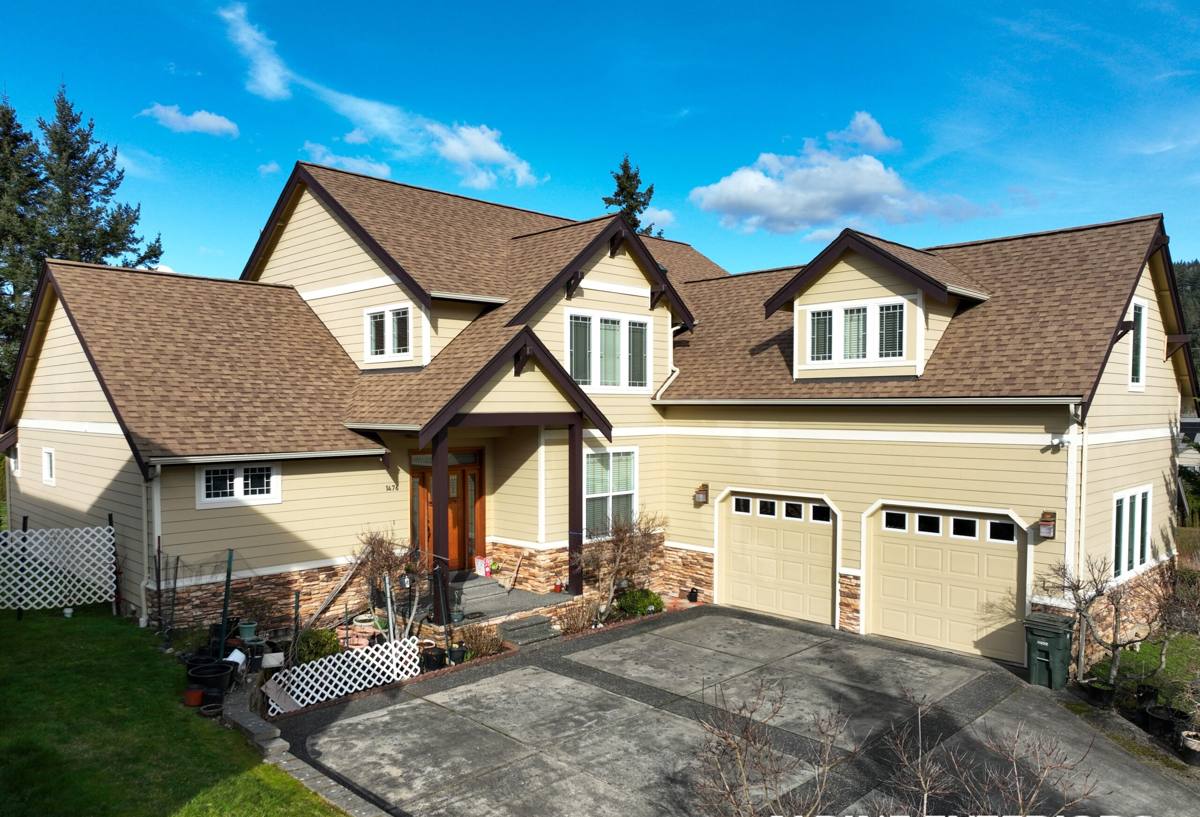
What Salt Air Does to a Roof Over Time
Salt air is corrosive, and it doesn't need to be a strong ocean breeze to matter. Even a few miles inland, airborne salt settles on exposed metal and, combined with our region's moisture, accelerates corrosion at any point where the protective coating is thin, scratched, or missing. The parts of a metal roof most at risk are the fasteners, the cut edges of panels, and any exposed flashing that wasn't properly coated or capped.
Where Corrosion Actually Starts
In our experience, premature failure on metal roofs in this area almost never starts on the flat field of a panel. It starts at:
- Exposed screw heads with worn-out rubber washers
- Field-cut panel edges that were never resealed
- Dissimilar metals in contact with each other, which sets up galvanic corrosion
- Flashing seams where two different trades' work meets and nobody owned the detail
None of this is a flaw in metal roofing as a material. It's a flaw in installation shortcuts. A correctly detailed metal roof, using fasteners and flashing rated for the coastal-adjacent exposure Alger gets, is built to shrug off decades of salt air.
Driving Rain and What It Means for Water Management
Storms coming off the water in this part of Skagit County don't always fall straight down. Wind-driven rain can push water sideways and upward under laps, seams, and trim that would be perfectly fine in a calmer climate. This is why the underlayment and flashing package matters as much as the panel itself.
A metal roof that's correctly built for driving rain includes a synthetic or self-adhered underlayment at vulnerable points — valleys, eaves, penetrations, and rake edges — along with panel laps and seams sized and sealed for wind-driven exposure, not just gravity drainage. On steep or wind-exposed roof planes, we pay particular attention to lap direction and fastening patterns, since a panel installed with the wrong lap orientation relative to prevailing wind can invite water intrusion that won't show up until it's already caused damage underneath.
Standing Seam vs. Exposed Fastener: Choosing the Right System
Not every metal roof is the same product, and the two most common systems perform differently under Alger's conditions. Both can be the right choice depending on the roof, the budget, and the homeowner's priorities — the table below lays out the honest trade-offs.
| Factor | Standing Seam | Exposed Fastener |
|---|---|---|
| Fastener exposure | Concealed clips, no exposed screws | Screws penetrate the panel face |
| Long-term maintenance | Very low — no gaskets to inspect | Requires periodic gasket/fastener checks |
| Upfront cost | Higher | More budget-friendly |
| Performance in driving rain | Excellent — interlocking seams shed wind-driven water | Good, if fasteners and washers are maintained |
| Best fit | Homes wanting decades of low-maintenance performance | Homes prioritizing lower installed cost |
We install both systems and will walk through which one makes sense for your roof's slope, exposure, and budget rather than defaulting to whichever is easier to sell.
Moss Season and Roof Design
The tree cover and consistent moisture around Alger give moss a long runway to establish itself, especially on north-facing slopes and shaded valleys. Moss on a metal roof isn't just cosmetic — it holds moisture against the panel surface longer than the coating was designed to tolerate, and it can work its way under lap edges over time.
What Actually Reduces Moss Buildup
Panel choice and finish play a role, since smoother, properly coated metal gives moss and organic debris less to grip onto than a rougher surface. But design details matter just as much: valleys and low-slope transitions that are sized to move water quickly, gutters and downspouts that don't create standing water at the eave line, and keeping overhanging branches back from the roof plane all reduce the conditions moss needs to take hold. We factor this into the layout during the estimate, not as an afterthought after the panels are up.
What a Correct Metal Roofing Job Involves
A metal roof is only as good as everything installed underneath and around it. Our process on every Alger metal roofing job includes:
- Removal of old roofing and inspection of the deck for rot or soft spots before anything new goes down
- Ice-and-water or synthetic underlayment at eaves, valleys, and all penetrations
- Fasteners and flashing rated for coastal-adjacent, high-moisture exposure — not generic hardware
- Proper attic and roof ventilation, since trapped moisture under a metal roof causes problems regardless of how good the panels are
- Correctly lapped and sealed seams sized for wind-driven rain, not just standard drainage
- A final walkthrough where we show you the flashing and penetration details before we leave
Skipping any one of these is how a metal roof that should last 40-plus years ends up with leaks in year eight.
Our Process, Start to Finish
We keep the process straightforward because homeowners in Alger have generally already dealt with one contractor who overcomplicated it. First, we come out and inspect the existing roof, deck, and ventilation in person — not from a satellite photo. From there we talk through system options (standing seam vs. exposed fastener), panel finish, and color, along with an honest estimate that accounts for the flashing and underlayment work, not just the panels. Once you approve the scope, we schedule around the weather window rather than pushing through a storm system, since a rushed installation during driving rain is exactly how corners get cut. After installation, we walk the roof with you and point out the details that matter — where the flashing ties in, how the valleys were treated, what maintenance (if any) is actually needed going forward.
Maintenance Checklist for Metal Roofs in This Climate
A well-installed metal roof needs far less upkeep than shingles, but "far less" isn't "none," especially with Alger's moss season and salt exposure. A homeowner can reasonably handle:
- Clearing gutters and valleys of needles and debris before fall rains pick up
- Trimming back branches that overhang the roof plane
- Doing a visual check after major windstorms for lifted trim or debris impact
- Watching for moss starting on shaded, north-facing sections and addressing it early
- Scheduling a professional check every few years on fastener and flashing condition, especially on exposed-fastener systems
None of this requires climbing on the roof yourself — most of it is ground-level observation, and we're happy to point out what to watch for during your estimate.
Why It Matters That We Already Work in Alger
Roofing decisions that look fine on paper sometimes don't hold up against the specific conditions of a place. A crew that hasn't worked much around the Samish Bay and Skagit County area might spec a roof the same way they would for a drier, inland climate — because that's what they know. Working in and around Alger regularly means we've seen which details actually get tested by this area's combination of salt air, wind-driven rain, and moss, and which ones are just theoretical until a homeowner calls three winters later with a leak nobody can find. That local pattern recognition shapes how we spec and install every roof, not just what's written in a manufacturer's install guide.
Let's Look at Your Roof
If you're weighing a metal roof for a home in Alger, the best next step is a straightforward, no-pressure look at your specific roof — slope, exposure, existing deck condition, and what system actually fits. Use the form below to request a free estimate and we'll get you a clear, honest answer.