 Mount Vernon
 Windows on Little Mountain Take a Different Kind of Beating
Homes on and around Little Mountain sit in a spot where Skagit County's weather really shows up on a house. You're close enough to Puget Sound and the Skagit River delta to get salt-laden air working on metal hardware and finishes, you're exposed to driving rain that comes in sideways during fall and winter storms, and the shade and moisture from the surrounding tree cover keep moss and mildew active for a good chunk of the year. None of that is unique to Little Mountain, but the combination of elevation, tree cover, and exposure to weather moving in off the water makes window failure show up sooner here than it does in more sheltered parts of Mount Vernon.
If you've noticed fogging between panes, wood trim that's gone soft, sashes that stick or won't latch right, or drafts you can feel standing near the glass, those are signs the window's seals, frame, or flashing have already started losing the fight. Window replacement isn't just a cosmetic upgrade at that point — it's stopping water and air from getting into the wall assembly behind the window, which is where the expensive damage happens.
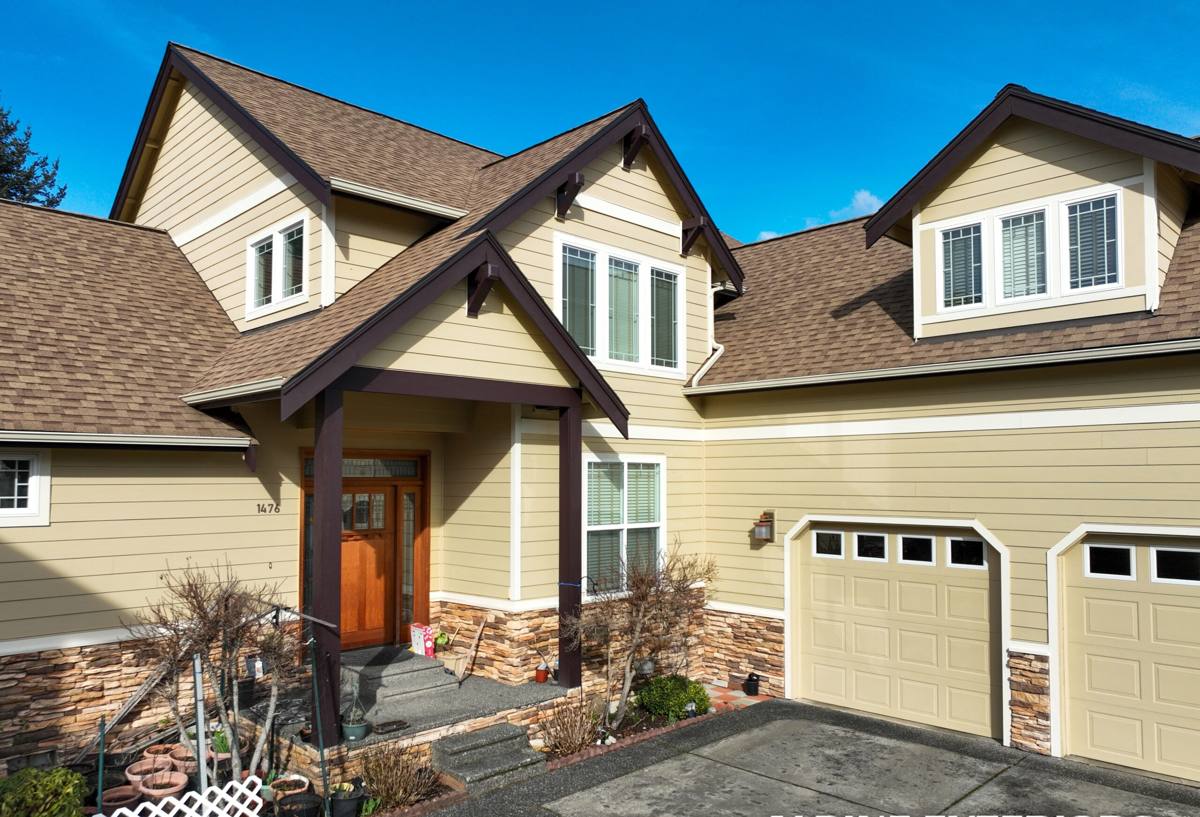
What Little Mountain's Climate Actually Does to a Window
Salt Air and Hardware
Cheaper window hardware — cranks, hinges, locks — corrodes faster when it's regularly exposed to moist, salt-tinged air. Once hardware starts binding or pitting, a window stops sealing tightly even if the frame and glass are fine, and that's when air and moisture start finding their way in around the sash.
Driving Rain and Wind-Driven Water
Wind-driven rain doesn't just fall on a window, it gets pushed sideways and upward into any gap in the flashing or sealant. On exposed elevations of a Little Mountain property, this is usually the number one cause of rot we find in window bucks and sill framing — not a single big leak, but years of small amounts of water getting past worn caulk or an aging flashing detail.
Moss, Shade, and Extended Moisture Season
Tree cover keeps siding and trim around windows damp longer after a storm than it would be in full sun. That extended damp period is exactly what moss and mildew need to establish themselves on wood trim and in caulk joints, and it's also what accelerates wood rot once water has already gotten behind a seal.
Signs a Little Mountain Home Needs Window Replacement, Not Just Repair
- Fogging, haze, or visible moisture between the panes of a double-pane window — the seal has failed and can't be repaired
- Soft, spongy, or discolored wood at the sill or the corners of the frame
- Windows that are difficult to open, close, or lock, especially after damp weather
- Visible gaps, cracked caulk, or daylight showing around the frame from inside
- A noticeable draft or cold spot near the window even when it's fully closed
- Rising heating bills without any other clear explanation
- Paint or trim around the window failing faster than on other parts of the house
- Condensation forming on the inside of the glass regularly during cooler months
Any one of these on its own might just mean a caulking touch-up. Several of them together, especially on a wall that takes the brunt of the weather, usually means the window and its surrounding flashing need to come out and be done right.
What a Correct Window Replacement Job Involves Here
Window replacement done properly is mostly about what happens before the new window ever goes in the opening. In a climate like this, the flashing and water management around the window matter as much as the window unit itself.
Removal and Inspection
We pull the old window and check the rough opening — sill, jack studs, header — for rot or moisture damage before anything new goes in. If we find soft framing, that gets addressed first. Installing a new window into a compromised opening just hides the problem for a while and lets it keep spreading behind the wall.
Flashing and Weatherproofing
This is the step that matters most for a house exposed to driving rain. Proper flashing tape and a correctly lapped weather-resistive barrier around the opening are what actually keep wind-driven water out, more so than the window itself. We build the drainage plane so water that does get to the opening drains back out, not into the wall.
Setting and Sealing the Window
The window gets shimmed level and square, fastened per the manufacturer's specs, insulated around the frame without overpacking it, and sealed on the exterior with a sealant rated for this climate. Interior and exterior trim get finished to match the house.
Final Check
We check operation, look at reveal and gaps, and confirm the sealant lines are clean before we consider the job done.
Choosing Windows for a Little Mountain Property
There's no single "best" window for every house — it depends on your exposure, your home's style, and your budget. What we do steer people toward, given the local climate, are frame materials and glass packages that hold up to sustained moisture and don't require constant upkeep to stay sealed.
| Frame Material | How It Handles This Climate | Maintenance |
|---|---|---|
| Vinyl | Doesn't rot or corrode; performs well against moisture and salt air | Low — occasional cleaning |
| Fiberglass | Very stable in wet, temperature-swinging conditions; strong seal retention over time | Low |
| Aluminum | Can corrode faster in salt-influenced air and conducts cold, leading to condensation | Moderate to high |
| Wood (unclad) | Attractive but the most vulnerable to rot and moss in a shaded, damp exposure | High — regular painting/sealing |
| Wood-clad (composite exterior) | Interior wood look with an exterior shell that resists moisture better than bare wood | Moderate |
We're generally cautious about recommending unclad wood windows on exposed, shaded elevations in this area — not because wood is a bad material, but because the maintenance schedule needed to keep it sealed against this much sustained moisture is more than most homeowners want to keep up with. If you love the look of wood, a clad option gets you most of the aesthetic with a lot less upkeep.
Glass Packages Worth Considering
Double-pane, low-E glass with argon fill is the standard baseline for this climate and covers most homes well. For rooms that take direct exposure to wind and rain — upper floors, west- or south-facing walls, anywhere without much wind break — triple-pane or upgraded gas-fill options are worth pricing out for the extra performance against both moisture and heat loss. We'll walk through what makes sense for your specific exposure rather than upselling a package you don't need.
Our Process, Start to Finish
- Free on-site assessment — we look at your current windows, framing condition, and exposure
- Straightforward written estimate covering materials, labor, and any framing repair we expect to find
- Scheduling that works around Skagit County's weather windows — we don't like opening up walls right before a storm
- Removal, framing inspection, and any needed repair before the new window goes in
- Proper flashing, insulation, and sealing around every new window
- Final walkthrough so you can see and test the finished work before we call it done
Why Hire a Crew That Already Works Little Mountain
A contractor who works this specific area regularly already knows which elevations tend to take the worst of the wind-driven rain, how shaded lots hold moisture longer, and what kind of rot patterns show up in older Mount Vernon-area homes versus newer construction. That's not something you can fully substitute with a generic install checklist. It means fewer surprises once we open up an opening, and it means the flashing and sealing details get built for the weather your house actually faces, not a generic average.
It also matters for the long run. Skagit County's damp, shaded microclimates are hard on shortcuts. A window installed without proper flashing might look fine for a year or two before water finds the gap — by then it's a repair on your wall, not just your window. We'd rather do the flashing and prep right the first time than have you calling us back in three years about a soft spot in the drywall.
Get a Straightforward Estimate
If your windows on or near Little Mountain are fogging, sticking, drafting, or just showing their age, we're happy to take a look and give you an honest read on whether you're looking at repair or replacement. There's no pressure and no obligation — just a straight answer and a clear estimate. Use the form below to request your free assessment.