 Mount Vernon
 Why Little Mountain Siding Takes a Different Kind of Beating
Homes on and around Little Mountain sit in a spot where several tough conditions stack on top of each other. The elevation and tree cover mean more shade on north- and east-facing walls, which slows drying time after every storm. Add in the salt-laden air that moves up the Skagit Valley from Puget Sound, near-constant driving rain through the fall and winter, and a moss season that can run six months or longer, and you've got siding that's working overtime compared to a house in a drier, more open part of the county.
We're not describing a hypothetical here — it's the pattern we see on repair calls throughout Mount Vernon and Skagit County. Siding that looks fine from the street can be hiding softened trim, trapped moisture behind a failed caulk joint, or moss roots working into a seam that was never sealed correctly to begin with. Little Mountain's tree canopy and terrain make all of that worse, not better.
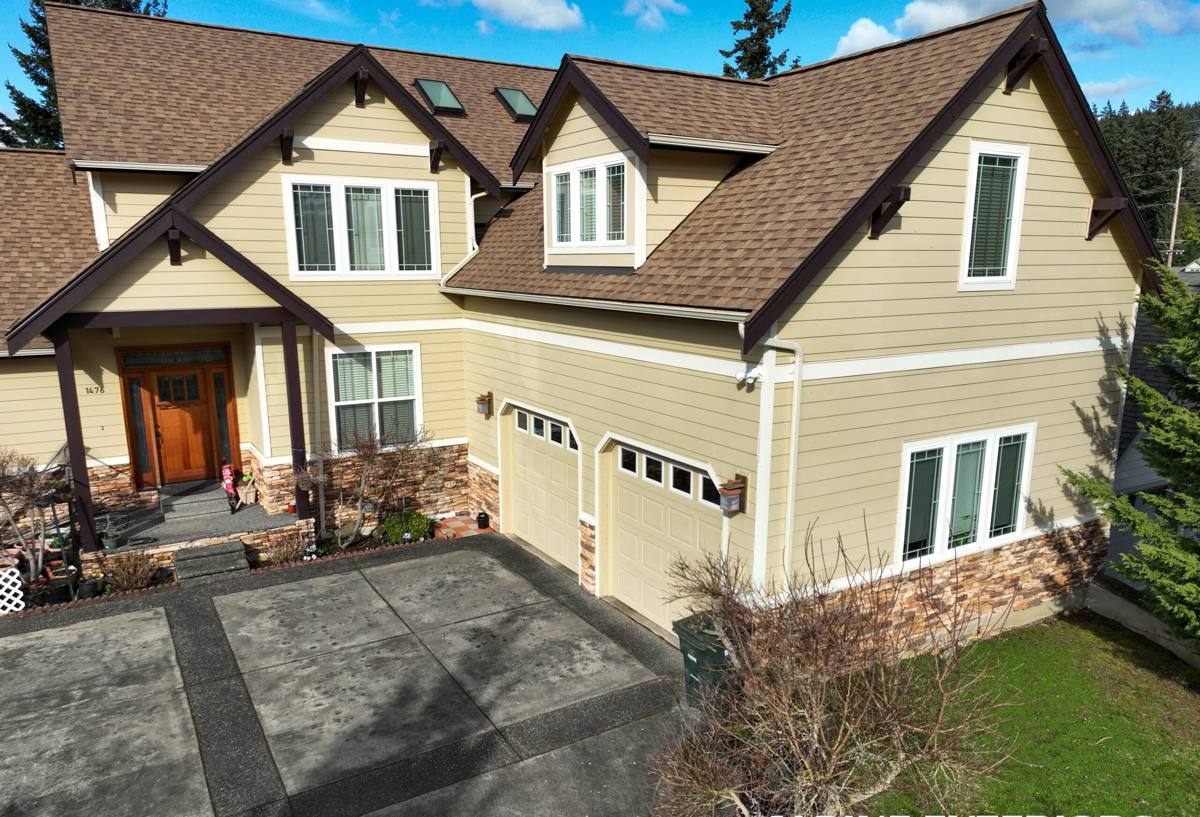
What "Correct" Siding Repair Actually Means Here
A lot of siding repair is really just patchwork — cut out the bad piece, nail up something close in color, caulk the edges, and move on. That approach might look fine for a season, but on a site like Little Mountain, with its shade, moisture, and moss pressure, a patch job without attention to the water management underneath it will fail again, usually in the same spot.
What a proper repair addresses
- The moisture or rot source behind the visible damage, not just the visible damage itself
- Flashing and house wrap continuity at the repair area, so water is still directed out and down, not behind the new piece
- Proper fastening and clearance at the bottom edge so the new siding can dry the way it's designed to
- Color and profile matching so the repair doesn't stand out for the next fifteen years
- Caulk and sealant only where the manufacturer's install spec calls for it — not as a substitute for proper flashing
Skip any one of those and you've bought yourself a repair that needs to be repaired again — often sooner than you'd expect, given how much moisture this area holds onto.
Common Failure Points We See in This Area
Certain patterns show up again and again on Little Mountain repair calls, largely because of the combination of shade, rain volume, and moss:
Moss and organic buildup at seams and laps
Moss doesn't just sit on the surface — its root structure holds moisture against the siding and can work into horizontal laps and butt joints over time. On shaded walls, moss can re-establish within a single wet season if the underlying moisture problem isn't fixed along with the cosmetic cleanup.
Caulk failure at trim and window returns
Driving rain finds any gap in a caulk joint and pushes water behind the siding rather than letting it run off the face. Once water gets behind trim boards or window returns, the damage is often worse than it looks from outside.
Soft or delaminating panels on shaded elevations
Walls that don't get direct sun dry more slowly after every storm. On siding materials that absorb or hold moisture, this leads to softening, swelling, or delamination well before the same product would fail on a sunnier elevation of the same house.
Fastener and edge issues from original installation
Over-driven nails, wrong fastener spacing, or missing clearance at the bottom edge are installation errors that don't cause problems right away — they cause problems three, five, or ten years later, right around when a homeowner starts noticing paint failure or soft spots.
Repair or Replace? How We Help You Decide
Not every damaged section needs a full re-side, and we're not going to tell you it does. But there's a point where patch-repairing keeps costing money without solving the underlying problem. Here's how we walk through that decision with homeowners:
| Factor | Leans Toward Repair | Leans Toward Replacement |
|---|---|---|
| Extent of damage | Isolated to one or two elevations or sections | Recurring damage across multiple walls |
| Cause | Impact damage, isolated caulk failure, one bad flashing detail | Systemic moisture intrusion or original installation errors |
| Age of existing siding | Siding is otherwise sound and within its useful life | Siding is near or past its expected service life |
| Material match | Matching panels or product line still available | Discontinued product, no reasonable color/profile match |
| Moss/moisture history | First occurrence, easily addressed | Chronic moss and moisture issues tied to shade and grade |
When repair is the right call, we do it right the first time. When the pattern points to something bigger, we'll tell you plainly rather than keep sending you invoices for repeat visits.
Why We Only Repair and Install James Hardie Fiber Cement
Every repair we do — patch, section replacement, or full re-side — uses James Hardie fiber cement. That's not a marketing preference; it's a standard we hold across every job in Skagit County, including repair work. We don't install LP SmartSide, vinyl, Cemplank, Allura, primed spruce, or cedar, and on a site like Little Mountain, the reasons matter more than usual.
Fiber cement doesn't swell, delaminate, or feed moss growth the way wood-based or moisture-sensitive products can. It holds its factory-applied ColorPlus finish through repeated wet-dry cycles instead of needing repainting every few years. And because Hardie makes climate-engineered HZ product lines built specifically for wetter regions, a repair section we install today will hold up under the same driving rain and shade conditions that caused the original damage — not just repeat the cycle.
It also means color and texture matching is realistic. Because we work almost exclusively with one manufacturer's product lines, we can match an existing Hardie installation far more reliably than trying to blend a replacement panel from a different brand or material into an aging installation.
What this means for your repair specifically
- Repaired sections carry the same non-combustible, moisture-resistant material as new full installations
- ColorPlus-finished replacement panels won't need repainting to match over time the way field-painted patches do
- HZ5 product lines are engineered for exactly the wet, marine-influenced climate Skagit County sees
- Manufacturer warranty coverage stays intact when repairs are installed to Hardie's published specifications
How Our Little Mountain Repair Process Works
We keep the process straightforward, because homeowners dealing with a siding problem usually just want a clear answer and a clean job:
- On-site inspection. We look at the damaged area and also check adjacent sections, flashing, and trim — because visible damage is rarely the whole story.
- Moisture and cause assessment. We identify what actually let water or moss in, not just what it did once it got there.
- Straight recommendation. Repair, section replacement, or a conversation about full replacement if the damage points that direction — explained in plain terms.
- Matching and sourcing. We source the correct Hardie profile and ColorPlus color to match your existing siding as closely as possible.
- Correct installation. Flashing, house wrap, and fastening are addressed at the repair site — not just the cosmetic panel swap.
- Site cleanup and walkthrough. We show you what was done and why, so you know exactly what's protecting your home going forward.
Why Local Experience on Little Mountain Specifically Matters
Terrain and access on hillside and wooded lots around Little Mountain aren't the same as a flat in-town lot. Slopes, retaining walls, mature trees close to the house, and limited staging space all affect how a repair crew works safely and efficiently. A crew that's already done repair work in this specific area knows what to expect before the truck is even unloaded.
Local experience also means knowing which elevations in this microclimate tend to fail first, how much moss pressure to expect on a shaded wall versus a sunny one, and what kind of flashing details hold up against the driving rain patterns that come through this part of Mount Vernon and Skagit County. That's the difference between a repair that's genuinely fixed and one that's just been made to look fixed.
Preventing the Next Repair Call
Good repair work should reduce how often you need us back out. A few habits go a long way on a site like Little Mountain:
- Keep tree branches and shrubs trimmed back from siding to improve airflow and sun exposure on shaded walls
- Rinse moss and organic buildup off siding surfaces before it establishes root structure in seams
- Check and refresh caulk at trim, window, and door returns every couple of years, not just when it visibly fails
- Keep gutters and downspouts clear so roof runoff isn't sheeting down siding faces
- Watch for soft spots or discoloration on north- and east-facing walls first — they'll show problems earliest
If you're noticing moss buildup, soft trim, or a section of siding that just doesn't look right, we're happy to take a look and give you a straight assessment — no pressure, no upsell, just an honest read on what your home actually needs. Request a free estimate using the form below and we'll get you scheduled.