 Mount Vernon
 Windows in La Conner Work Harder Than Windows Inland
La Conner sits close to Skagit Bay and the Swinomish Channel, which means homes here deal with a different mix of weather than a house a few miles inland in Mount Vernon. Salt-laden air moves off the water and settles on window frames, hardware, and glazing. Wind-driven rain hits siding and window openings at an angle instead of falling straight down, which puts extra stress on flashing and seals. And the long, wet gray season that Skagit County is known for gives moss, algae, and general moisture a lot of time to work on anything that isn't sealed correctly.
None of that means your windows are doomed. It means the details of the installation — the flashing, the sealants, the hardware finish, the frame material — matter more here than they would in a drier, calmer climate. A window that would hold up fine in eastern Washington can fail early in a marine environment like La Conner if it wasn't built or installed with that exposure in mind.
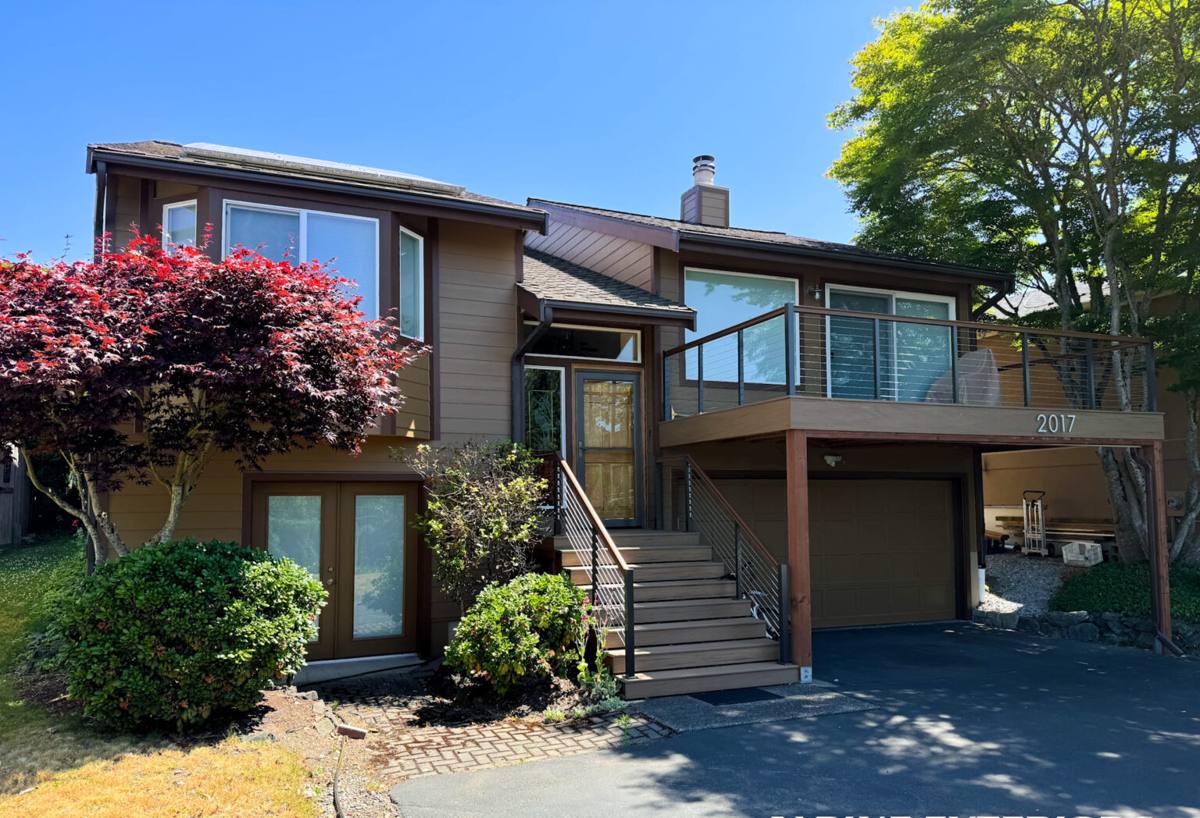
Signs a La Conner Home Needs Window Replacement
Windows rarely fail all at once. They give warning signs first, and in a coastal-adjacent climate those signs often show up faster than homeowners expect.
- Fogging or a permanent haze between the panes — a sign the seal on a double-pane unit has failed and moisture has gotten inside the glass
- Soft, spongy, or discolored wood around the frame or sill, especially on walls that face prevailing wind and rain
- Corroded, stiff, or pitted hardware — hinges, locks, and cranks that used to move smoothly
- Visible moss or algae staining on the frame or the siding directly around the window
- Drafts or a noticeable temperature difference near the window even when it's fully closed and locked
- Windows that are difficult to open, close, or lock — frames can swell or warp from repeated wet-dry cycles
- A musty smell or soft drywall on the interior wall below or beside the window
If you're seeing more than one of these, it's worth having the window looked at rather than just the glass — often the frame and the flashing behind it are the real issue, not just an old pane.
What a Correct Window Replacement Job Actually Involves
It Starts With the Opening, Not the Window
The single biggest factor in whether a new window lasts is what happens to the rough opening before the window ever goes in. In a climate with driving rain and salt air, water management around the opening is the whole game. That means checking the sheathing and framing for hidden rot, correcting anything soft or damaged, and building a proper drainage plane so any water that gets behind the siding has somewhere to go besides your wall cavity.
Flashing Is Where Jobs Succeed or Fail
Flashing tape and pan flashing at the sill need to be installed in the right order — sill first, then jambs, then head — so water is always shed downward and outward, never trapped. This is the part of the job that's invisible once the window is in, which is exactly why it's the part that separates a window that lasts twenty-plus years from one that leaks behind the trim in five.
Full-Frame Replacement vs. Insert Replacement
There are two basic approaches. An insert (or "pocket") replacement fits a new window into the existing frame, which is faster and less disruptive but only works well if the existing frame is still sound. A full-frame replacement removes the window down to the rough opening, which costs more and takes longer but lets us actually inspect and fix what's behind the trim — the sheathing, the flashing, any hidden moisture damage. In a wet coastal-influenced climate, we lean toward full-frame more often than a contractor might in a drier region, simply because hidden rot is more common here and an insert job can seal a problem inside the wall instead of solving it.
Sealing and Finishing
The final seal — caulking, backer rod, and trim work — needs to be compatible with salt air exposure and flexible enough to handle our seasonal temperature and moisture swings without cracking. Rigid or low-grade sealant is one of the more common causes of early leaks we see on older installs in this area.
Choosing Window Materials for La Conner's Climate
There's no single "best" window material for every home — it depends on your budget, your home's style, and how much maintenance you want to take on. Here's how the common options generally compare for a marine-influenced climate like this one.
| Material | How It Handles Salt Air & Moisture | Maintenance | Typical Trade-Off |
|---|---|---|---|
| Vinyl | Won't rot or corrode; handles moisture well | Low — occasional cleaning | Fewer color/finish options; can look less custom on older homes |
| Fiberglass | Very stable in wet, salty air; resists warping | Low | Higher upfront cost than vinyl |
| Wood-Clad | Exterior cladding protects the wood, but any gap in the cladding or seal lets moisture reach the wood core | Higher — finish and seals need monitoring | Classic look, but more sensitive to installation quality in wet climates |
| Aluminum | Conducts cold and can corrode over time near salt air unless properly coated | Moderate | Slim sightlines, but not our first recommendation this close to the water |
We don't push one brand or material on every homeowner. What we do insist on is being straightforward about how a given material will actually perform a few blocks from Skagit Bay versus how it performs in a marketing brochure written for a national audience.
Hardware and Finish Matter More Here
Locks, hinges, and cranks with a marine-grade or corrosion-resistant finish cost a little more but hold up noticeably better than standard hardware in this air. It's a small line item that has an outsized effect on how the window feels to use five years down the road.
Glazing: Don't Overlook the Glass Package
The glass itself does a lot of work beyond letting light in. Low-E coatings help manage heat gain and loss, and insulated (double- or triple-pane) units with argon or krypton gas fill improve comfort and cut down on condensation — a real issue in a humid, wet climate where interior moisture likes to find the coldest surface in the room. For a home exposed to more wind and driving rain, we also look at the glazing's impact rating and how well the seal is expected to hold up under repeated wet-dry cycling, not just its energy rating on paper.
Our Process for a La Conner Window Replacement
1. On-Site Assessment
We look at each window individually — not every window on a house needs the same treatment. Some may need full-frame replacement, others may be candidates for an insert. We also check the surrounding siding and trim for signs of moisture damage.
2. Straightforward Proposal
You get a clear breakdown of materials, scope, and price before any work starts — no vague allowances that turn into surprises later.
3. Careful Removal
Old windows come out carefully to protect interior finishes and give us a clean look at the rough opening underneath.
4. Correct Flashing and Installation
This is the step we don't rush. Proper flashing sequence, air sealing, and insulation around the frame are what actually keep water and drafts out long-term.
5. Final Trim, Cleanup, and Walkthrough
Interior and exterior trim is finished, the site is cleaned up, and we walk through the operation of each window with you before we call the job done.
What Affects the Cost of Window Replacement
Every home is different, so we won't quote a number without seeing the job, but these are the main variables that move the price up or down.
| Factor | Why It Matters |
|---|---|
| Full-frame vs. insert replacement | Full-frame involves more labor and often reveals (and fixes) hidden framing issues |
| Window size and configuration | Larger units, bay windows, and custom shapes cost more than standard-size single or double units |
| Frame material | Vinyl is typically the most affordable; fiberglass and wood-clad cost more upfront |
| Glazing package | Impact-rated or upgraded Low-E/gas-fill glass adds cost but pays off in comfort and durability |
| Condition behind the existing window | Rot or moisture damage found during removal adds repair scope |
| Number of windows done at once | Doing multiple windows in one visit typically reduces the per-window cost |
As a rough starting point, straightforward vinyl replacements tend to run in the low-to-mid four figures per window installed, with full-frame work, larger openings, or upgraded materials pushing toward the higher end of that range or beyond. We'll give you real numbers once we've seen your windows.
Why It Matters to Hire a Crew That Already Works in La Conner
A contractor who mostly works drier inland areas may not think twice about flashing details or hardware finish that make a real difference this close to the water. Crews who regularly work Skagit County's coastal-influenced areas tend to build in those extra steps by habit, not as an upsell — because they've seen what happens when they're skipped. Local experience also means a faster, more accurate read on whether a given window is a good candidate for an insert replacement or needs the full-frame approach, since that call depends heavily on how the specific home has held up against local weather over the years.
Living With Your New Windows: Maintenance in a Wet Climate
Even good windows benefit from a little seasonal attention here. Rinse frames periodically to clear salt residue and organic buildup before moss or algae gets a foothold. Check exterior caulk lines once a year, especially after a hard winter, and address any cracking before water finds its way behind the trim. Keep weep holes on the exterior sill clear so water draining out of the frame can actually escape instead of pooling.
If you're noticing drafts, fogged glass, or moisture damage around your windows, we're happy to come take a look and give you an honest, no-pressure assessment. Reach out through the form below for a free estimate on window replacement for your La Conner home.