 Mount Vernon
 Why Kulshan Ridge Homes Need a Different Approach to Windows
Kulshan Ridge sits within Mount Vernon's broader Skagit County climate zone, which means homes here deal with a specific combination of conditions that a generic "energy-efficient windows" checklist doesn't fully address: salt-tinged marine air moving inland from the Puget Sound and Skagit Bay, long stretches of driving, wind-pushed rain, and a moss season that can stretch from fall through spring. Individually, each of these is manageable. Together, over years, they find every weak point in a window installation — the frame material, the flashing detail, the seal quality, and the sill drainage.
When we talk about "energy-efficient windows" for this neighborhood, we're really talking about two overlapping goals: keeping conditioned air inside the house, and keeping moisture and salt-laden moisture out of the wall assembly. A window that's efficient on paper but poorly installed for this climate will fail on the second goal long before it fails on the first — and that failure usually shows up as rot, fogged glass, or a spike in the heating bill.
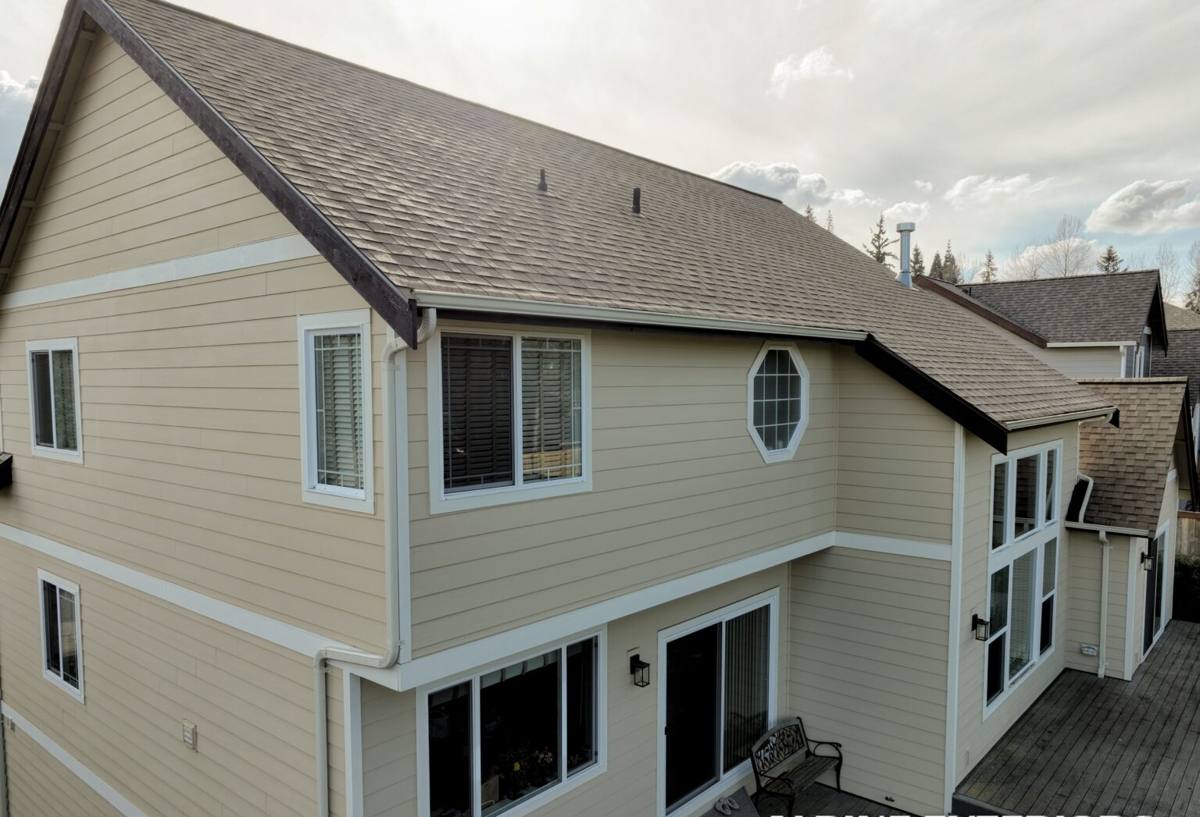
What the Local Climate Actually Does to Windows
Salt Air
Even at a distance from open water, marine air carries fine salt particulate that settles on exterior surfaces. Over time it accelerates corrosion on lower-grade aluminum hardware, pits certain finishes, and breaks down cheap weatherstripping faster than it would in a drier inland climate. This is less about any one dramatic failure and more about steady, cumulative wear on hardware and seals.
Driving Rain
Skagit County rain often comes in sideways, pushed by wind off the Sound. Wind-driven rain tests a window's weatherproofing in a way that vertical rain doesn't — it forces water up and under sills, into corner joints, and against any gap in the flashing. A window that's watertight in a still-air rain test can still leak under driving rain if the installation details around it are wrong.
The Long Moss Season
Sustained dampness and shade during the moss season keep exterior surfaces wet longer between drying periods. Around windows, that means trim, sills, and any exposed wood stay damp longer, which is exactly the condition rot and mold need. Good drainage and the right sealants matter more here than in climates where surfaces dry out quickly.
What a Correct Energy-Efficient Window Job Involves
Efficiency isn't just the glass package. A window performs as a system, and every part of that system has to be right for the climate it's going into.
- Frame material suited to sustained moisture exposure and salt air — with attention to hardware and finish durability, not just upfront cost
- Glass package matched to the home's orientation — solar heat gain matters differently on a south-facing wall than a north-facing one
- Flashing and drainage plane integrated correctly with the existing wall assembly, so water that gets past the outer seal has somewhere to go besides into the framing
- Sill pan installed under every opening, not just the ones that look like they need it
- Weatherstripping and hardware rated for coastal-adjacent conditions, not standard-grade parts that corrode or compress prematurely
- Interior and exterior sealant applied in the correct sequence — sealing the wrong layer, or sealing everything solid with no way for incidental moisture to escape, causes as many problems as it solves
The Sill Pan and Flashing Detail
This is the single most common point of failure we see in older window installations around Mount Vernon, and it's invisible once the trim is back on. A sill pan creates a sloped, waterproof pocket under the window unit so any water that works its way past the exterior seal drains back outside instead of soaking into the framing below. Skipping this step — or installing it incorrectly — is one of the main reasons a "new" window installation can still lead to rot within a few years, especially in a climate with this much sustained moisture exposure.
Comparing Frame Options for This Climate
| Frame Type | Moisture & Salt Air Handling | Maintenance | Our Take for This Area |
|---|---|---|---|
| Vinyl | Good — won't corrode or rot, seams are the main watch point | Low | Solid, cost-effective choice for most Kulshan Ridge homes |
| Fiberglass | Excellent — dimensionally stable, resists moisture and salt exposure well | Low | Strong option where budget allows, especially on exposed elevations |
| Wood (unclad) | Poor without diligent upkeep — the long moss season is unforgiving of unclad wood | High | We generally steer clients away from unclad wood on exposed faces here |
| Wood-clad (vinyl or aluminum exterior) | Good on the exterior face — interior wood still needs normal upkeep | Moderate | Reasonable if the interior wood look matters to the homeowner |
| Standard-grade aluminum | Fair — prone to corrosion and thermal transfer without upgraded finishes | Moderate | Not our first recommendation for salt-exposed openings |
We don't push one material on every job. The right frame depends on the specific wall's sun and wind exposure, the home's existing trim details, and the homeowner's maintenance appetite. What we won't do is recommend a frame or hardware grade that we know struggles in marine air just because it's cheaper up front — that's a call we make based on what holds up here, not a knock on any manufacturer.
Our Process for Kulshan Ridge Window Replacements
- On-site assessment — we look at the existing frames, sills, and surrounding siding for signs of moisture intrusion before quoting anything
- Measurement and product selection — matched to each opening's exposure, not a one-size answer for the whole house
- Removal with wall inspection — once the old unit is out, we check the framing and sheathing underneath for hidden rot or past leaks
- Sill pan and flashing installation — built correctly for wind-driven rain, every time, not just on openings that look exposed
- Window installation and sealing — set level and plumb, sealed in the correct sequence so moisture can escape rather than get trapped
- Interior and exterior trim finish — matched to the home's existing look
- Final walkthrough — operation, locks, and visible sealant lines checked before we call it done
Why the Order of Operations Matters
A window installed out of sequence — glazing before flashing is fully cured, trim closed up before sealant has set, or siding tied back in before the drainage plane is confirmed continuous — can look identical to a correct installation from the outside. The difference only shows up years later, usually as a soft spot in the sill or a stain on interior drywall. This is why we don't shortcut the sequence to save a half-day on a job.
Signs Your Current Windows Are Underperforming
- Condensation forming between the panes (a sign the seal has failed on a double- or triple-pane unit)
- Drafts you can feel near the frame even when the window is fully latched
- Soft or discolored trim or sill wood, especially on north- or west-facing walls
- Difficulty opening, closing, or locking that wasn't there when the windows were newer
- Visible corrosion on hardware or hinges
- A noticeable jump in heating costs without a clear explanation
- Moss or persistent green staining on the sill or surrounding trim
Cost Factors to Expect
We don't quote exact numbers without seeing the home, but a few factors consistently move the price up or down on Kulshan Ridge projects:
| Factor | Effect on Cost |
|---|---|
| Number of openings being replaced | More units typically lowers the per-window cost through shared labor and setup |
| Frame material chosen | Vinyl generally costs less than fiberglass or wood-clad options |
| Condition of existing framing | Hidden rot found during removal adds repair work before the new window can go in |
| Wall exposure and elevation | Openings on wind- and rain-exposed faces may warrant upgraded flashing or hardware |
| Glass package | Higher-performance low-E or gas-fill options add cost but improve comfort and efficiency |
| Custom sizing | Non-standard openings cost more than stock sizes |
Why Hire a Crew That Already Works This Area
A window installer who mostly works drier inland climates can do fine work there and still get the details wrong here — not out of carelessness, but because the failure modes are different. Skipping a sill pan matters more in a place that gets this much sustained rain. A hardware grade that's fine in a dry climate corrodes faster in salt air. A crew that regularly works Mount Vernon and the surrounding Skagit County neighborhoods has already seen how these specific conditions play out on real homes, and builds the installation around that — not around a generic manual.
We also know what "normal wear" looks like on a Kulshan Ridge home versus what's an early warning sign, which helps us catch problems during an assessment rather than after they've spread into the wall framing.
Get an Assessment for Your Home
If your windows are drafty, fogging, sticking, or just older than the rest of the house, we're happy to take a look and give you an honest read on what's going on — no pressure, no obligation. Fill out the form below and we'll set up a time to come assess your Kulshan Ridge home.