 Mount Vernon
 Windows That Have to Work Harder in Little Mountain
Homes around Little Mountain sit in one of the more demanding micro-climates in Mount Vernon. You've got the tree cover and shade that comes with being close to the park and forested slopes, damp air rolling in off the Skagit Valley and Puget Sound, and a wet season that runs long even by Western Washington standards. Windows here don't just need to look good — they need to manage moisture, block wind-driven rain, and hold their seal through years of freeze-thaw swings and salt-tinged air. A window that's fine in a drier inland climate can start failing early in this one.
We work on homes in this part of Mount Vernon regularly, and the patterns repeat: fogged double panes, swollen wood sashes, vinyl frames that have gone brittle or discolored, and heating bills that creep up every winter as old seals give out. This page is about what actually matters when you're replacing windows on a Little Mountain home — not a generic rundown of window types, but what this specific climate demands and how we approach the job.
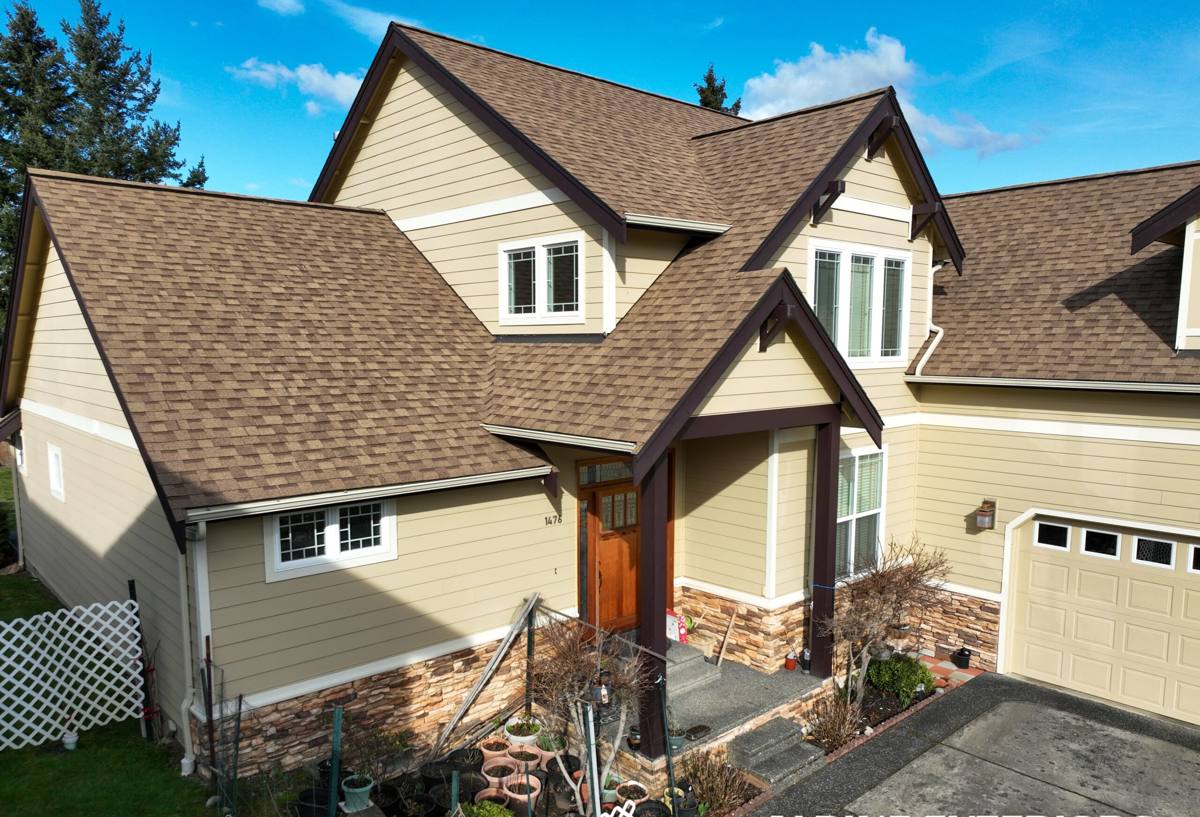
What Skagit County's Climate Does to Windows Over Time
Salt Air and Coastal Moisture
Mount Vernon isn't right on the coast, but Skagit County sits close enough to Puget Sound and the Salish Sea that salt-laden, moisture-heavy air is a regular fact of life, especially with onshore weather patterns. That air accelerates corrosion on hardware — hinges, locks, balance mechanisms — and speeds up the breakdown of poor-quality seals and gaskets. Over ten or fifteen years, that's the difference between a window that still locks tight and one that rattles and leaks air.
Driving Rain and Wind-Driven Water
Pacific storm systems don't just drop rain straight down here — wind pushes it sideways into siding and window openings. If flashing and sealant weren't done right the first time, that wind-driven rain finds its way behind the frame, and you won't see the damage until it shows up as soft trim, stained drywall, or a musty smell near the window. This is one of the most common failure points we find when we pull old windows out.
A Long Moss and Shade Season
Homes near Little Mountain often sit under more tree canopy than homes out in the open valley floor, which means longer damp shade, slower drying after storms, and more moss and algae growth on sills, tracks, and nearby trim. That extended damp season is hard on wood components especially, and it means condensation on the inside of the glass tends to stick around longer instead of evaporating off quickly.
What "Energy-Efficient" Should Actually Mean Here
"Energy-efficient" gets used as a marketing word, but for a Little Mountain home it should translate into specific, measurable performance:
U-Factor Matters More Than the Label
U-factor measures how well a window resists heat loss — lower is better. In our climate, where heating season runs long and cooling loads are modest, U-factor is the number that affects your winter energy bills the most. Look for U-factor in the range ENERGY STAR sets for this region rather than trusting a sticker that just says "energy efficient."
Solar Heat Gain Is a Secondary Concern Here
In hotter, sunnier climates, solar heat gain coefficient (SHGC) is a huge deal because you're trying to keep heat out. Around Mount Vernon, especially on shaded Little Mountain lots, that's less critical — moderate SHGC glass is usually the right call rather than paying extra for glazing optimized for a desert climate.
The Seal Matters More Than the Glass
A double-pane, low-E window with a poor installation will underperform a well-installed single upgrade. Air sealing, proper flashing, and correct shimming do as much for comfort and energy use as the glass package itself — sometimes more.
Frame Material Comparison for This Climate
| Frame Type | Moisture Resistance | Maintenance | Typical Lifespan Here |
|---|---|---|---|
| Vinyl | Good — won't rot, but can warp with poor installation or extreme heat exposure | Low | 20-30 years |
| Fiberglass | Very good — dimensionally stable, handles wet-dry cycling well | Low | 30-40+ years |
| Wood-clad | Depends heavily on cladding integrity and sealed joints | Moderate to high | 15-30 years, shorter if cladding fails |
| Aluminum | Poor thermal performance, prone to condensation in our damp climate | Low | 20-25 years |
We steer most Little Mountain homeowners toward vinyl or fiberglass for this reason: both handle sustained damp exposure without the ongoing maintenance burden wood-clad frames require, and neither corrodes the way aluminum does in salt-influenced air. Wood-clad can still be the right call for a specific architectural look, but it comes with a real maintenance commitment in this climate — that's a trade-off we'll walk you through honestly rather than talk you out of.
Signs Your Windows Are Underperforming
Most homeowners don't realize how much a window has degraded until they're told what to look for. Walk your house and check for these:
- Visible fogging or moisture trapped between panes (a failed seal on a double-pane unit)
- Condensation on the inside of the glass most mornings, especially in bedrooms
- Drafts you can feel with your hand near the frame on a windy day
- Soft or discolored trim/drywall directly around a window opening
- Difficulty opening, closing, or locking a window that used to operate smoothly
- Visible gaps between the frame and siding, or cracked/missing exterior caulk
- Moss or dark staining building up on the sill or lower frame
- A noticeable temperature difference near the window compared to the rest of the room
Any one of these on its own isn't necessarily urgent. Several of them together, especially on a home more than 15-20 years old, usually means it's time to have the windows evaluated rather than patched again.
What a Correct Installation Actually Involves
Flashing and Weatherproofing Come First
The window itself is only part of the job. Correct integration with the wall's water management system — proper flashing tape, a sloped sill pan, and sealant placed in the right order rather than caulked over gaps — is what actually keeps wind-driven rain out. This is where a lot of shortcuts get taken on rushed jobs, and it's exactly the detail that matters most given how much sideways rain this area gets.
Shimming and Air Sealing
A window needs to be shimmed square and plumb, not just screwed into whatever gap is there. Low-expansion foam or backer rod and sealant around the perimeter — not spray foam alone — keeps the frame from bowing while still sealing out air and moisture.
Interior and Exterior Trim Detailing
Trim isn't just cosmetic. Properly sealed and back-primed trim keeps water from wicking into the wood over a long wet season, which matters more here than in drier climates where trim can dry out between rain events.
How We Approach a Little Mountain Job
Assessment and Measurement
We start by looking at each opening individually — not every window on a house is in the same condition, and some may need more extensive flashing repair than others. We measure for an exact fit and check the surrounding wall and sill for any existing moisture damage before quoting the work.
Install Day
We work efficiently to keep openings exposed for as little time as possible, which matters given how quickly weather can turn here. Old windows come out, any damaged framing or sheathing gets addressed before the new unit goes in, and flashing is installed in the correct shingle-lap order so water is always directed outward and down.
Final Check and Cleanup
Every window gets tested for smooth operation and a tight seal before we consider the job done, and we clean up the work area fully — inside and out — before we leave.
Why a Local Crew Matters for This Job
Window installation quality depends heavily on understanding the specific conditions a house faces — and that's not the same everywhere in Skagit County. A crew that regularly works in and around Little Mountain already knows how shaded, damp lots behave differently than open valley-floor properties, how to sequence work around the area's rain patterns, and what kind of moisture damage tends to show up in homes of a given age here. That familiarity shows up in fewer surprises during the job and a longer-lasting result once it's done.
Cost Factors to Expect
| Factor | Why It Matters Here |
|---|---|
| Frame material | Vinyl is typically the most affordable; fiberglass costs more upfront but needs less long-term maintenance in our damp climate |
| Existing moisture damage | Rot or soft framing found during removal adds repair work before the new window can be installed correctly |
| Number and size of openings | Larger or custom-sized windows cost more per unit and take longer to install properly |
| Flashing and trim complexity | Homes with more elaborate trim or siding transitions require more careful (and time-consuming) weatherproofing |
| Glass package | Upgraded low-E coatings or gas fills add cost but improve winter performance |
As a broad range, mid-tier vinyl double-pane replacement windows installed correctly tend to run in the several-hundred to low-thousand-dollar range per window, with fiberglass and larger or custom units running higher. Any damage found once old windows come out — soft sheathing, failed old flashing — will affect the final number, which is why we always want to see the actual openings before giving a firm price.
Maintenance That Actually Matters in This Climate
New windows still need some upkeep here, mostly because of the moss and moisture factors already covered. A few habits go a long way:
- Clear moss and debris from sills and tracks a couple times a year, especially on shaded sides of the house
- Check exterior caulking annually and re-seal any cracked or separated joints before the wet season sets in
- Keep weep holes on vinyl and fiberglass frames clear so water can drain properly
- Wipe down interior condensation promptly to protect sills and interior trim
None of this is heavy maintenance — it's the kind of periodic attention that keeps a well-installed window performing for decades instead of degrading early the way a neglected one will in this climate.
If you're seeing drafts, fogged glass, or moisture issues around your windows, we're glad to take a look and give you a straightforward, no-pressure estimate — just fill out the form below and we'll get in touch.