 Mount Vernon
 Building Decks for Edison's Climate
Edison sits close enough to Samish Bay and the surrounding tidal flats that homes here deal with a different set of conditions than a deck going in further inland around Mount Vernon proper. Salt-laden air moves through the area regularly, driving rain comes in sideways off the water often enough that it's not really "weather," it's just Tuesday, and the long wet season means anything organic on a horizontal surface has months to grow moss, algae, and mildew before summer finally dries things out. A deck built to a generic spec sheet will survive that for a while. A deck built for this specific stretch of Skagit County holds up for decades.
We've worked on homes throughout the Edison area and the broader Mount Vernon region long enough to know which fastener finishes actually last, which board profiles shed water instead of pooling it, and which framing details keep a deck from turning into a maintenance headache by year three. This page walks through what that looks like in practice.
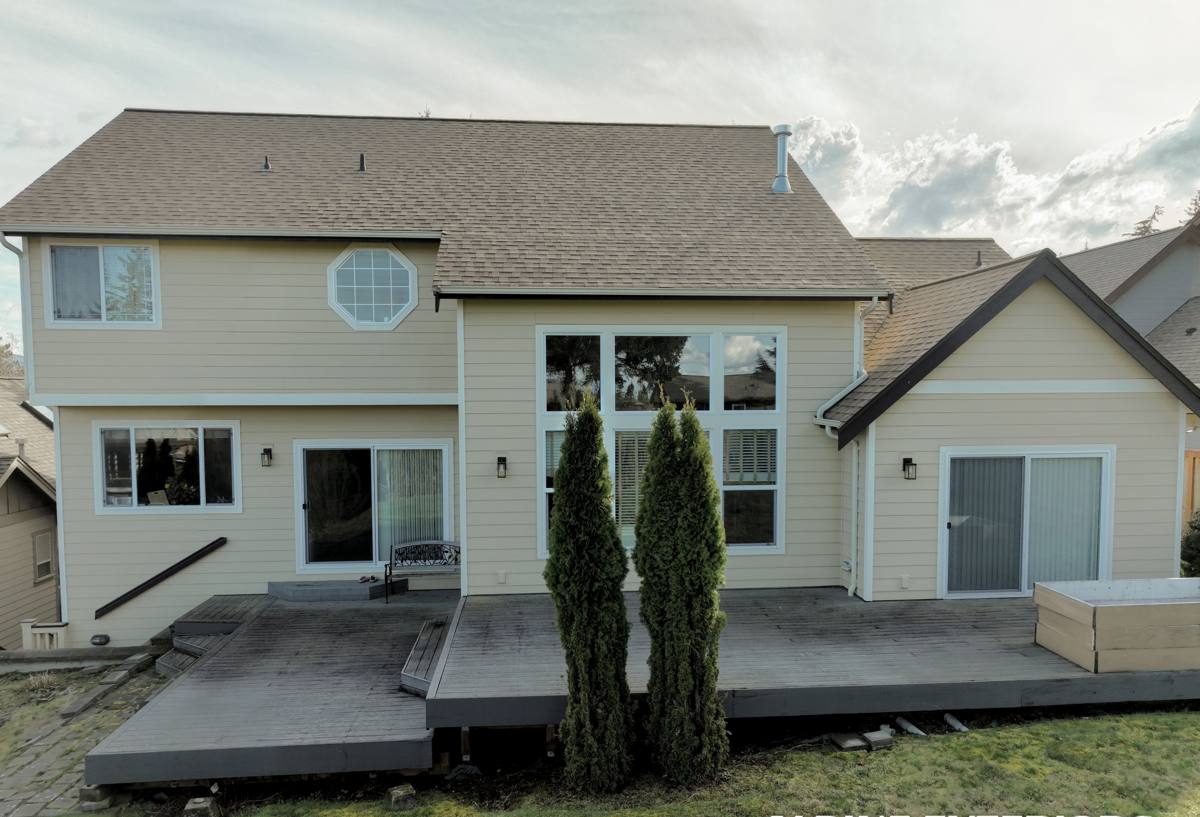
What Salt Air and Moisture Do to a Deck Over Time
Three things wear decks down faster in Edison than in a drier inland climate:
- Corrosion. Salt-laden air accelerates rust on any fastener, bracket, or connector that isn't rated for it. Standard hot-dip galvanized hardware can start showing surface corrosion within a few seasons this close to the water; stainless or high-grade coated fasteners cost more up front but don't need to be revisited.
- Moisture retention. Driving rain gets pushed into places a calm, straight-down rain never reaches — under railings, into end-grain cuts, behind ledger boards. Wood and composite decking both need real drainage and ventilation underneath, not just on top.
- Moss and organic growth. Skagit County's long wet season gives moss, algae, and lichen months to establish themselves on any surface that stays damp and shaded. Once established, moss holds moisture against the decking surface, which speeds up rot in wood and can stain or etch some composite surfaces if left unaddressed.
None of this means a deck can't last in Edison — it means the build has to account for these conditions from the framing up, not just at the surface finish.
Where We See Problems on Existing Decks
When we're called out to look at an aging or failing deck in the area, the damage is rarely random. It clusters in predictable spots:
- Ledger board connections where the deck meets the house — a common spot for trapped moisture if flashing wasn't installed correctly
- Post bases sitting directly on concrete without a moisture break
- Fastener heads that have corroded and stained the decking around them
- North-facing or shaded sections that stay damp longer and develop moss first
- Joist tops without any protective tape or coating, rotting from the inside out under the decking boards
Material Choices That Make Sense for This Area
There's no single "best" decking material — there's a best material for a given budget, maintenance tolerance, and how much shade or salt exposure the specific site gets. Here's how the common options stack up for an Edison-area build.
| Material | Moisture/Moss Behavior | Maintenance | Typical Lifespan Here |
|---|---|---|---|
| Pressure-treated lumber | Absorbs water, needs sealing to resist moss and cupping | Annual cleaning, re-seal every 2-3 years | 15-20 years with upkeep |
| Cedar | Naturally rot-resistant but still needs finish maintenance in wet climates | Cleaning and re-staining every 1-2 years | 15-25 years with upkeep |
| Capped composite | Sheds water well, resists moss staining better than uncapped boards | Periodic washing, no sealing/staining | 25-30+ years |
| PVC decking | Doesn't absorb moisture, cleans off easily | Low — occasional washing | 25-30+ years |
We're not going to tell you composite is "better" in every sense — cedar and treated lumber both have a warmth and price point that composite doesn't match, and plenty of Edison homeowners are perfectly happy staying on top of a cleaning and sealing schedule. What we will say is that if low maintenance matters to you and you're in a shaded or exposed-to-weather spot, capped composite or PVC earns its higher upfront cost back in avoided upkeep.
Framing and Structure: Where the Real Durability Comes From
The decking boards get all the attention, but the framing underneath is what determines whether a deck is still solid in 20 years or spongy in 8. For this climate, a few details matter more than they would somewhere drier:
Ledger Attachment and Flashing
The ledger board — where the deck attaches to the house — is the single most common failure point on decks in wet regions. It needs proper flashing that directs water away from the house sheathing, not just caulk and a hope. We install ledger flashing as a matter of course, not an upsell.
Joist Protection
Joist tops take on water that runs off the decking above. A protective tape or coating over the joist top keeps that moisture from soaking into the wood grain and starting rot from underneath, where it's invisible until the deck starts to feel soft.
Post Bases and Footings
Posts that sit directly on concrete or in standing water wick moisture up into the wood. Post bases that hold the post slightly elevated off the concrete, combined with proper footing depth for our frost and drainage conditions, keep the structural posts drier over the life of the deck.
Fastener Selection
Given the salt air in the Edison area, we use fasteners and structural hardware rated for coastal or high-corrosion exposure rather than standard-grade galvanized. It costs a bit more in materials and shows up nowhere on the finished deck — but it's the difference between hardware that's still sound in year 15 and hardware that's staining and weakening by year 5.
Design Details That Fight Moss and Standing Water
Beyond material and framing choices, how a deck is laid out affects how much moss and moisture trouble it gives you down the road:
- Board spacing: Proper gapping between deck boards lets water drain through instead of pooling on the surface.
- Slope: A slight pitch away from the house keeps water moving off the deck rather than sitting against the ledger.
- Airflow underneath: Adequate clearance and ventilation below the deck surface lets the framing dry out between rain events instead of staying perpetually damp.
- Sun exposure: Where possible, we account for which sections of a deck will be shaded most of the day — those areas are where moss establishes first and may benefit from more frequent cleaning or a different material choice.
- Railing and baluster spacing: Beyond meeting code, tighter design choices here can create more surfaces for moisture to sit; simpler railing profiles shed water better than heavily detailed ones.
Our Process for an Edison Deck Project
We keep the process straightforward because a deck build shouldn't feel mysterious:
- On-site assessment. We look at the site's sun exposure, drainage, existing structure if it's a rebuild, and how close you are to salt air or standing moisture concerns.
- Material and layout discussion. We walk through decking material options honestly, including maintenance trade-offs, based on your budget and how much upkeep you want to take on.
- Permitting. Deck projects above a certain size or height typically require a permit through the county or city depending on exact location — we handle that process rather than leaving it to you.
- Framing and structural work. This is where the corrosion-resistant hardware, ledger flashing, and joist protection get built in — the parts that don't show but matter most.
- Decking installation. Boards go down with proper spacing and fastening for the material chosen.
- Railings, stairs, and finish details. Final structural and cosmetic elements are installed and inspected.
- Walkthrough. We go over basic care — what to clean, how often, and what to watch for — so you're not guessing at maintenance.
Maintenance: What Actually Keeps a Deck Looking Good Here
Whatever material you choose, a little seasonal attention goes a long way in this climate:
- Sweep debris off regularly — wet leaves and needles trap moisture against the surface and accelerate moss growth
- Wash the deck surface at least once or twice a year, more often in shaded areas, to knock back algae and moss before it takes hold
- Check and clear drainage gaps between boards so they don't clog with debris and hold water
- For wood decks, inspect the finish annually and re-seal or re-stain on the schedule your material needs
- Keep an eye on fastener heads and hardware for early signs of corrosion or staining
- Trim back vegetation that shades the deck excessively, since shade plus moisture is exactly what moss needs
Why Hire a Crew That Already Works in This Area
A deck built by someone unfamiliar with Skagit County conditions might use standard-grade hardware because that's what's stocked, skip ledger flashing because it's "extra," or not think twice about drainage and airflow underneath. None of those choices show up as a problem on install day — they show up two, five, or ten years later as rot, rust stains, or a spongy spot near the house.
We build decks around Mount Vernon and communities like Edison regularly, so the corrosion-resistant hardware, proper ledger flashing, and drainage-conscious layout aren't upgrades we pitch — they're just how we frame a deck here. It's the same reason our siding work accounts for the same driving rain and salt air: build for the actual climate once, and you're not fighting it every year after.
If you're planning a new deck or need to replace one that's showing its age, we're happy to come take a look and talk through honest options for your site — no pressure, no obligation. Fill out the form below to schedule a free estimate.