 Mount Vernon
 Why Roofs in East Mount Vernon Wear the Way They Do
East Mount Vernon sits close enough to Skagit Bay and the broader Puget Sound corridor that roofs here take on a specific mix of stress most inland homes never see. Salt-tinged air moves through on the prevailing winds and slowly works on exposed fasteners, flashing, and metal components. Add in driving rain that comes sideways during fall and winter fronts, and a moss season that can stretch eight or nine months thanks to the cloud cover and tree canopy common to this part of Skagit County, and you get a roof that ages differently than the same product would twenty miles inland.
None of this means East Mount Vernon roofs fail faster across the board. It means the details that get skipped on a rushed job — fastener choice, underlayment overlap, ventilation balance, moss-resistant granules — matter more here than they do in a drier climate. A replacement done right accounts for all of it up front instead of leaving the homeowner to fight moss and leaks for the next fifteen years.
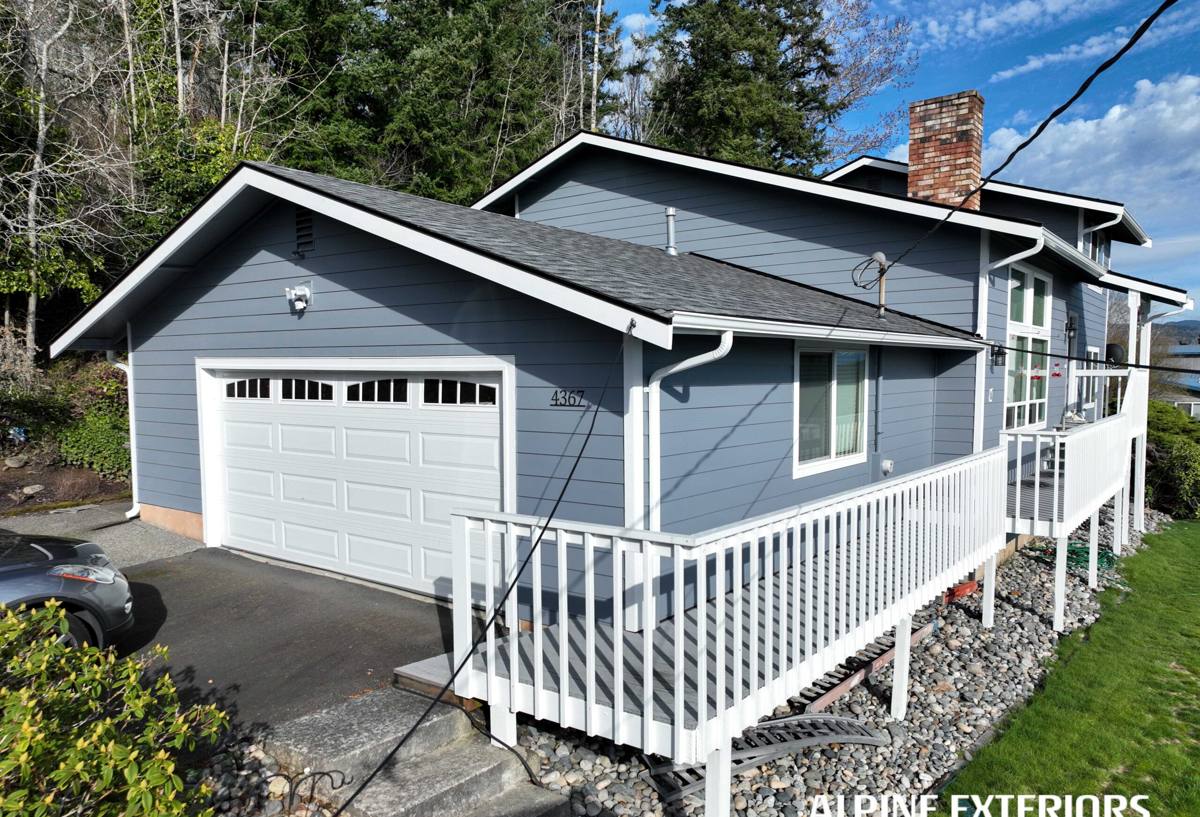
Signs a Repair Won't Cut It Anymore
Not every roof problem calls for a full replacement, and a straight repair is the honest answer more often than some contractors admit. But there's a point where patching individual leaks just delays a bigger job and costs more over time. Before we recommend replacement, we look for these:
- Granule loss heavy enough to expose the black asphalt mat underneath, especially on south and west-facing slopes
- Moss forming ridges along shingle tabs rather than just surface staining — moss roots lift the shingle edge and let water track underneath
- Soft or spongy spots when walking the roof, which usually mean the decking underneath has already absorbed moisture
- Daylight visible through the attic roof deck, or damp insulation below a section of roof
- Shingles that are curling, cupping, or cracking rather than lying flat
- Repeated leaks around the same valley, chimney, or vent after every major storm, even after spot repairs
- An asphalt roof already past the 20-25 year mark, which is a realistic ceiling for this climate even with good maintenance
If a roof shows one or two of these in isolation, repair is usually the right call. If it shows several at once, replacement tends to be the more honest recommendation, both for the homeowner's budget and for avoiding interior damage down the line.
What a Correct Roof Replacement Actually Involves
Full Tear-Off and Deck Inspection
Layering new shingles over old is sometimes allowed by code, but it traps moisture, hides the condition of the deck, and shortens the life of the new roof. A proper replacement starts with a full tear-off down to the sheathing, followed by an honest inspection of every deck panel. Any rotted or delaminated plywood gets replaced before anything new goes down — not patched over.
Underlayment and Water Barriers
Given how much driving rain this area sees, underlayment choice isn't a place to cut corners. Self-adhering ice-and-water barrier belongs at eaves, valleys, and around any roof penetration, with synthetic underlayment covering the rest of the field. This is the layer that protects the deck if wind ever drives rain up under a shingle tab, which happens more in exposed spots near open water.
Ventilation
A new roof is only as good as the attic ventilation underneath it. Balanced intake at the eaves and exhaust at the ridge keeps moisture from condensing on the underside of the deck — a common cause of hidden rot in homes with older, undersized vents. Skipping this step is one of the most common reasons a "new" roof still develops problems within a few years.
Flashing and Valleys
Flashing around chimneys, skylights, and sidewalls, along with valley metal, is where most roof leaks actually originate — not the shingle field. We replace flashing as part of every full replacement rather than reusing old metal, and we choose corrosion-resistant fasteners and flashing given the salt content in the air this close to the water.
Matching the Material to Coastal Skagit County Conditions
There's no single "best" roofing material for every home — the right choice depends on the roof's pitch, the home's style, the budget, and how much ongoing maintenance the homeowner wants to take on. Here's how the common options actually perform under this area's combination of salt air, rain, and moss pressure:
| Material | Moss & Algae Resistance | Rain & Wind Performance | Typical Lifespan | Maintenance |
|---|---|---|---|---|
| Architectural asphalt shingle (algae-resistant) | Good, especially with copper or zinc granule treatment | Strong when properly fastened and flashed | 25-30 years | Low — periodic moss treatment on shaded slopes |
| Standard 3-tab asphalt shingle | Fair — more prone to algae staining over time | Adequate but less wind-rated than architectural | 15-20 years | Moderate |
| Standing-seam metal | Excellent — moss struggles to gain a foothold on the smooth surface | Excellent in driving rain and wind | 40-plus years | Low |
| Synthetic/composite shake | Good, varies by product | Strong | 30-50 years | Low to moderate |
We install based on what fits the home and the homeowner's priorities, not a one-size-fits-all default. On heavily shaded roofs with a long moss history, we'll often steer the conversation toward algae-resistant shingles or metal, simply because they hold up with less upkeep in that specific condition — not because any competing product is defective.
A Note on Wood Shake
Traditional cedar shake still has fans for its look, but it's the highest-maintenance option in a climate this wet. It absorbs moisture, feeds moss growth faster than any manufactured product, and requires more frequent treatment and inspection to avoid rot. We'll install it if a homeowner wants that specific appearance, but we're upfront that it comes with a maintenance commitment the other options don't.
Moss and Algae: What Actually Slows It Down
Moss doesn't just sit on a roof — it roots into the shingle surface, holds moisture against it, and lifts tabs enough for water to get underneath. In a climate where roofs can stay damp for days at a stretch, moss control is part of the job, not an afterthought.
A few things make a real difference: zinc or copper strips installed near the ridge let rain carry trace metal ions down the roof slope, which suppresses new moss growth over time. Keeping overhanging branches trimmed back reduces both shade and the steady drop of organic debris that feeds moss and clogs valleys. And a light annual rinse — never a pressure wash, which strips granules and shortens shingle life — keeps buildup from taking hold in the first place.
Our Process for an East Mount Vernon Roof Replacement
The steps are the same for every home, but the pace and scheduling adjust around this area's weather patterns:
- On-site assessment — we walk the roof and attic, check the deck condition, and note ventilation, flashing, and any moss or moisture issues specific to the site
- Written estimate — a clear breakdown of scope, material options, and price, with no pressure to decide on the spot
- Material selection — matched to the home's exposure, pitch, and the homeowner's maintenance preferences
- Permitting — handled through the appropriate local jurisdiction before work starts
- Tear-off and installation — scheduled around forecast rain windows whenever possible, since dry decking time matters in this climate
- Daily cleanup — including a magnetic sweep for stray nails and debris removal from gutters and landscaping
- Final walkthrough — reviewing the completed work with the homeowner before we consider the job done
Why a Crew That Already Works This Neighborhood Matters
A roof replacement is only as good as the judgment calls made during it, and those calls are easier to get right when a crew already knows the area. Knowing which streets in East Mount Vernon tend to have more tree cover and heavier moss buildup, understanding local permitting steps, and having a feel for how quickly Skagit County weather can turn all shape decisions on the roof in real time — when to push through a section before rain moves in, when to add extra flashing at a tricky valley, when a homeowner's specific moss history calls for a different material than the neighbor's roof.
It also matters after the job is done. A crew based in the area can respond quickly if a question comes up after a storm, rather than a homeowner waiting on a company with no local presence.
What Roof Replacement Costs Depend On
We don't publish blanket prices because every roof is different, but the real cost drivers are consistent from job to job:
| Factor | Why It Moves the Price |
|---|---|
| Roof size and pitch | Steeper roofs take longer, need more safety setup, and use more material for the same square footage |
| Layers of existing roofing | Tearing off two or three old layers costs more in labor and disposal than a single-layer tear-off |
| Decking condition | Rotted plywood found during tear-off adds material and labor not visible in the original estimate |
| Material choice | Standard asphalt, algae-resistant shingle, and metal roofing sit at different price points and lifespans |
| Roof complexity | Valleys, dormers, chimneys, and skylights all add flashing work and installation time |
| Access | Roofs with limited ground access or heavy landscaping around the home take longer to stage and protect |
An accurate number only comes from seeing the actual roof, which is why we walk every property before quoting rather than estimating over the phone.
If your East Mount Vernon roof is showing its age or you just want an honest read on whether repair or replacement makes sense, we're happy to take a look. The estimate is free, there's no pressure attached to it, and you'll get a straight answer either way — just fill out the form below to get started.