 Mount Vernon
 Building New in East Mount Vernon: Why Window Installation Deserves Extra Attention
East Mount Vernon has seen a steady run of new home construction over the past several years, filling in lots along the edges of established neighborhoods and adding new streets where farmland used to sit. If you're building here, the windows in your plans aren't just a design choice — they're one of the two or three details that determine whether your new home stays dry for the next thirty years or starts showing water stains behind the drywall in year five.
New-construction window installation is different from a replacement job in an existing house. There's no old window to pull, no old flashing to inspect and correct. You're working with a bare rough opening, a housewrap or weather-resistive barrier that's either already up or about to go up, and a sequence of trades — framers, window installers, siding crews, sometimes stucco or trim carpenters — who all have to hand off the work cleanly to each other. Skagit County's climate doesn't forgive shortcuts in that sequence. Get it right once during the build, and it's right for good. Get it wrong, and it's hidden behind siding until something fails.
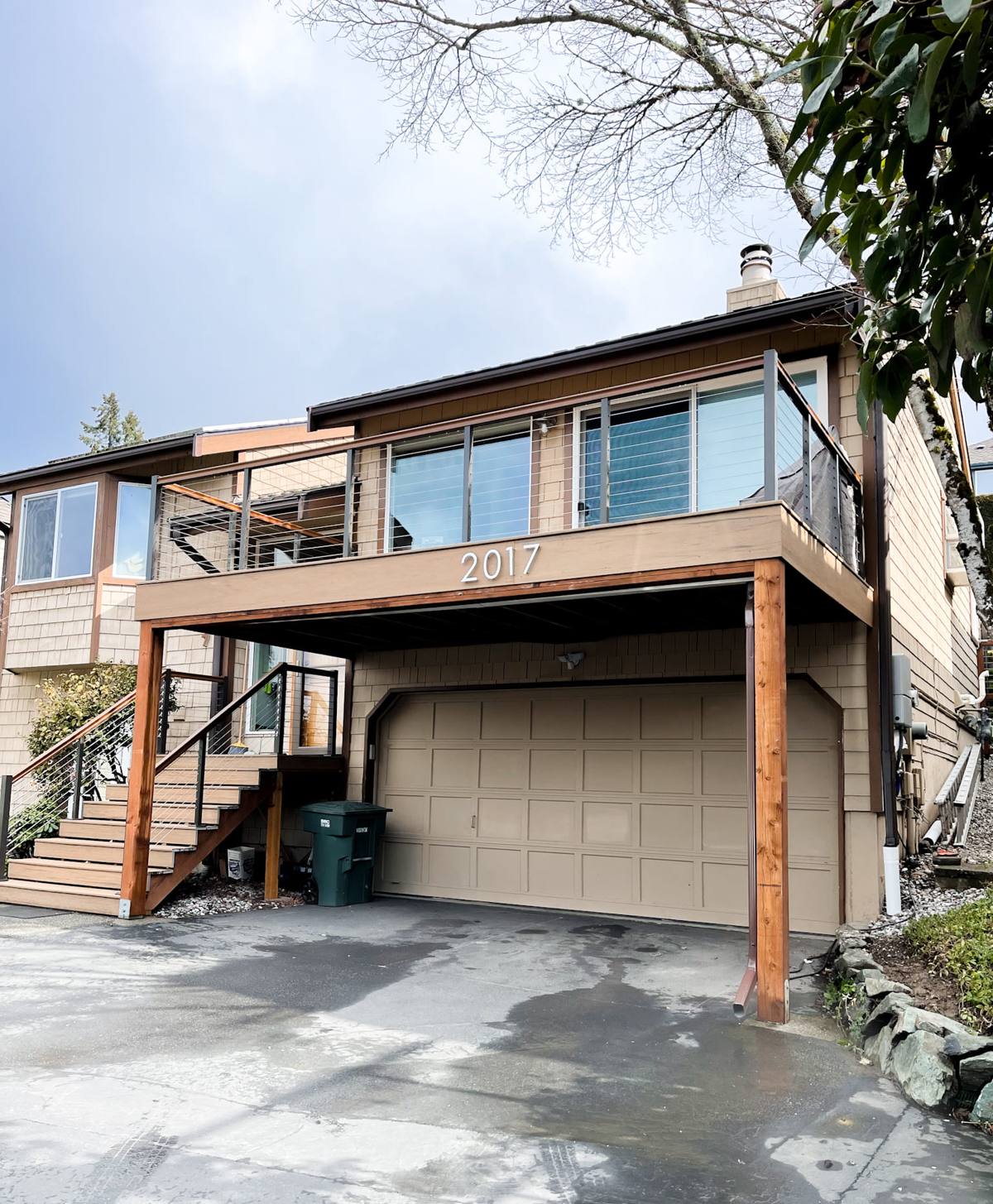
What Skagit County's Climate Demands From a New Window Install
Mount Vernon sits in a stretch of the Skagit Valley that gets a genuinely long wet season — soaking, low-intensity rain that can run for days at a time, plus the kind of driving, wind-pushed rain that comes through during fall and winter storms off the Sound. East Mount Vernon's slightly more open, newer-development lots often catch more of that wind-driven rain than older, tree-sheltered streets closer to downtown. Add in the salt-tinged air that moves inland off Puget Sound and the moss and mildew pressure that comes with months of damp, shaded conditions, and you've got a climate that actively tests every seam in a window installation.
What that means in practice for new construction:
- Flashing has to shed water down and out, every time, with no reliance on caulk alone. Sealant fails eventually. Flashing sequencing is what protects the wall long after the caulk has cracked.
- The weather-resistive barrier (WRB) and window flashing need to work as one system, lapped correctly so water always drains toward the outside of the wall, never behind it.
- Corrosion-resistant fasteners and hardware matter more here than in drier inland climates. Salt-influenced moisture in the air accelerates corrosion on the wrong metals over time.
- North- and west-facing walls, and anything exposed to prevailing weather, need the most conservative detailing — these catch the bulk of the driving rain in a typical Skagit Valley storm.
- Ventilation and drying paths behind trim and siding help manage the moss-and-mildew season by giving any incidental moisture somewhere to go instead of sitting against wood.
The Parts of a New-Construction Window Job That Actually Matter
Rough Opening Prep
Before a window ever goes in, the rough opening needs to be square, correctly sized, and free of debris. Sill pans — a shaped, sloped barrier at the bottom of the opening — are non-negotiable in this climate. A sill pan gives any water that gets past the window a way to drain back outside instead of soaking into the framing. This is one of the most commonly skipped steps in production-built homes, and it's one of the cheapest details to get right during construction versus fix later.
Flashing Sequencing
Flashing tape and self-adhered membrane go on in a specific order — sill first, then jambs, then head flashing, always shingle-lapped so the piece above overlaps the piece below, the same way roof shingles work. The WRB behind the wall integrates into that sequence, tucking under the head flashing and lapping over the jamb and sill flashing. Reversing any part of that order creates a spot where water can work its way behind the barrier instead of over it.
Window Selection and Set
The window unit itself needs to be plumb, level, and square in the opening, shimmed correctly so it isn't relying on the fasteners to hold its shape. A window installed slightly out of square will bind, won't seal evenly, and puts uneven stress on the frame that shows up as air leaks or operational problems years down the road.
Sealant as a Backup, Not a Primary Defense
Caulk and sealant have a role — but that role is secondary to properly lapped flashing, not a substitute for it. We use sealant at joints where it belongs and skip it where flashing should be doing the work instead, because sealant-dependent installations are the ones that fail quietly, years after the crew that installed them is gone.
Coordination With Siding and Trim
New-construction window installation doesn't happen in isolation — it has to hand off cleanly to whatever siding and trim comes next. Window flashing needs to integrate with the housewrap and drainage plane the siding installer is counting on. When the same crew or a well-coordinated team handles both stages, there's no ambiguity about who's responsible for what layer of the water management system.
Energy Code and Performance Considerations
Washington's energy code sets minimum performance requirements for new-construction windows, including U-factor limits that are stricter than what many older homes in Mount Vernon were built to. New builds need to hit those numbers as designed, which usually means:
- Selecting glass packages (typically dual-pane, low-E coated, argon-filled) rated to meet or beat the required U-factor for the climate zone.
- Confirming window specs match what's in the approved building plans before the units are ordered, not after they show up on site.
- Making sure installation doesn't compromise the performance the window was rated for — gaps around the frame, missing insulation at the rough opening, or poor air sealing can all quietly undercut a window's real-world performance even if the unit itself is rated well.
Comparing Window Approaches for New Construction
| Consideration | Nail-Fin (New-Construction) Frame | Retrofit/Insert Frame |
|---|---|---|
| Best used for | New builds, full wall openings, additions with wall opened to studs | Existing openings where wall isn't being opened up |
| Flashing access | Full access to sheathing, WRB, and framing for proper flashing | Limited — relies more on the existing wall's condition |
| Long-term water management | Built-in drainage plane integration from the start | Dependent on the health of the existing wall assembly |
| Typical use in East Mount Vernon | New subdivisions, custom builds, additions | Renovations of existing homes |
For a new build in East Mount Vernon, the nail-fin approach is standard because it lets us build the water management system correctly from bare studs outward, rather than working around what's already there.
Our Process for New-Construction Window Installs
- Plan review. We confirm window sizes, U-factor ratings, and rough opening dimensions against the approved plans before ordering anything.
- Rough opening inspection. Every opening gets checked for square, size, and framing condition before install day.
- Sill pan and flashing installation. Sloped sill pans go in first, followed by properly lapped jamb and head flashing tied into the WRB.
- Window set. Units are shimmed plumb, level, and square, then fastened per manufacturer specifications.
- Sealant and trim integration. Sealant is applied only where it belongs in the system, and the install is coordinated with whoever is handling siding and exterior trim next.
- Final check. Operation, sealing, and flashing laps are verified before we consider the opening complete.
What to Ask Before Hiring for a New-Construction Window Job
- Do you install sill pans on every opening, or only when asked?
- How do you sequence flashing with the WRB — can you walk me through the lap order?
- Will the window specs you're installing actually meet the U-factor called for in my plans?
- Have you worked on new builds in Mount Vernon or elsewhere in Skagit County before?
- Who is responsible for the handoff between window flashing and the siding installation?
Why Local Experience in East Mount Vernon Matters
A crew that already works new construction in this part of Skagit County has seen how the local weather actually behaves against a house — which elevations take the worst of the driving rain, how long the moss season really runs, and how salt-influenced air over years of exposure treats different fastener and trim materials. That's not something you get from a spec sheet. It comes from having stood on enough East Mount Vernon lots, in enough weather, to know what holds up and what doesn't.
New construction only gives you one real shot at this. Once the siding goes on, the flashing and sill pan work underneath it is out of sight for the life of the house. Doing it right the first time, with a crew that understands both the building code requirements and the climate realities of this area, is what protects your investment for the decades ahead.
Get a Free, No-Pressure Estimate
If you're building in East Mount Vernon and want your window installation done right the first time, we're happy to look at your plans and walk through the details with you — no pressure, no obligation. Use the form below to request a free estimate.