 Mount Vernon
 Why East Mount Vernon Homes Need a Different Approach to Windows
East Mount Vernon sits back from the Skagit River but still lives inside the same weather pattern that shapes every neighborhood in this part of Skagit County: long stretches of damp, gray months, wind-driven rain that comes in sideways off the Puget Sound air mass, and a moss and mildew season that can run eight months out of the year on a shaded lot. Add in the salt-tinged marine air that rolls up the valley from Padilla Bay and the Sound, and you have conditions that are quietly hard on window assemblies — not through one dramatic storm, but through years of slow, cumulative exposure.
Older aluminum-frame windows and early-generation vinyl units were not built with this specific combination of moisture and temperature swing in mind. Frames that looked fine for a decade can suddenly show fogged glass, soft trim, or drafts once the seals finally give out. For homeowners in East Mount Vernon, replacing windows isn't just a cosmetic upgrade — it's a chance to correct the specific weaknesses this climate exposes, and to do it with materials and installation details matched to the way water and air actually move around a house here.
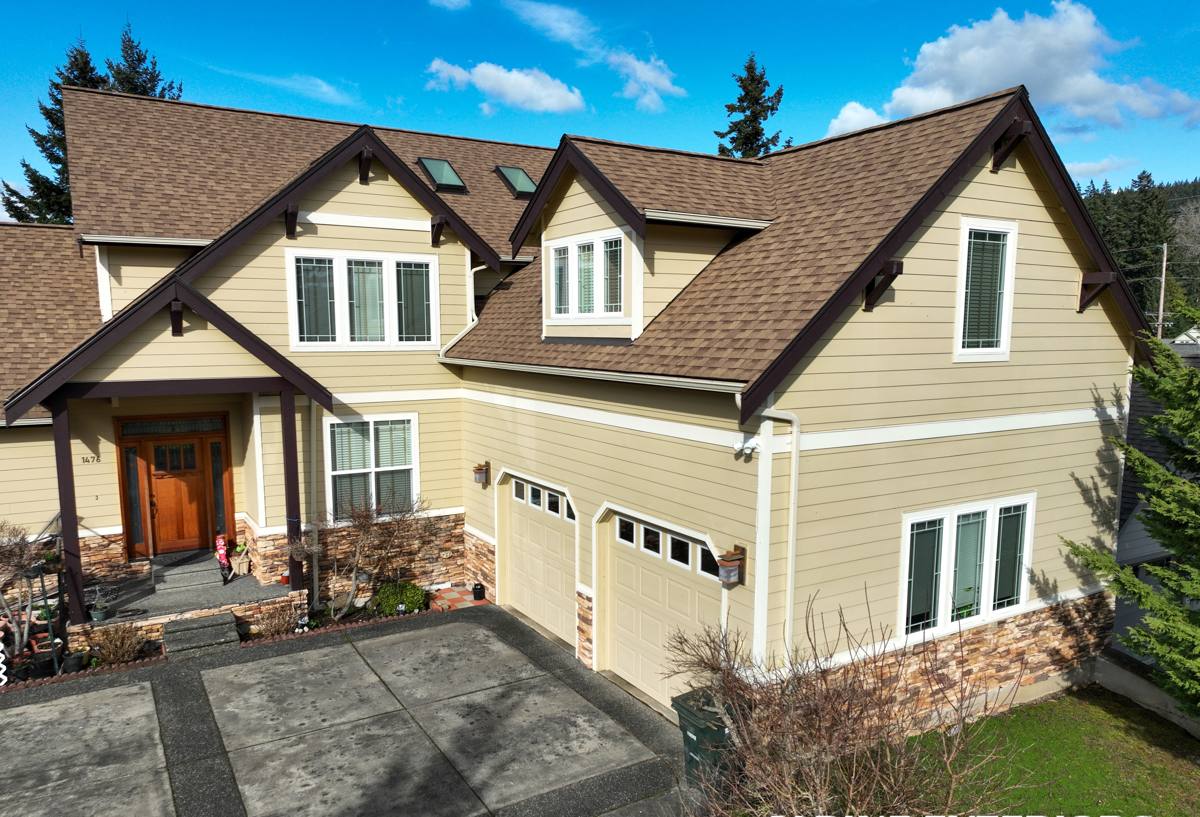
What "Energy-Efficient" Actually Means in This Climate
Energy efficiency for a window isn't one number — it's a combination of factors that work together, and in a marine climate like Skagit County's, some matter more than others.
The Ratings That Matter Locally
- U-Factor: Measures how well the window resists heat loss. In our climate, where heating dominates the energy bill far more than cooling, a low U-Factor (0.30 or lower for the whole unit) is the single most important number.
- Air Leakage (AL): Rated separately from U-Factor, this measures how much air sneaks through the frame and sash under wind pressure — directly relevant when winter storms push driving rain and gusts against a west- or south-facing wall.
- Solar Heat Gain Coefficient (SHGC): Less critical here than in sunnier climates, but still worth understanding on south-facing rooms that get real afternoon sun in summer.
- Condensation Resistance: Often overlooked, but important in a house that runs a humid interior against a cold, wet exterior for months at a time — poor condensation resistance shows up as chronic fogging or moisture on interior glass and sills.
We look at all four together, not just the headline U-Factor number, because a window that's efficient on paper but leaks air at the frame corners or sweats on the inside every January isn't actually solving the problem.
How Salt Air, Driving Rain, and Moss Attack a Window Over Time
Each of these conditions wears on a different part of the window assembly:
Salt Air
Even well inland from the Sound, airborne salt accelerates corrosion on exposed hardware — hinges, locks, and especially older aluminum frames or cladding. It's slow, but it's relentless, and it's one reason we steer clients away from bare aluminum in favor of vinyl, fiberglass, or properly clad wood on exposed elevations.
Driving Rain
Wind-driven rain doesn't just fall on a window, it gets pushed sideways and upward into any gap in the flashing, sill pan, or trim. A window can have a perfect glass unit and still fail if the flashing detail around the rough opening wasn't done correctly. This is where installation quality matters as much as the product itself.
Moss and Sustained Moisture
On shaded elevations, particularly north-facing walls or windows tucked under eaves and trees, sustained dampness feeds moss and mildew growth on sills, trim, and caulking. Beyond the cosmetic issue, that trapped moisture slowly breaks down wood trim and can work its way behind poorly sealed flashing.
What a Correct Window Replacement Job Involves
Energy-efficient glass is only half the equation. The other half is the installation detail that keeps water out and conditioned air in — and it's the part that's easiest to shortcut and hardest to inspect after the fact.
Our Process, Step by Step
- On-site assessment: We look at each window individually — sun exposure, shading, current condition of trim and flashing, and any signs of past water intrusion around the opening.
- Product selection matched to exposure: A window on an exposed west wall facing prevailing storms gets specified differently than a sheltered window under a covered porch.
- Removal and opening inspection: Once the old unit is out, we check the rough opening, sheathing, and framing for hidden rot or moisture damage before anything new goes in. This step catches problems that are invisible from outside.
- Sill pan and flashing installation: A sloped, sealed sill pan and properly lapped flashing (integrated correctly with the house wrap or building paper) is what actually keeps driving rain from working its way into the wall cavity — this is the detail that separates a durable install from a callback.
- Window setting and shimming: The unit is set level, plumb, and square, then shimmed so it operates correctly and the frame isn't under stress that can crack seals prematurely.
- Air sealing: Low-expansion foam or backer rod and sealant around the frame perimeter, sized correctly so it insulates without bowing the frame.
- Exterior trim and caulking: Sealed and finished so water sheds away from the opening rather than pooling against it.
- Final operation and seal check: Every window is tested for smooth operation, proper locking engagement, and a complete air seal before we call the job done.
Skipping or rushing any one of these steps is how a brand-new, high-efficiency window still ends up drafty or leaking within a few years — the glass and frame get the credit or blame, when the real issue was usually the flashing or sealing detail.
Choosing the Right Frame Material for East Mount Vernon
| Frame Material | Performance in This Climate | Maintenance | Typical Trade-Offs |
|---|---|---|---|
| Vinyl | Good thermal performance, handles moisture well, no corrosion risk from salt air | Low — occasional cleaning | Frame color/finish options more limited than wood; large sizes can flex slightly if not reinforced |
| Fiberglass | Excellent — very stable through temperature and moisture swings, strong against wind-driven rain | Low | Higher upfront cost than vinyl |
| Clad Wood | Warm interior look, good performance if cladding and flashing are done correctly | Moderate — exposed wood elements need monitoring, especially near moss-prone shaded areas | More installation-sensitive; a poor seal at the cladding-to-wood transition is where problems start |
| Bare Aluminum | Poor — conducts cold, prone to condensation, vulnerable to salt-air corrosion over time | Higher — hardware and finish need attention | Not our default recommendation for this climate; better suited to drier regions |
Our default recommendation for most East Mount Vernon homes is vinyl or fiberglass for the balance of performance, low maintenance, and value. Clad wood remains a solid option for homeowners who want that interior look, as long as the installation detail is treated with the extra care it requires.
Glass Packages: What's Worth Paying For
Double-pane, low-E, argon-filled glass is the practical baseline for this climate — it's not an upgrade so much as the standard that makes sense here. Beyond that baseline, a few options are worth understanding:
- Triple-pane glass: Meaningfully better U-Factor and sound dampening, worth considering on street-facing or particularly exposed elevations, but adds cost and weight — not always necessary on every window in the house.
- Warm-edge spacers: The material separating the glass panes affects both efficiency and condensation resistance at the glass edge — a detail that matters more in a humid climate than people expect.
- Low-E coating type: Different coatings are tuned for different climates; in our region we prioritize coatings that manage heat loss well rather than ones optimized primarily for solar heat rejection.
Signs Your East Mount Vernon Home's Windows Need Attention
Homeowners often live with a slowly worsening window problem for years because none of the individual symptoms seem urgent on their own. Watch for:
- Fogging or moisture between the panes of a double-glazed unit — the seal has failed and the insulating gas is gone
- Visible moss, black staining, or soft spots on exterior sills and trim
- A noticeable draft near the frame on windy, rainy days
- Condensation forming on the inside of the glass regularly during colder months
- Windows that stick, won't lock fully, or have visibly warped frames
- A jump in heating costs without another clear explanation
Any one of these can point to a failed seal, a compromised flashing detail, or simply a frame material that's finally lost its fight with the climate.
Why Local Installation Experience Matters
Window replacement looks straightforward from the outside, but the details that determine whether a job lasts are specific to the conditions it has to survive. A crew that installs windows regularly in Skagit County understands how prevailing wind and rain patterns hit different elevations of a house, how much shading and moss exposure a given lot typically sees, and which flashing and sealing details actually hold up through a full wet season rather than just passing a walkthrough inspection. That local pattern recognition is hard to replicate with a crew that mostly works in a different climate zone, and it's the difference between a window that performs for twenty-plus years and one that needs attention again in five.
We also stand behind the installation itself, not just the product warranty from the manufacturer — because in this climate, installation quality is usually the deciding factor in how a window performs over time.
Getting Started
If your East Mount Vernon home has windows showing their age — drafts, fogged glass, sticking sashes, or visible wear around the frames — we're happy to take a look and give you a straightforward, no-pressure assessment of what's actually going on and what your realistic options are. There's a free estimate form below whenever you're ready.