 Mount Vernon
 New-Construction Windows for Downtown Mount Vernon
New-construction window work is different from a retrofit, and it's worth understanding why before you start pricing bids. On a new build or a true addition, the window goes in before the siding, house wrap, and trim are finished — which means the window nailing fin gets integrated directly into the wall's water management system rather than sealed against existing siding after the fact. Done right, this is the strongest, most weathertight way to install a window. Done wrong, it's the way a lot of hidden leaks get built into a house from day one, and nobody finds out until the drywall or sheathing behind the window is already damaged.
For a project in Downtown Mount Vernon, that matters more than it would somewhere drier. Skagit County sits close enough to the water that homes deal with salt-laden air, long stretches of driving rain off and on through fall and winter, and a moss season that can run several months where anything shaded and damp stays damp. New-construction windows here need to be installed with that reality built into the flashing plan from the start, not bolted on as an afterthought.
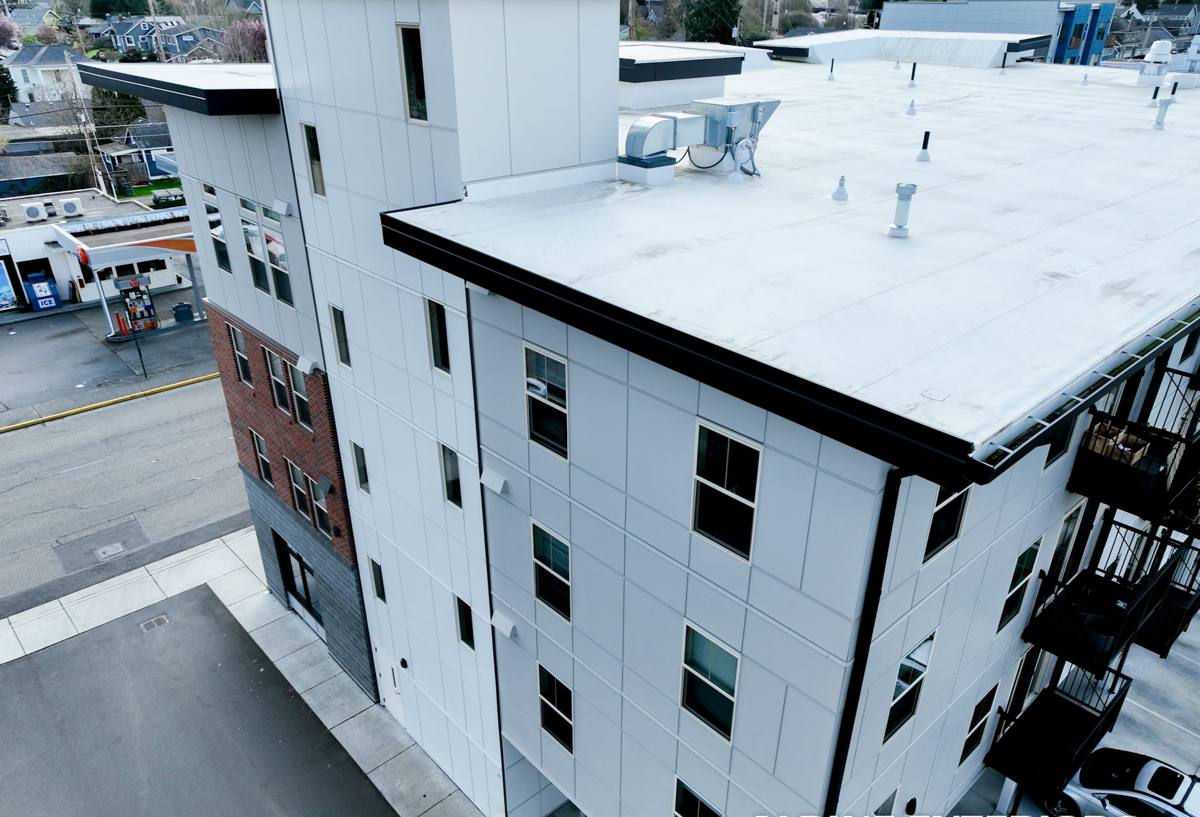
Why New Construction Is a Different Job Than Replacement
With a replacement window, we're generally working within an existing rough opening and existing siding, matching what's there. With new construction, we're building the water management layer from scratch — house wrap, flashing tape, sill pans, and window integration all have to work together as one system before any siding goes on. There's more opportunity to do it correctly, but also more ways to get it wrong if the sequence is off.
What This Means for a Downtown Mount Vernon Build
- The sill pan and flashing sequence has to shed water outward and downward even under sustained, wind-driven rain — a normal winter pattern this close to Puget Sound and the Skagit River delta.
- Housewrap laps and tape need to be installed shingle-style (upper courses over lower) so gravity and wind-driven moisture can't work their way behind the wrap at the window's top corners.
- Any exterior trim or sill detail should be designed to shed water away from the wall rather than create a ledge where moss and organic debris can collect and hold moisture against the building.
- Frame materials and hardware finishes should hold up to salt-influenced air without pitting, chalking, or corroding prematurely.
What a Correct Installation Involves, Step by Step
There's no shortcut version of this that still holds up over time. A proper new-construction window installation follows a sequence, and skipping steps is exactly how call-backs happen two or three winters later.
- Rough opening check. Confirm the opening is square, level, and sized correctly for the window unit before anything else happens.
- Sill pan flashing. A sloped or pre-formed sill pan directs any water that gets past the window back outward, rather than letting it sit on the rough sill and soak into the framing.
- Housewrap and flashing tape integration. Jamb and head flashing get integrated with the housewrap in the correct shingle-lap order — sides first, then head flashing lapped over the top of the side flashing and under the wrap above.
- Setting the window. The unit is set, shimmed for square and level, and fastened through the nailing fin per the manufacturer's instructions — this is also where warranty compliance is either protected or voided.
- Backer rod and sealant at the interior and exterior. A continuous, properly sized bead of quality sealant — not just a smear — at the right points seals the assembly without trapping moisture where it can't escape.
- Interior air-sealing. Low-expansion foam or backer rod and sealant at the interior gap controls drafts and helps with energy performance without over-pressuring the frame.
- Exterior trim and siding tie-in. Trim details are set to shed water past the window rather than pool against it, and siding is brought in to lap correctly over the flashing.
Choosing Frame and Glass for This Climate
For new construction in a coastal-influenced Skagit County location, we generally steer homeowners toward vinyl or fiberglass frames with a good multi-point locking system and low-E, dual-pane (or triple-pane for exposed elevations) glass. Wood-frame windows can look great, but they demand consistent exterior maintenance to keep moisture out of end grain and joints — in a location with a long damp season and salt-influenced air, that maintenance burden is real and ongoing, and we're upfront with clients about that trade-off rather than talking them into a product that needs more upkeep than they're expecting.
Frame Material Comparison for New Construction
| Frame Type | Moisture Tolerance | Maintenance Need | Typical Fit for This Area |
|---|---|---|---|
| Vinyl | Excellent — won't rot or corrode | Low — occasional cleaning | Strong all-around choice for coastal/rain-heavy conditions |
| Fiberglass | Excellent — very stable, low expansion | Low | Good for larger openings or where a slimmer sightline is wanted |
| Wood (clad or unclad) | Good if maintained, vulnerable if not | High — regular sealing/painting | Workable but requires real ongoing commitment from the owner |
| Aluminum | Fair — can corrode near salt air over time, thermally conductive | Moderate | Less common recommendation here unless thermally broken |
Moss, Shade, and Sill Design
Downtown Mount Vernon has plenty of mature trees and shaded lots, and shaded, damp conditions are exactly what moss and algae need to take hold on sills, trim, and lower siding courses. It's not just cosmetic — sustained organic growth holds moisture against wood trim and can accelerate rot at the most vulnerable point of a window assembly, the sill. We design sill and trim details with a slight slope and a drip edge so water sheds cleanly instead of sitting, and we recommend low-maintenance trim materials on north- and shade-facing elevations where moss pressure is highest.
Energy Performance for New Builds
New construction is the best possible time to get window energy performance right, since there's no existing structure limiting the options. For Skagit County's climate — cool, wet winters and mild summers — we typically recommend double-pane low-E glass as a baseline, with triple-pane or upgraded low-E coatings considered for north-facing rooms, larger glazing areas, or clients specifically prioritizing energy bills. Proper installation (accurate shimming, correct sealant placement, sound air-sealing) affects real-world energy performance as much as the glass package itself — a well-installed standard window often outperforms a poorly installed premium one.
Our Process for Downtown Mount Vernon New-Construction Projects
- On-site consultation. We walk the framed openings (or plans, if we're brought in early) and talk through window selection, sizing, and any project-specific concerns.
- Coordination with your builder or GC. New-construction window work only goes smoothly when it's sequenced correctly with framing, wrap, and siding trades — we coordinate directly so nobody's waiting on anybody.
- Written estimate. Clear line items for materials and labor, no vague allowances.
- Installation per manufacturer specification. This protects your warranty and gives you a documented, correct installation.
- Final walkthrough. We check operation, seals, and trim on every opening before calling the job done.
Why a Local Crew Matters for This Kind of Work
New-construction window installation lives or dies on flashing sequence and sill design, and those details should be built around the actual climate the house will sit in — not a generic national spec sheet. A crew that already works Downtown Mount Vernon jobs regularly has already seen how driving rain moves against homes in this part of Skagit County, how much shade and moss pressure a given lot tends to carry, and which sill and trim details actually hold up here versus in a drier inland climate. That local pattern recognition shows up in fewer callbacks and windows that are still performing well a decade in, not just on install day.
Questions Worth Asking Any Contractor Before You Hire
| Question | Why It Matters |
|---|---|
| Who installs the sill pan flashing, and how? | This is the single most common point of failure in new-construction window leaks. |
| Are you familiar with this manufacturer's written installation instructions? | Deviating from them can void your window warranty even if the work looks fine. |
| How do you sequence with the framing and siding crews? | Poor coordination is how gaps and rushed shortcuts happen on new builds. |
| What's your approach for shaded or moss-prone elevations? | A local crew should have a specific answer, not a generic one. |
If you're planning a new build or true addition in Downtown Mount Vernon and want window work done right the first time, we're happy to walk the plans or the framed openings with you and put together a straightforward, no-pressure estimate — just fill out the form below.