 Mount Vernon
 Building Decks for Downtown Mount Vernon's Climate
Downtown Mount Vernon sits in the Skagit River valley, close enough to Puget Sound and the Salish Sea that homes here deal with a mix of moisture problems most inland towns never see. You get the marine layer's salt-tinged air, long stretches of driving rain off the water, and a moss season that can run from October well into April. A deck built without those three things in mind will look fine for a year or two and then start telling on itself — soft spots underfoot, green film on the boards, rust bleeding from fastener heads, ledger boards that stay damp long after the rain stops.
We build decks for homes in and around Downtown Mount Vernon on a regular basis, and the construction choices that work well in a drier part of the state simply don't hold up the same way here. This page covers what a deck actually needs to survive a Skagit County winter, what correct construction looks like, and how we approach the job from first look to final walkthrough.
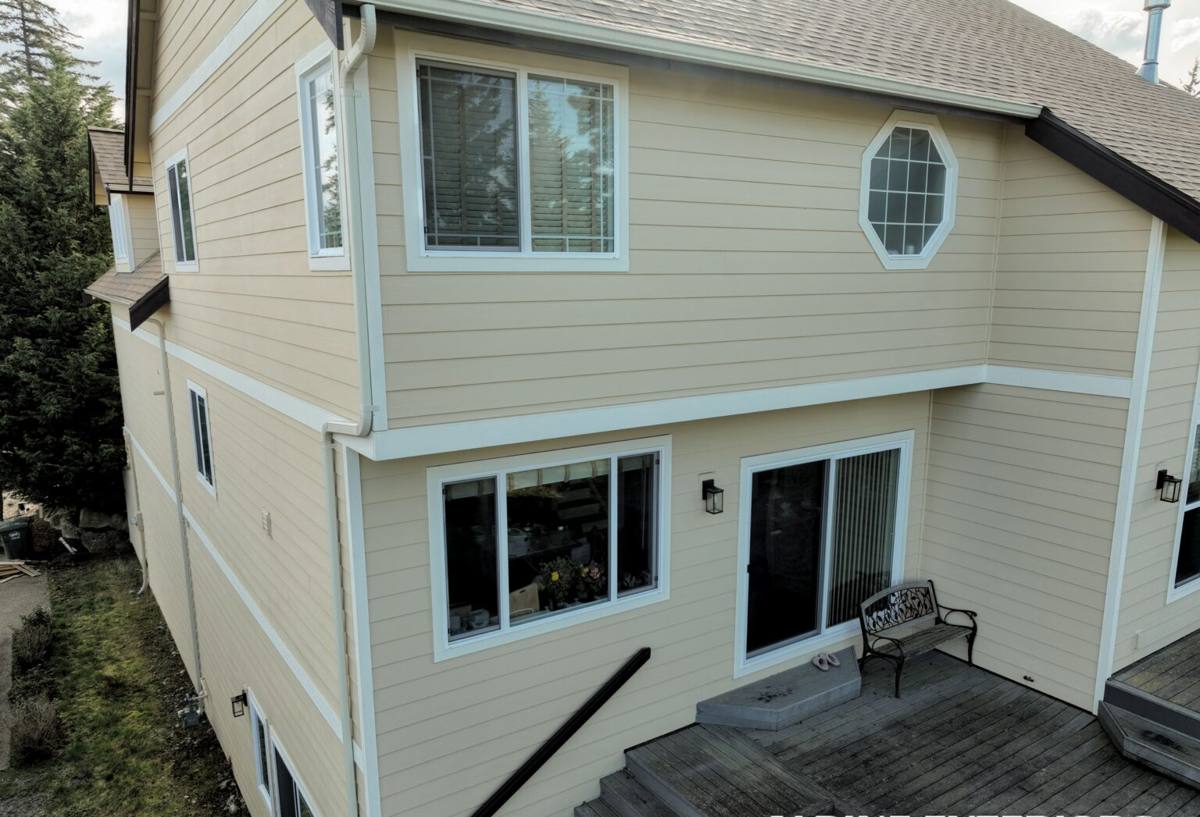
What Downtown Mount Vernon Decks Are Up Against
Salt Air and Metal Fatigue
Even set back from the water, this stretch of Washington gets enough salt-laden air that untreated or poorly rated hardware corrodes faster than manufacturers' generic specs assume. Screws, joist hangers, and structural connectors that aren't rated for coastal exposure can start rusting within a couple of seasons, and once a fastener weakens, it's a structural issue, not a cosmetic one.
Driving Rain and Water Intrusion
Rain here rarely falls straight down — wind off the valley pushes it sideways into ledger connections, stair stringers, and any spot where two materials meet. A deck that isn't flashed and sloped correctly at those joints will trap water instead of shedding it, and trapped water is what eventually rots framing you can't see from the surface.
Moss, Algae, and Shade
Many Downtown Mount Vernon lots have mature trees and tight side yards that keep decks shaded and damp for long stretches of the year. That's ideal growing conditions for moss and algae, which don't just look bad — they hold moisture against the decking surface and turn boards slick and dangerous underfoot.
What a Correctly Built Deck Includes
A deck that's going to hold up here needs the right answer at every layer, not just a good-looking surface board. The pieces that matter most:
- Ledger board flashing that actually diverts water away from the house band joist, not just a bead of caulk behind the ledger
- Joist tape or a comparable moisture barrier on top of every joist, so fasteners don't sit in standing water
- Stainless or coated fasteners and structural connectors rated for coastal/high-moisture exposure
- Proper slope away from the house on the decking surface, even if it's subtle, so water doesn't pool against the siding
- Adequate ventilation underneath the deck so the framing can dry out between storms instead of staying damp for months
- Footings set to the correct depth for our frost and soil conditions, inspected and poured correctly the first time
Skip any one of those and the deck can still look finished on handover day. The problems show up eighteen months to three years later, usually as soft decking, a wobbly rail post, or a musty smell coming from underneath — by which point the fix is bigger and more expensive than it would have been to do right the first time.
Decking Material Choices for This Climate
There's no single "best" decking material — it's a real trade-off between upfront cost, maintenance commitment, and how the material behaves in wet, shaded, moss-prone conditions. Here's how the common options actually compare for a Downtown Mount Vernon yard:
| Material | Moisture Behavior | Maintenance | Typical Lifespan Here |
|---|---|---|---|
| Pressure-treated wood | Absorbs water; needs a functioning sealant coat to resist rot and moss | Annual cleaning and re-sealing recommended | 10-15 years with upkeep |
| Cedar | Naturally rot-resistant but still needs sealing in a wet, shaded yard | Cleaning and re-sealing every 1-2 years | 15-20 years with upkeep |
| Composite decking | Doesn't absorb water or rot, but can still grow surface algae/moss film in deep shade | Periodic washing; no sealing or staining | 25-30+ years |
| PVC decking | Fully moisture-resistant, least hospitable surface for moss growth | Occasional washing | 25-30+ years |
For a sunny, well-drained lot, quality cedar can be a fine, budget-conscious choice. For a shaded Downtown lot near mature landscaping — which describes a good number of properties in this neighborhood — composite or PVC decking earns its higher upfront cost back in avoided maintenance and a much slower moss cycle. We'll walk your specific yard with you and give you an honest read on which category makes sense before you commit to a material.
Railings, Stairs, and Structural Hardware
Railings and stairs take the brunt of foot traffic and weather exposure, and they're also where a lot of corner-cutting hides in plain sight. Wood rail posts that aren't properly flashed at the base will wick moisture up from the deck surface and rot from the inside out — often invisible until the post has actual give to it. Stair stringers sitting directly on damp soil or concrete without a barrier between them are in the same position.
We use structural hardware rated for the exposure this region actually produces, not the minimum the building code allows in a drier climate. That includes post bases that keep wood off standing water, connectors sized correctly for the load, and fasteners that won't start bleeding rust streaks down your decking within the first year.
Our Process for a Downtown Mount Vernon Deck
- Site walk and honest assessment — we look at sun exposure, drainage, proximity to trees, and how the deck ties into your home before recommending materials.
- Permitting — most new decks and significant rebuilds in Mount Vernon require a permit; we handle that process so it's not on you to navigate.
- Framing and structural work — footings, ledger flashing, joists, and moisture barriers go in correctly the first time, because this is the layer you won't see again once the decking is down.
- Decking, railing, and stairs — installed to the material manufacturer's spec, with attention to slope and drainage at every seam.
- Final walkthrough — we go over the finished deck with you, including what maintenance (if any) your chosen material needs going forward.
Maintenance That Actually Matters
Whatever material you choose, a little seasonal attention goes a long way in this climate. Before moss season sets in each fall, a simple checklist keeps most problems from ever starting:
- Clear leaves and debris from between boards and off the surface before fall rains arrive
- Check that under-deck ventilation gaps aren't blocked by stored items or overgrown plants
- Look at ledger flashing and post bases for any sign of water staining or standing moisture
- Wash the surface with a deck-safe cleaner if you're seeing early moss or algae film
- For wood decks, plan on re-sealing on the schedule your material calls for — don't wait until it's visibly gray or absorbing water
None of this replaces correct construction — a poorly built deck will fail no matter how well you maintain it — but on a properly built deck, this short list is really all it takes to keep it looking and performing the way it should.
Why Local Experience on This Job Matters
A crew that mostly builds in drier parts of the state will default to standard details that work fine there and fall short here. Building decks in and around Downtown Mount Vernon regularly means we already know which fastener grades hold up, which decking materials actually resist this area's moss cycle, and where water tends to find its way into a structure if the flashing isn't done right. That's not a marketing point — it's the difference between a deck that needs real repair work in three years and one that's still solid in twenty.
We're also familiar with Mount Vernon's permitting process, so a new deck or a full rebuild doesn't stall out waiting on paperwork nobody explained to you up front.
Get a Free, No-Pressure Estimate
If you're planning a new deck or replacing one that's showing its age, we're glad to come take a look and give you a straightforward assessment — what your yard's conditions call for, which materials make sense for your budget, and what the job will actually involve. Use the form below to request a free estimate, no pressure and no obligation.