 Mount Vernon
 Deck Building in Burlington: Built for the Weather You Actually Get
Burlington sits in the flat, damp heart of Skagit County, close enough to Puget Sound and the Samish flats to catch salt-laden air and far enough from the mountains to get soaked by long stretches of driving rain most of the year. A deck built here doesn't fail because of one big storm. It fails slowly, from months of standing moisture, trapped humidity under the boards, and moss working its way into every joint and fastener hole. If you're planning a new deck or replacing an old one in Burlington, the material choices and construction details matter more than they would in a drier climate.
We build and repair decks throughout the Mount Vernon and Burlington area, and most of the deck problems we get called out for aren't design flaws — they're moisture and drainage problems that were baked in at the time of construction. This page walks through what a Burlington deck actually needs, what a correct build looks like, and how we approach the work.
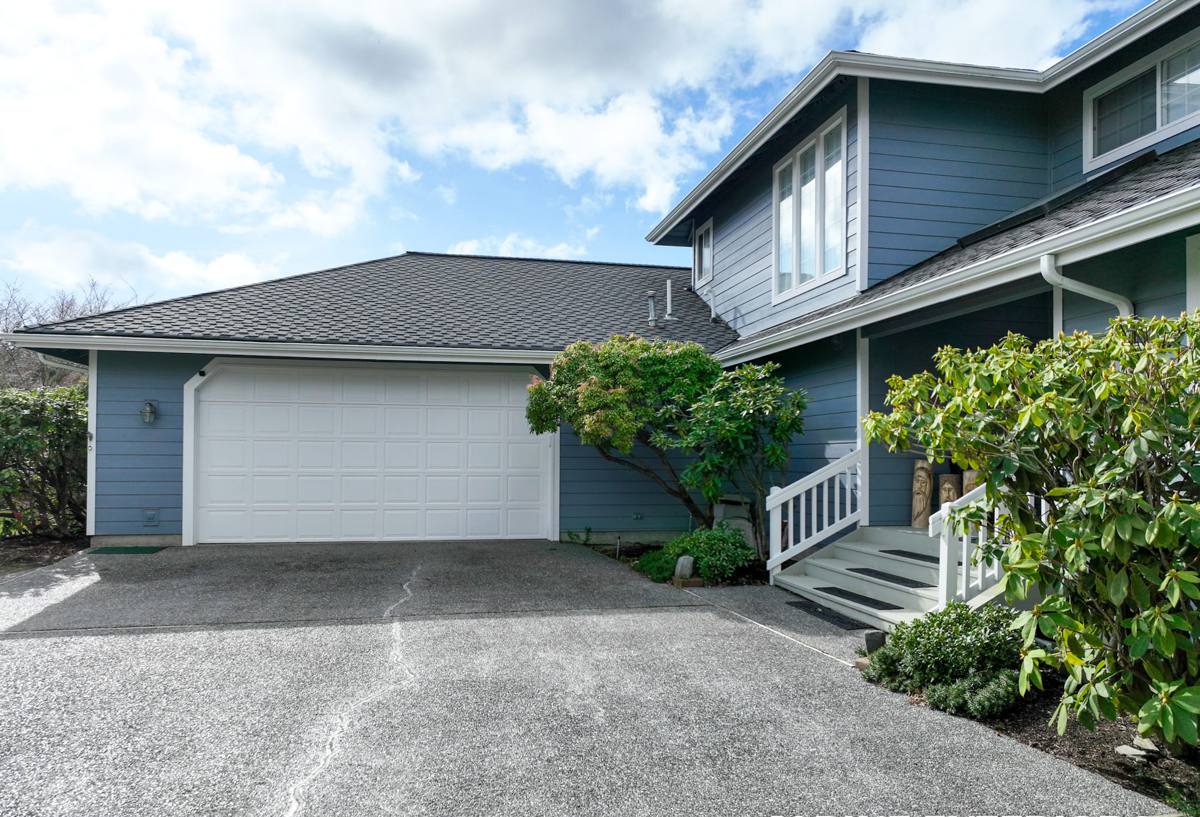
What Skagit County Weather Does to a Deck Over Time
Three things define outdoor structures in this part of Washington: salt air, driving rain, and a moss season that can run from fall through spring.
Salt Air
Burlington isn't right on the water, but the marine air moving in off Padilla Bay and the Sound carries salt and moisture inland. Over years, that air accelerates corrosion on exposed fasteners, hardware, and metal railings or post connectors that aren't rated for coastal exposure. A deck built with interior-grade screws or unprotected brackets will show rust streaks and weakened connections well before the wood itself gives out.
Driving Rain
Rain here doesn't just fall straight down — wind-driven storms push water sideways, into gaps, under flashing, and behind ledger boards where the deck attaches to the house. That's the single most common failure point we see: water getting behind the ledger board and rotting the rim joist or sill plate of the house itself, hidden behind the decking for years before anyone notices.
Moss and Standing Moisture
Low, indirect winter sun and long damp stretches mean moss and algae get a real foothold on any horizontal surface that doesn't dry out quickly. On a deck, that means slick, discolored boards, moss growing between deck boards where debris collects, and — on wood decking — the beginning of rot underneath a mat of moss that's holding moisture against the surface.
Choosing the Right Decking Material for a Burlington Home
There's no single "best" decking material for every homeowner — it depends on budget, how much upkeep you're willing to do, and how long you want the deck to last without major work. Here's how the common options actually perform in this climate.
| Material | Upfront Cost | Maintenance | Moss/Moisture Behavior | Typical Lifespan Here |
|---|---|---|---|---|
| Pressure-treated wood | Lowest | Annual cleaning, periodic staining/sealing | Absorbs moisture; needs regular sealing to resist moss and rot | 10–15 years with upkeep |
| Cedar | Moderate | Regular sealing to hold color and resist moisture | Naturally more rot-resistant than treated pine, but still needs sealing in this climate | 15–20 years with upkeep |
| Composite decking | Higher | Occasional washing, no sealing or staining | Does not absorb water or rot, but surface moss/algae can still grow and should be washed off | 25–30+ years |
| PVC/capped polymer | Highest | Low — occasional washing | Fully moisture-sealed surface; best resistance to moss staining | 30+ years |
For homeowners who don't want a yearly maintenance chore, composite or capped polymer boards make the most sense in Skagit County's climate — the extra upfront cost buys you out of the sealing cycle that wood requires here. For those who prefer the look and lower cost of real wood, that's a completely reasonable choice too, as long as you go in knowing the sealing schedule is not optional in this climate — skip it a couple of seasons and moss and rot get ahead of you fast.
Framing and Structure: Where Most Deck Problems Actually Start
The decking surface is what you see, but the framing underneath is what determines whether the deck is safe and how long it lasts. A few details matter more in a wet climate than in most:
- Ledger board flashing — where the deck attaches to the house needs proper flashing that sheds water away from the wall, not just caulk or a wrap that will eventually fail.
- Joist protection — joist tops and cut ends should be protected (capped or treated) since end grain absorbs water fastest and rots from the inside out.
- Fastener and hardware grade — hot-dip galvanized or stainless hardware holds up far better against salt air corrosion than standard coated fasteners.
- Footings set below frost and to code depth — Skagit County's clay-heavy, often saturated soil needs footings sized and set correctly so the deck doesn't shift as the ground swells and drains through wet seasons.
- Post-to-beam and beam-to-joist connections — mechanical connectors rated for exterior use, not just toe-nailing, especially on taller or multi-level decks.
None of this is visible once the decking is down, which is exactly why it's worth asking a contractor to walk you through their framing plan before boards go on, not after.
Drainage, Airflow, and Keeping Moss From Taking Hold
A deck that dries out quickly after a storm will always outlast one that stays damp. A few things we build into every deck to help with that:
Proper board spacing lets water drain through instead of pooling, and it lets air move underneath the deck surface so the framing dries between rain events. On ground-level or low-clearance decks, we pay attention to grading underneath so water doesn't collect and sit against posts and footings. Where a deck sits under trees or in a shaded spot — common on lots with mature landscaping around Burlington — we'll talk through gutter or drip-edge details on the house above so runoff isn't dumping directly onto the deck surface, which speeds up moss growth and surface wear.
Our Deck Building Process
The process is straightforward, but every step is where a climate-aware build either happens or doesn't:
- Site visit and assessment — we look at drainage, sun exposure, soil, and how the deck will tie into the house before talking materials.
- Design and material selection — sizing, layout, railing style, and decking material chosen based on your budget and how much maintenance you want going forward.
- Permitting — most new decks and many replacements in Burlington and unincorporated Skagit County require a building permit; we handle that process as part of the job.
- Footings and framing — footings set to code depth, structural framing built with corrosion-resistant hardware and proper ledger flashing.
- Decking and railing installation — boards spaced for drainage, railings installed to current code height and baluster spacing requirements.
- Final walkthrough — we go over maintenance expectations for whatever material you chose, so there are no surprises in year two or three.
Permits and Local Code Considerations
Deck permitting requirements vary depending on the deck's height, size, and whether it's attached to the house, and Burlington falls under different jurisdictional review depending on whether the property is inside city limits or unincorporated Skagit County. Rather than guess, we pull the requirements for your specific property before we start, and we build to current guardrail height, stair, and structural code — not just what was allowed when an older deck was originally built. If you're replacing an existing deck, this is often the point where we find the older structure wouldn't pass a current inspection even if it looks fine from the surface.
Maintaining a Deck Through a Skagit County Winter
Whatever material you choose, a little seasonal attention goes a long way here:
- Sweep leaves and debris off the deck regularly in fall — trapped organic matter is what feeds moss and holds moisture against boards.
- Wash the surface at least once or twice a year with a deck cleaner to remove algae and moss before it stains or gets slick.
- Check and re-seal wood decking on the schedule recommended for that product — don't wait until it looks gray and dry.
- Keep gutters and downspouts on the adjacent roofline clear so runoff isn't concentrating onto one section of the deck.
- Inspect fasteners and hardware periodically for rust or looseness, especially on older decks built before corrosion-resistant hardware was standard practice.
- Clear snow with a plastic shovel, not metal, to avoid gouging the surface, and avoid rock salt on composite or sealed wood.
Why Hire a Crew That Already Works in Burlington
A deck built to a generic national spec sheet isn't necessarily wrong, but it often misses the details that matter for this specific climate — the flashing detail that keeps driving rain out of a ledger board, the hardware grade that shrugs off salt air instead of rusting in five years, the board spacing that actually accounts for a long wet moss season instead of a dry-climate assumption. Working with a contractor who builds decks in Skagit County regularly means those decisions are already built into the plan, not something you have to think to ask about.
If you're planning a new deck or dealing with an aging one showing rot, moss, or soft spots, we're happy to come take a look. Reach out for a free, no-pressure estimate using the form below.