 Mount Vernon
 Storm Damage Roof Repair for Conway Homes
Conway sits in the lowland reach of the Skagit River valley, close enough to Puget Sound that homes here deal with a mix of weather most inland towns don't: salt-tinged air moving up the valley, long stretches of driving rain off the water, and wind that funnels through the flat delta with nothing to slow it down. When a storm rolls through and takes a bite out of a roof, the damage is rarely just cosmetic. Water finds the smallest gap, and once it's under the roofing material, it doesn't stop until it hits something it can soak into.
We work on roofs throughout Mount Vernon and the surrounding Skagit County communities, and Conway roofs tend to show a specific pattern of wear. Understanding that pattern is most of what makes a storm repair actually hold up instead of becoming next season's callback.
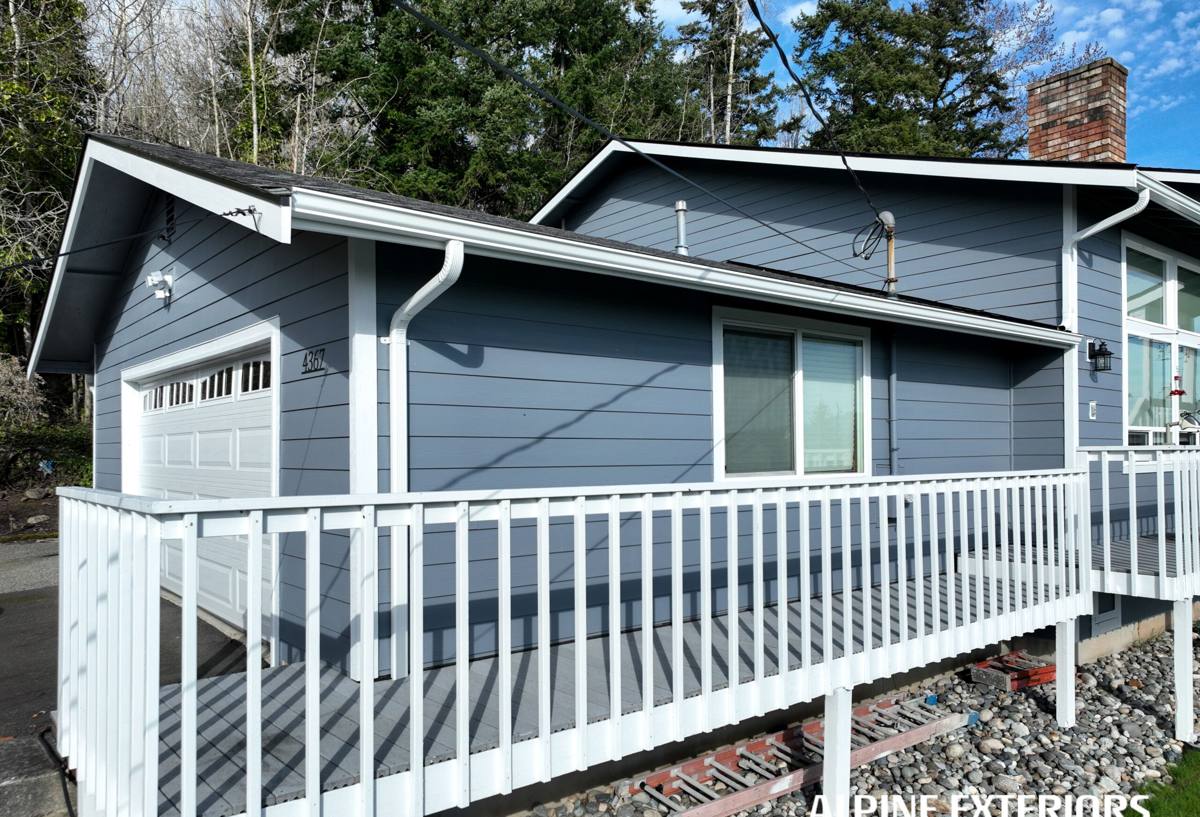
What Makes Storm Damage Different in Conway
Wind Off the Open Delta
Because Conway sits in open, low-lying farmland near the river, wind gusts during a fall or winter storm don't get broken up by hills or dense tree cover the way they might in town. That means uplift on ridge caps, loosened shingle tabs along exposed edges, and flashing that works itself loose faster than it would on a more sheltered lot. A roof that looks fine from the driveway can have a whole section of tabs partially lifted, which is an open invitation for the next rain to get underneath.
Driving Rain and Wind-Driven Water
Straight-down rain is easy for a roof to shed. Rain pushed sideways by wind is a different problem — it gets forced up under shingle edges, around vent boots, and into any nail penetration that's lost its seal. This is how storm damage in Conway often shows up first: not as a missing shingle, but as a stain on an interior ceiling weeks after the actual storm, once enough water has worked its way through.
Salt Air and Long Moss Seasons
The valley carries a faint but steady dose of salt air up from the Sound, and combined with our long wet season, it accelerates corrosion on exposed metal — flashing, fasteners, gutter hardware. Add in moss, which gets a long, uninterrupted growing season here thanks to the shade and moisture, and you get a roof surface that's already compromised before a storm ever hits. Moss holds moisture against the roofing material and lifts shingle edges as it grows, which is exactly where wind and rain then do the most damage.
How to Tell If Your Roof Has Storm Damage
Not all storm damage announces itself right away. Some signs are obvious, others take a few weeks of rain to surface.
- Shingles that are cracked, curled, torn, or missing outright, especially on the side of the roof that faces prevailing wind
- Granules collecting in gutters or at downspout outlets after a storm — a sign of impact or wind abrasion
- Flashing around chimneys, skylights, or roof-wall intersections that looks bent, lifted, or separated
- New or worsening water stains on interior ceilings or upper walls
- Sagging or soft spots in the roof deck when walked on (a sign water has already reached the sheathing)
- Debris — branches, moss clumps — that's been driven into valleys or against vent penetrations
- Gutters pulling away from the fascia or full of granule buildup and moss debris
If you notice any of these after a wind or rain event, it's worth having someone look before the next storm arrives — Skagit County winters rarely give a roof much recovery time between systems.
What a Correct Storm Repair Actually Involves
A lot of storm repair work we get called out for is a redo of a rushed patch job from someone else. Doing it right the first time means treating the repair as a system, not a single fix.
Inspection Before Anything Gets Touched
We start on the roof itself, not just from the ground with binoculars. That means checking the roof deck for soft spots, tracing water stains back to their actual entry point (which is often several feet from where the stain shows up inside), and checking flashing, vents, and valleys — not just the shingles that are obviously missing.
Matching Materials, Not Improvising
A patch that doesn't match the existing shingle profile, color, or exposure will fail faster than the surrounding roof and often looks obviously wrong. When exact matches aren't available because a roof has aged or been discontinued, we're upfront about that trade-off before starting, not after.
Flashing and Fastening Get the Same Attention as Shingles
Most leaks that come back after a "repair" come back because flashing was reused instead of replaced, or because new shingles were nailed over damaged decking without addressing the deck itself. We replace compromised flashing and fasteners as part of the repair rather than working around them.
Moss and Debris Cleared Before Repair, Not After
Repairing around active moss growth just seals moisture in. Any moss or debris in the repair area gets cleared and the surface dried out before new material goes down.
Our Process for Conway Storm Calls
- Assessment. We inspect the roof and identify every point of entry, not just the most visible one.
- Documentation. We note the damage clearly, which also helps if you're filing an insurance claim.
- Honest scope. We tell you what's a targeted repair and what's a sign of broader roof age or prior neglect that a patch won't solve.
- Repair. Matching materials, correct flashing detail, and fastening appropriate to our wind exposure.
- Follow-up check. After the next significant rain, we're available to confirm the repair is holding.
Repair vs. Replacement: How We Help You Decide
Not every storm-damaged roof needs a full replacement, and not every roof that "just needs a patch" is actually a good candidate for one. The honest answer usually comes down to the roof's age, how widespread the damage is, and what condition the underlying deck is in.
| Factor | Repair Usually Makes Sense | Replacement Should Be Considered |
|---|---|---|
| Roof age | Under 12–15 years, matching material still available | Nearing or past expected lifespan for the material |
| Extent of damage | Isolated to one section or a handful of shingles | Damage spread across multiple roof planes |
| Deck condition | Solid, dry sheathing under the damaged area | Soft, water-stained, or rotted decking found |
| Prior repair history | First or second repair on an otherwise sound roof | Repeated patches in the same area over the years |
| Moss/algae condition | Manageable, treated during the repair | Heavy, long-term moss growth affecting large areas |
We'll always tell you honestly which side of that table your roof falls on. A patch on a roof that's genuinely near the end of its service life is a short-term fix that costs money twice.
Why Hiring a Crew That Already Works in Conway Matters
Roofing crews that mostly work drier, more sheltered parts of the region sometimes underestimate how hard wind-driven rain and salt air are on a lowland roof near the Skagit delta. A repair that would hold up fine in a sheltered neighborhood in town can fail within a season out here if the flashing detail and fastening pattern don't account for our wind exposure. We work on homes throughout Mount Vernon, Conway, and the rest of Skagit County regularly enough to know which repair details actually last in this specific climate — not just in a manufacturer's general specifications.
Response Time Matters After a Storm
After a significant wind or rain event, roof damage can go from a small vulnerability to active interior water intrusion within days. Being local means we can get eyes on a damaged roof and get a tarp or temporary repair in place quickly, which often makes the difference between a straightforward shingle repair and a much bigger sheathing or insulation problem.
Preventing the Next Storm's Damage
Once a storm repair is done, a little maintenance goes a long way given how long our moss season runs and how much rain the roof sees over a typical year.
- Keep gutters and downspouts clear so wind-driven rain has somewhere to go instead of backing up under the roof edge
- Have moss treated or removed before it has a chance to lift shingle edges over a full wet season
- Check flashing around chimneys and vents annually, since these are the first points to loosen in high wind
- Trim back overhanging branches that can whip against the roof surface during wind events
- Address small issues — a lifted tab, a loose piece of flashing — before the next storm turns them into a leak
Get an Honest Look Before the Next Storm
If your Conway home has been through recent wind or rain and you're seeing any signs of damage — or you just want a roof checked before the next system moves through the valley — we're happy to come take a look. We'll give you a straight answer about what's actually needed, whether that's a targeted repair or a bigger conversation, and there's no pressure either way. Reach out for a free estimate using the form below.