 Mount Vernon
 Siding Installation Built for Conway's Setting
Conway sits low in the Skagit River delta, close enough to Puget Sound and the Skagit Bay tideflats that homes here deal with a different mix of weather than siding a few miles inland. Salt-tinged air off the water, wind-driven rain that comes in sideways during fall and winter storms, and a wet, shaded growing season for moss and algae all put real demands on exterior siding. A siding job that looks fine on day one but wasn't built for this environment tends to show its weaknesses within a handful of years — cupping, soft spots, streaking, or paint that won't hold. We install siding in Conway with those specific conditions in mind, not a generic install done the same way everywhere in the county.
This page covers what we look at, what correct installation involves, and why local experience on this stretch of Skagit County matters as much as the material itself.
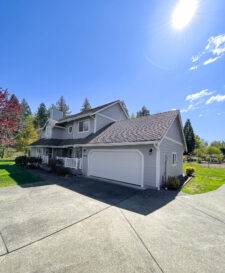
What Conway's Climate Actually Does to Siding
Salt Air and Moisture Exposure
Homes near the delta and bay get airborne salt and near-constant humidity. Salt accelerates corrosion on exposed metal fasteners and trim, and it interacts with paint films over time, dulling finishes and encouraging early chalking on lower-grade coatings. Materials that rely on a thin surface coating rather than a factory-baked finish tend to fade and streak faster in this kind of air.
Driving, Wind-Driven Rain
Open, low-lying land near the river and bay means less wind break than a home might get farther into town or up in the foothills. Rain doesn't just fall here — it's pushed sideways into wall assemblies, which puts pressure on every seam, joint, and penetration in the siding system. Poor flashing details or gapped joints that would be a minor issue in a sheltered lot become a real water-intrusion risk on an exposed Conway lot.
Moss, Algae, and a Long Wet Season
Skagit County's siding season for moss and algae growth runs long — shaded, north-facing walls and anything near mature trees or damp low ground stay wet for extended stretches from fall through spring. Porous or organic-based siding materials give moss and algae something to root into over time. Dense, engineered fiber cement resists that kind of growth far better, especially with a factory finish that doesn't have the surface texture organic growth needs to take hold.
Why We Install Only James Hardie Fiber Cement
We standardized on James Hardie fiber cement siding for every home we work on, including Conway, and we don't install vinyl, LP SmartSide, cedar, primed spruce, Cemplank, or Allura. That's not a marketing position — it's a practical one based on how those products hold up in exactly the conditions described above.
- Non-combustible material: fiber cement doesn't feed a fire the way wood-based or vinyl products can.
- Factory-applied ColorPlus finish: a baked-on finish resists fading and chalking far longer than field-applied paint, which matters in salt air.
- Climate-engineered HZ product lines: Hardie manufactures region-specific formulations built for moisture exposure like the Pacific Northwest sees.
- Dimensional stability: fiber cement doesn't expand, contract, warp, or rot the way wood-based products can when they take on repeated moisture.
- Strong transferable warranty: backed by the manufacturer when installed to spec, which protects the homeowner, not just the installer.
We're upfront that other products have their place and their advocates. Vinyl is inexpensive and low-maintenance in mild climates; cedar has genuine natural appeal; LP SmartSide has improved its engineered wood formulation over the years. But given what Conway's salt air, wind-driven rain, and moss season do to a wall over 15-20 years, we've made the call that fiber cement is the only material we're willing to put our name behind here.
What Correct Siding Installation Involves
The material is only half the equation. Most siding failures we get called out to inspect aren't a product problem — they're an installation problem. A correct Hardie installation in a wet, wind-exposed area like Conway requires attention to details that are easy to skip and hard to spot once the siding is up.
Water Management Comes First
Before a single piece of siding goes up, the wall needs a correctly lapped weather-resistant barrier, properly integrated flashing at every window, door, and penetration, and a drainage plane that lets any moisture that gets behind the siding find its way back out. On an exposed Conway lot, skipping or rushing this step is where future leaks start — regardless of how good the siding itself is.
Fastening and Clearances to Manufacturer Spec
Hardie's warranty and performance depend on installation to their published specifications: correct fastener type and spacing, proper nailing patterns, and specific clearances from grade, roofing, and other transitions. Fasteners that aren't corrosion-resistant, or nailing that's too tight or too loose, cause problems that surface years later — right when they're expensive to trace back to the original install.
Joint and Seam Treatment
Every butt joint, corner, and trim intersection is a potential water entry point. Correctly treated and sealed joints, with the right expansion allowance, keep wind-driven rain from working its way behind the siding over time — which is exactly the kind of rain Conway gets more of than sheltered inland areas.
Ventilation Behind the Cladding
A rainscreen or properly vented assembly lets any incidental moisture dry out instead of sitting against the wall sheathing. In a high-humidity, low-lying area, this is one of the most overlooked details in a substandard install — and one of the most important for long-term performance.
Our Process for a Conway Siding Installation
- On-site assessment: we walk the exterior, check existing siding and sheathing condition, note exposure direction, drainage, and any moss or moisture patterns specific to the lot.
- Scope and product selection: we recommend the right Hardie product line, profile, and color for the home's exposure and the owner's style, and walk through a written estimate.
- Tear-off and sheathing check: old siding comes off and we inspect sheathing underneath for rot or damage before covering it back up — this is often where hidden problems from a prior install turn up.
- Weather barrier and flashing installation: the water management layer goes in correctly before any siding, with extra attention to window and door flashing given the area's rain exposure.
- Siding installation to manufacturer spec: fastening, clearances, and joint treatment done to Hardie's published requirements, not shortcuts.
- Final inspection and cleanup: we walk the finished job with the homeowner, check details, and clean the site.
Why Local Experience in This Area Matters
A crew that already works this stretch of Skagit County knows which walls on a Conway lot take the worst of the weather, how close to the water a given property sits, and what that means for flashing and drainage decisions before the first piece of siding goes up. That's different from a crew installing siding the same way on every job regardless of exposure. Working locally also means we're reachable if a question comes up after the job is done — not a name from an out-of-area company that's hard to track down a year later.
Cost Factors for a Conway Siding Project
Every home is different, but these are the main factors that move the cost of a fiber cement siding installation up or down. We give a firm, itemized estimate after walking the property — we don't quote off square footage alone.
| Factor | Why It Matters |
|---|---|
| Home size and wall complexity | More corners, gables, and trim details mean more labor and material waste. |
| Existing siding removal | Tear-off of old siding, and any sheathing repair found underneath, adds time and cost. |
| Hardie product line and profile | Lap siding, shingle-style panels, and board-and-batten carry different material and labor costs. |
| Exposure and water management scope | Homes facing open wind and rain need more thorough flashing and drainage work. |
| Trim and accent work | Fascia, soffits, and trim boards done to match add to the scope but improve the finished result and durability. |
Questions to Ask Before Hiring Anyone for This Job
- Do you install to the manufacturer's published fastening and clearance specifications?
- Who inspects the sheathing before new siding goes on, and what happens if damage is found?
- What weather barrier and flashing details do you use, and why?
- Is the manufacturer's warranty transferable, and is it backed by certified installation?
- Can you explain how the wall assembly will handle wind-driven rain on this specific lot?
If your Conway home's siding is showing moss staining, cupped boards, cracked caulk lines, or you're simply planning ahead for a replacement, we're happy to walk the property and give a straight, no-pressure estimate. Use the form below to get started.