 Mount Vernon
 Conway's Climate Doesn't Forgive a Sloppy Roof
Conway sits low in the Skagit River delta, close enough to Skagit Bay and Puget Sound that salt-laden air is a daily fact of life, not an occasional event. Add in the driving, wind-pushed rain that comes through this part of Skagit County most of the year and a moss season that can stretch from fall through spring, and you have a climate that actively works against any roofing material that isn't installed correctly. Metal roofing, done right, handles this environment about as well as anything on the market. Metal roofing done poorly — wrong fasteners, wrong flashing, wrong ventilation — fails faster here than it would almost anywhere else in the state.
That's the honest starting point for this page. Metal is a strong choice for a Conway home, but the material alone isn't what protects the house. The install is what protects the house.
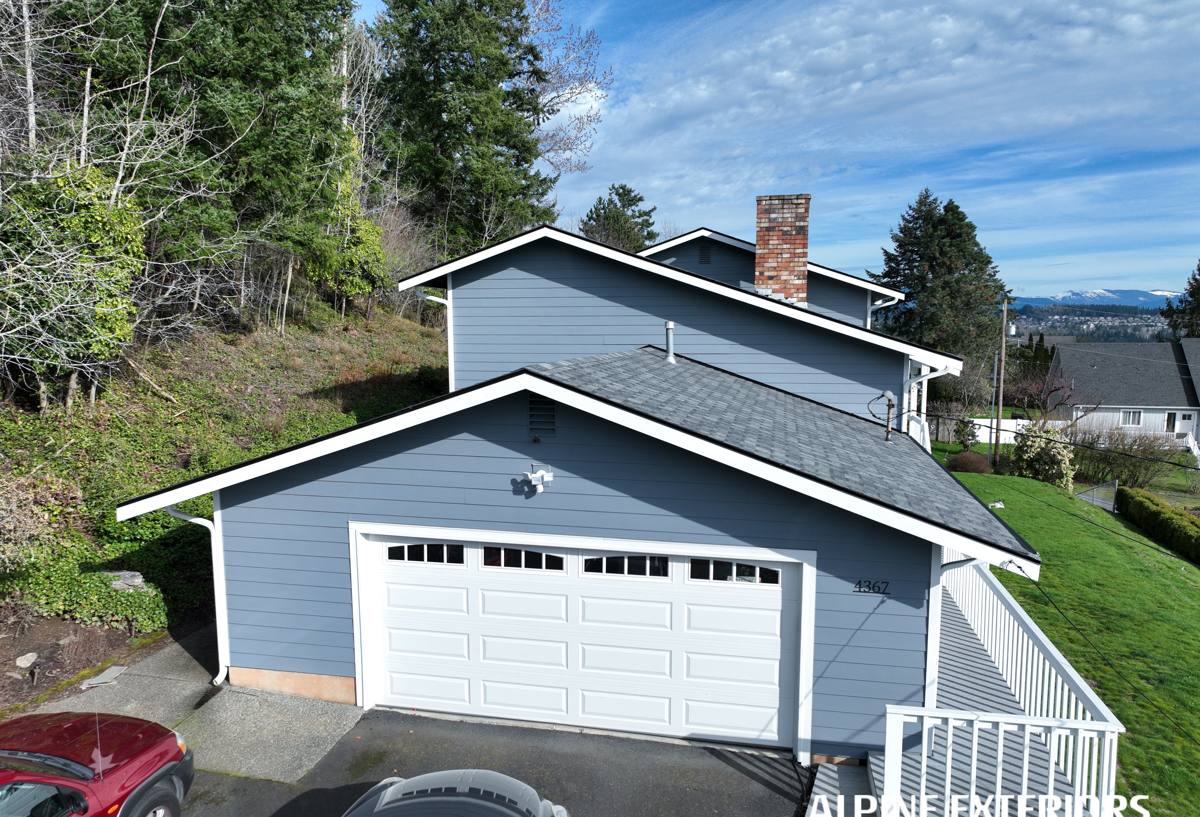
What Salt Air and Moss Actually Do to a Roof
It helps to understand the specific failure modes we're designing against, rather than treating "coastal climate" as a vague label.
Salt Air and Corrosion
Airborne salt accelerates corrosion at any point where dissimilar metals touch, where a fastener coating has been compromised, or where a cut edge of panel or flashing is left exposed. A single wrong screw type, or a cut panel edge that was never treated, becomes the starting point for rust years before the rest of the roof shows any wear.
Driving Rain and Wind-Driven Water
Rain that comes in at an angle doesn't behave like rain falling straight down. It gets pushed sideways under panel laps, around penetrations, and into any flashing detail that was cut short or caulked instead of properly formed. On a standard asphalt roof this shows up as slow leaks around vents and valleys. On metal, the same wind-driven moisture finds the same weak points — the panels themselves are not the vulnerability, the terminations and transitions are.
Moss and Organic Growth
A long, damp moss season means anything that traps moisture against a roof surface — needle debris in valleys, moss colonies on north-facing slopes, organic buildup around chimneys and skylights — will hold water against the substrate far longer than the roof was designed to tolerate. Metal sheds moss more readily than shingles because it's smooth and non-porous, but it isn't immune, especially in low-slope sections or shaded areas where debris collects.
What a Correct Metal Roof Installation Actually Involves
A metal roof is a system, not a single product. Every layer matters, and skipping or downgrading any one of them is where coastal Skagit County roofs run into trouble.
Deck and Substrate Condition
Before any panel goes down, the decking underneath has to be sound — no soft spots, no hidden rot from a prior leak, no fasteners that have backed out. On an older Conway home, this is often the step that gets skipped by crews trying to move fast. We check it because a new roof over a compromised deck just hides the problem for a while.
Underlayment
Given the amount of wind-driven rain this area sees, we use a high-temperature, self-adhering synthetic underlayment rather than a lighter felt product, particularly at eaves, valleys, and around penetrations. This is the backup layer that protects the structure if wind ever pushes water past the panel laps — cheap insurance against the exact weather pattern Conway gets regularly.
Fasteners and Flashing Compatibility
This is the detail most tied to salt-air performance. Fasteners, flashing, and panel material all need to be compatible with each other to avoid galvanic corrosion — mixing incompatible metals is one of the fastest ways to get premature rust streaking and fastener failure on a coastal roof. We match fastener coatings and flashing metals to the panel system rather than grabbing whatever is on the truck.
Panel Seams and Laps
How panels lock together — and how much overlap they have — determines how well the roof resists wind-driven rain. Standing seam systems interlock mechanically and shed water without relying on exposed fasteners at all, which is a real advantage in this climate. Exposed-fastener panels can perform well too, but only when lap lengths, fastener spacing, and sealant details are done to spec, not shortcut.
Flashing at Penetrations and Transitions
Chimneys, vent pipes, skylights, and roof-to-wall transitions are where the vast majority of real-world leaks start — on metal roofs just as much as any other type. Properly formed step flashing, counterflashing, and pipe boots that are rated for UV and temperature swings matter more than the panel choice itself.
Standing Seam vs. Exposed Fastener: Which Fits a Conway Home
Both systems have a place here. The right choice depends on roof slope, budget, and how much long-term maintenance you want to take on.
| Factor | Standing Seam | Exposed Fastener |
|---|---|---|
| Water resistance in wind-driven rain | Excellent — concealed fasteners, mechanically locked seams | Good, if installed to spec — relies on gasketed screws |
| Long-term maintenance | Low — no exposed fasteners to re-torque or replace | Moderate — fastener gaskets and washers age and eventually need attention |
| Upfront cost | Higher | Lower |
| Best suited for | Low-slope sections, homes near the water, long-term "install once" preference | Steeper slopes, budget-conscious projects, outbuildings and shops |
| Salt-air corrosion risk | Lower — fewer penetration points in the panel field | Slightly higher — many more fastener penetrations to manage |
Neither option is wrong. We'll walk your specific roof and tell you honestly which one makes sense for your slope and budget, rather than defaulting to whichever is easier to install.
Ventilation: The Detail That Gets Skipped
Metal reflects and sheds heat differently than asphalt, and that changes how the attic below needs to breathe. Without adequate intake and exhaust ventilation, moisture from daily household use can condense on the underside of the roof deck, especially during the cool, damp stretches that dominate the Skagit County calendar. Over time that trapped moisture causes deck rot from the inside — a failure that has nothing to do with the metal panels themselves and everything to do with an overlooked ventilation calculation. We size intake and exhaust ventilation to the specific roof, not off a generic rule of thumb.
Moss and Debris Management After Installation
A correctly installed metal roof sheds moss and debris far better than shingles, but Conway's tree cover and damp season mean valleys, low-slope transitions, and shaded north faces still need attention.
- Keep gutters and valleys clear of needle and leaf debris, especially heading into fall
- Trim back overhanging branches that keep a section of roof shaded and damp longer than the rest
- Have flashing and sealant points visually checked every couple of years, not just after a storm
- Watch for moss establishing in shaded valleys — catching it early means a simple rinse, not a scrub-down
- Confirm ridge and soffit vents stay unobstructed by debris or nesting
Our Process for a Conway Metal Roofing Project
We keep the process straightforward because that's what actually protects the house — not extra steps, just the right ones done in order.
- On-site assessment. We inspect the existing roof, deck condition, ventilation, and any problem areas specific to your home's exposure — waterfront-adjacent lots and sheltered lots need different attention.
- Honest scope and system recommendation. We tell you whether standing seam or exposed fastener fits your roof and budget, and whether a full tear-off or a compatible overlay is appropriate — we don't upsell a system your roof doesn't need.
- Deck repair, if needed. Any soft or damaged decking gets replaced before underlayment goes down. This isn't optional and we won't skip it to save time.
- Underlayment and flashing. High-temp synthetic underlayment and properly formed metal flashing at every transition, matched for corrosion compatibility.
- Panel installation. Installed to manufacturer spec for fastener spacing, lap length, and panel alignment — the details that determine how the roof performs in year ten, not just year one.
- Final walkthrough and cleanup. We check every penetration and edge with you before we consider the job finished, and we clean the site thoroughly, including a magnetic sweep for stray fasteners.
What Drives Cost on a Conway Metal Roof
Every roof is different, but the same handful of factors move the price up or down. We'll give you a firm number after the site visit — the table below is meant to explain what's behind that number, not to substitute for it.
| Cost Factor | Why It Matters |
|---|---|
| Roof slope and complexity | More valleys, dormers, and transitions mean more flashing labor and material |
| Tear-off vs. overlay | Removing an old roof adds labor and disposal cost but lets us inspect and repair the deck |
| Panel system chosen | Standing seam runs higher upfront than exposed fastener, offset by lower long-term maintenance |
| Deck condition | Rot or soft decking found during tear-off adds repair cost but prevents a bigger problem later |
| Ventilation upgrades | Adding or correcting intake/exhaust venting protects the whole roof system long-term |
| Access and site conditions | Steep slopes, limited staging area, or tree cover can affect labor time |
Why It Matters That We Already Work in Conway
A roofing crew that mainly works drier, inland areas can install a technically correct roof and still miss the details that matter specifically here — the fastener and flashing compatibility that salt air demands, the underlayment upgrade that wind-driven rain calls for, the ventilation math that this damp climate requires. Working Conway and the surrounding Skagit County waterfront-adjacent communities regularly means we're not guessing at how this environment treats a roof over time — we're building for the specific combination of salt air, driving rain, and moss season that your home actually faces every year, not a generic set of assumptions.
If you're weighing a metal roof for a Conway home, we're happy to walk the roof with you, explain what your specific slope and exposure call for, and give you a straight answer on system choice and cost — no pressure, no upsell. Reach out for a free estimate using the form below.