 Mount Vernon
 Roof Repair for Clear Lake Homes
Clear Lake sits east of Mount Vernon in Skagit County, tucked among trees and closer to the foothills than the flat farmland along the I-5 corridor. That location changes what a roof deals with over the course of a year. Homes here get more shade from surrounding timber, which means roofs dry out slower after rain, hold moisture longer, and grow moss more aggressively than roofs out in the open. Add in the salt-laden air that moves inland off Puget Sound, driving rain that comes in sideways during winter storms, and a moss season that can stretch from October well into spring, and you have a climate that is genuinely hard on roofing material.
We're a Mount Vernon-based crew and Clear Lake is part of our regular service area, not a place we drive out to occasionally. That matters more than most homeowners realize when it comes to roof repair, and we'll explain why below.
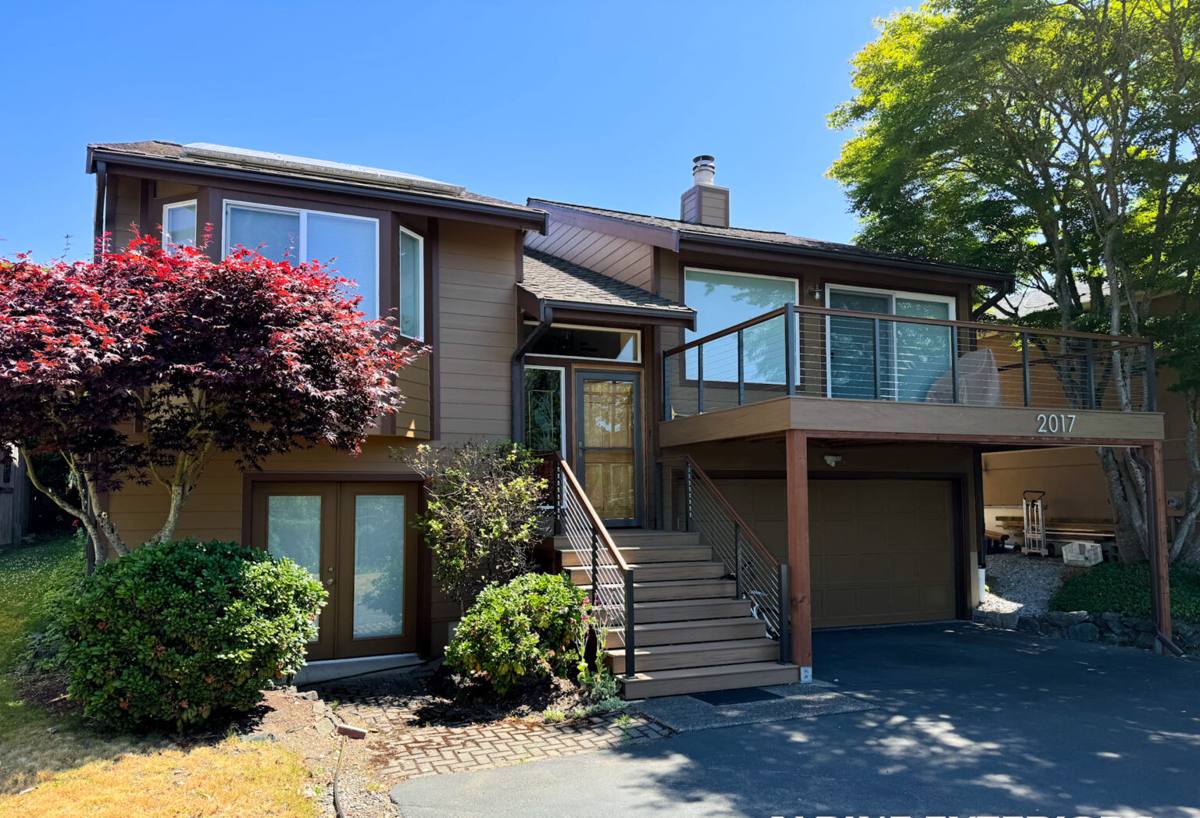
What Clear Lake's Climate Actually Does to a Roof
Moss and Organic Growth
Tree cover around Clear Lake keeps roofs shaded and damp longer after rain than roofs in more open parts of Mount Vernon or out toward the valley. Moss doesn't just sit on top of shingles looking bad — its rhizoids work into the granule surface and shingle mat, and as it spreads it lifts shingle edges, which lets wind-driven rain get underneath. Once moss establishes on the north-facing slope of a roof (the side that gets the least sun), it tends to spread toward the ridge if it isn't addressed.
Driving Rain and Wind-Driven Moisture
Skagit County storms often come with real wind behind the rain, not just straight-down precipitation. That matters because a roof can shed vertical rain just fine while still leaking under wind-driven conditions, where water gets pushed sideways and even slightly uphill under shingle laps, around flashing, and into any gap that's opened up from age or moss damage. Repairs that only address a leak's exit point, without any accounting for how wind pushes water at Clear Lake's exposure, tend to fail again in the next storm.
Salt Air and Metal Fatigue
Even set back from the water, Skagit County homes get some exposure to salt-carrying air off the Sound. Over years, that accelerates corrosion on exposed fasteners, flashing, and any galvanized metal that isn't properly coated or maintained. A roof repair that reuses corroded fasteners or old flashing without inspecting its condition is a repair that's already on a shorter clock.
Freeze-Thaw and Temperature Swings
Skagit County doesn't get brutal winters, but it does get enough freeze-thaw cycling — cold nights followed by wet, warmer days — to stress any spot on a roof where water has already found its way in. Trapped moisture that freezes expands, and that expansion is what turns a small leak into a bigger repair by widening cracks in flashing seals or lifting shingle tabs that were already loose from moss.
Signs a Clear Lake Roof Needs Repair, Not Just Cleaning
Moss removal and a roof repair are not the same service, and homeowners sometimes call for one when they need the other. Here's how to tell the difference before you book anything:
- Dark streaking or green growth across the roof surface, with no visible curling or missing shingles — usually a cleaning and treatment job
- Moss visibly lifting shingle edges, especially near valleys or the ridge — this is a repair situation, because moss has likely already compromised the seal
- Water stains on interior ceilings or in the attic after a windy rainstorm specifically — points to wind-driven intrusion, not just general wear
- Granules collecting in gutters or at downspout outlets — a sign the shingle surface is breaking down and losing its protective layer
- Soft or spongy decking felt when walking the roof — indicates water has already gotten past the shingles and into the sheathing
- Daylight visible through the roof deck from inside the attic — an active, urgent leak point
- Flashing around chimneys, skylights, or roof-to-wall transitions that looks rusted, lifted, or gapped
What a Correct Repair Actually Involves
A roof repair done right isn't just patching the spot where water is showing up inside the house. Water travels — it can enter at one point and show up on a ceiling several feet away, following framing members downhill before it drips. A proper repair process looks like this:
1. Find the Real Entry Point
We trace the leak from the interior stain or attic evidence back to its actual source on the roof, which is often uphill and to the side of where the damage shows up indoors. Guessing at this step is the single biggest reason repairs fail.
2. Inspect the Surrounding Area, Not Just the Spot
If moss caused the failure, we check how far it's spread and whether nearby shingles are also compromised, even if they haven't leaked yet. Given how aggressively moss establishes itself in Clear Lake's shaded lots, a single visible leak often means there's related damage nearby that hasn't shown up as an interior stain — yet.
3. Address the Cause, Not Just the Symptom
If moss is the underlying issue, treatment and removal are part of the repair, not an upsell tacked on afterward. If flashing has corroded from salt air exposure, we replace it rather than resealing around a metal piece that's already failing from the inside out.
4. Match Materials and Technique to What's Already There
Repairs on an older roof need to account for how the existing shingles have weathered, so the patch doesn't stand out or create a new point where water can get trapped between old and new material.
5. Verify the Fix Under Real Conditions
Where practical, we check flashing seals and shingle laps in a way that reflects how wind actually hits the roof at that specific site, not just whether water beads and runs off in calm conditions.
Repair vs. Full Replacement: How to Think About It
Not every roof issue at Clear Lake needs a full tear-off. But repair isn't always the right call either, especially on a roof that's already near the end of its service life. Here's a general framework:
| Situation | Repair Usually Makes Sense | Replacement Should Be Considered |
|---|---|---|
| Age of roof | Under 12-15 years, isolated issue | Approaching or past typical shingle lifespan |
| Extent of moss/damage | Localized to one slope or section | Widespread across most of the roof |
| Leak history | First occurrence, clear single cause | Repeated leaks in different spots over time |
| Decking condition | Solid, no soft spots found | Soft, delaminated, or visibly rotted sheathing |
| Flashing condition | Isolated corrosion or gaps | Widespread rust or failure at multiple penetrations |
An honest inspection will tell you which column you're in. We'd rather do a repair that genuinely holds than sell a replacement a roof doesn't need yet — and we'll say so plainly if that's what we find.
Why a Crew That Already Works Clear Lake Matters
Roof repair quality depends a lot on local knowledge that doesn't show up in a general inspection checklist. A crew that regularly works Clear Lake and the surrounding Mount Vernon area already knows which slopes in shaded, tree-heavy lots tend to hold moisture longest, how wind typically moves across roofs at this elevation and tree exposure, and what kind of flashing and fastener corrosion shows up after years of Skagit County's damp, salt-tinged air. That's the difference between a repair that's built around this specific climate and one that's a generic patch job that happens to be performed here.
There's also a practical side: if a repair needs a follow-up visit, or if a related issue turns up six months later during the next wet season, it's straightforward for a local crew to come back out. We're not scheduling a special trip from out of the area — Clear Lake and Mount Vernon are already part of our regular route.
Our Process for Clear Lake Roof Repairs
- Initial assessment: We look at the roof from the ground and, where safe and necessary, walk it directly to assess shingle condition, moss extent, and flashing points.
- Interior check: If there's an active leak, we check the attic and affected ceiling areas to trace water path and identify how far damage has traveled from the actual entry point.
- Honest scope and estimate: We tell you what we found, what needs to happen, and give you a written estimate before any work starts — no pressure, no surprise add-ons.
- Repair work: This includes moss removal and treatment where relevant, shingle or flashing replacement, and sealing done to hold up against wind-driven rain specifically, not just calm-weather conditions.
- Site cleanup: We clear debris, old materials, and moss removal waste from the property before we leave.
Maintenance That Extends the Life of a Repair
A repair is only as good as the roof's ongoing maintenance after we leave. For Clear Lake homes specifically, given the moss pressure and tree cover, we'd recommend:
- Annual moss inspection, ideally in early fall before the wet season sets in
- Keeping gutters clear so water isn't backing up under the roof edge, especially where tree debris accumulates
- Trimming back overhanging branches where practical, since they keep roof sections shaded and slow to dry
- A visual check after any major windstorm to catch lifted shingles or displaced flashing before the next rain
Get a Free Estimate
If you're dealing with a leak, visible moss damage, or just want an honest read on whether your Clear Lake roof needs repair or just maintenance, we're glad to come take a look. There's no pressure and no cost for the estimate — just a straight answer about what your roof actually needs.