 Mount Vernon
 Clear Lake's Climate Is Harder on a Roof Than It Looks
Clear Lake sits close enough to the water and tree cover that homes here take on a mix of conditions most inland roofing crews don't plan for: damp salt-tinged air drifting in off the Skagit Valley, long stretches of driving rain that finds every weak seam, and a moss season that can run most of the year under shaded lots. None of these things destroy a roof overnight. They wear on it slowly, and by the time a homeowner notices a stain on the ceiling or shingles curling at the edge, the underlying deck or underlayment has usually been dealing with moisture for a while.
A correct roof installation in this part of Mount Vernon isn't just about laying new shingles over what's there. It's about building a roof system that sheds water fast, breathes properly so trapped moisture doesn't rot the deck from underneath, and resists the moss and algae growth that thrives in Skagit County's shade and humidity. Get any one of those wrong and you're looking at a callback in a few years instead of a roof that lasts.
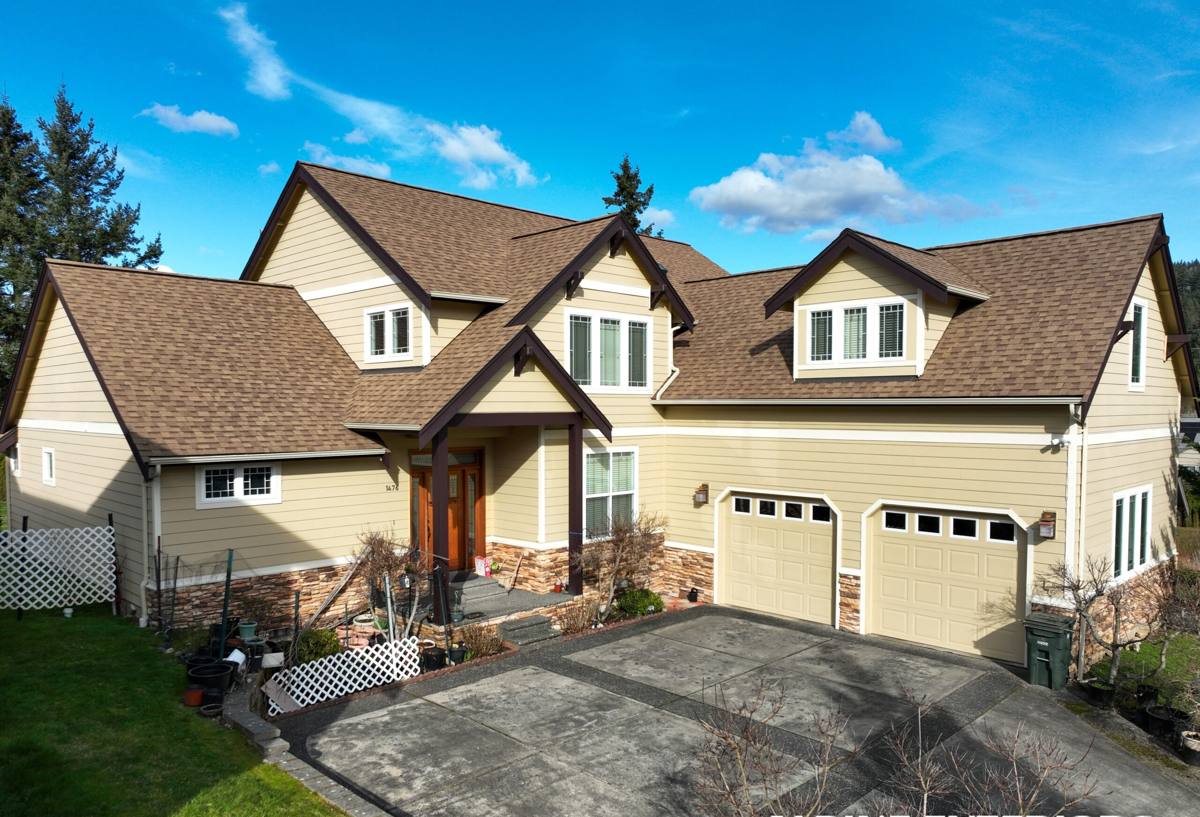
Signs a Clear Lake Roof Needs Replacement, Not Another Repair
Roofs rarely fail all at once. They give warning signs first, and knowing which ones point to a full replacement versus a patch job saves homeowners money and stress.
- Granules collecting in gutters or at downspout outlets, which means shingles are wearing down to bare asphalt
- Shingles that are cupping, curling, or cracking, especially on south and west-facing slopes that get the most sun and thermal cycling
- Dark streaking or thick moss growth across large sections rather than isolated spots
- Soft spots or noticeable sagging when walking the roof or viewing the roofline from the ground
- Daylight visible through the attic or new water stains on interior ceilings after a rain event
- A roof that's already had multiple repairs in the same areas over the last few years
One or two of these can sometimes be addressed with a targeted repair. Several at once, or a roof already past 20-25 years old, usually means the underlying materials are failing broadly and a repair would just be delaying the same failure in a new spot.
What an Honest, Correct Installation Actually Involves
A lot of roofing problems in this region trace back not to bad shingles but to shortcuts taken underneath them. Here's what should happen on every full tear-off and replacement, whether it's a modest ranch home or a larger property near the lake.
Full Tear-Off and Deck Inspection
We remove the old roofing down to the deck rather than layering over it. This is the only way to actually see the plywood or OSB sheathing underneath, which is where damp climates like ours do the most quiet damage. Soft, delaminated, or water-stained decking gets replaced before anything new goes down. Skipping this step is the single most common reason a "new roof" fails early.
Moisture Barrier and Underlayment
Given how much rain Skagit County sees over a typical winter, underlayment isn't a place to cut corners. We use synthetic underlayment across the full deck, with self-adhering ice-and-water shield at the vulnerable points: eaves, valleys, and around every penetration. This second layer of protection is what keeps wind-driven rain from working its way under shingles during the region's harder storms.
Flashing at Every Transition
Chimneys, skylights, dormers, and roof-to-wall transitions are where most leaks actually start, not out in the open field of shingles. New step flashing, counterflashing, and properly lapped valley metal at every one of these points matters more to long-term dryness than the shingle brand chosen.
Ventilation That Actually Balances
A roof needs balanced intake at the eaves and exhaust at the ridge so heat and moisture can escape the attic year-round. In a damp climate, poor ventilation traps humid air against the underside of the deck, which accelerates rot and can void a shingle manufacturer's warranty outright. We check existing ventilation on every job rather than assuming it's adequate.
Choosing a Roofing Material for This Climate
Most Clear Lake homes end up choosing between a handful of proven options. Each has real trade-offs worth understanding before deciding, rather than picking on looks alone.
| Material | Typical Lifespan | How It Handles This Climate |
|---|---|---|
| Architectural asphalt shingle | 25-30 years | Good balance of cost and durability; algae-resistant (AR) shingles are worth the upgrade here given moss and moisture exposure |
| 3-tab asphalt shingle | 15-20 years | Lower upfront cost but thinner and less wind-resistant; shows moss and wear sooner in shaded, damp lots |
| Standing seam metal | 40-50+ years | Sheds rain and moss growth well due to smooth, non-porous surface; higher upfront cost, fewer seams for water to find |
| Cedar shake | 20-30 years with upkeep | Traditional look but needs regular treatment and cleaning to resist rot and moss in a wet climate; higher maintenance burden |
We don't push one product on every home. A shaded lot near the tree line that stays damp most of the year is a different situation than an open, sun-exposed roofline, and the right material depends on that exposure as much as on budget.
Our Installation Process, Start to Finish
- On-site assessment — we inspect the current roof, attic ventilation, and deck condition, and take rough measurements before quoting anything
- Written estimate — a clear scope of work and price range based on material choice and what we find, with no vague allowances hidden in the fine print
- Material selection — we walk through shingle or metal options suited to the home's sun/shade exposure and the homeowner's budget
- Scheduling and delivery — materials are staged and the crew is scheduled around the weather window, which matters more here than in drier climates
- Tear-off and deck repair — old roofing removed, deck inspected board by board, any compromised sheathing replaced
- Underlayment, flashing, and ventilation work — the layers that determine whether the roof stays dry for the next 20-30 years
- New roofing installed — shingles or metal panels installed to manufacturer spec, including proper nailing patterns and exposure
- Final walkthrough and cleanup — magnetic sweep for stray nails, gutter check, and a final inspection with the homeowner before we consider the job done
Cost Factors Worth Understanding Before You Get Quotes
Roof replacement costs vary widely based on more than just square footage. These are the factors that most often move a price up or down:
| Factor | Why It Matters |
|---|---|
| Roof pitch and complexity | Steep or multi-plane roofs take longer to work safely and use more material for cuts and waste |
| Deck condition | Rotted or delaminated sheathing found during tear-off adds material and labor not visible in an initial quote |
| Number of penetrations | Chimneys, skylights, and vents each require flashing work that adds time regardless of roof size |
| Material choice | Asphalt, metal, and cedar carry different material and labor costs, with metal typically the highest upfront investment |
| Access and tree cover | Lots with heavy tree overhang near Clear Lake sometimes need branch trimming or extra debris protection during the job |
Any honest quote should walk through these line items rather than giving a single flat number with no explanation of what's included.
Living With a Damp-Climate Roof: Moss and Long-Term Maintenance
Even a correctly installed roof needs some ongoing attention in a climate like this. Moss doesn't just look bad; over time it holds moisture against the shingle surface and can lift edges, shortening the roof's life. A few habits go a long way:
- Keep overhanging branches trimmed back to let sunlight and airflow reach shaded sections of roof
- Have gutters cleared at least twice a year so water actually drains instead of backing up under the eaves
- Address moss growth early with proper treatment rather than pressure washing, which can strip granules and shorten shingle life
- Schedule a roof check after major windstorms, since lifted or cracked shingles are easy to miss from the ground
Why Working With a Crew That Knows Clear Lake Matters
Roofing crews that mostly work drier, sunnier regions sometimes underspec ventilation or skip the ice-and-water shield in areas where it isn't code-required but is still a good idea given local rainfall patterns. A crew that regularly works Mount Vernon and the surrounding Skagit County communities already knows which lots hold moisture longest, which rooflines catch the most wind off the valley, and how local permitting and inspection process works, so there are fewer surprises mid-project. That familiarity shows up in fewer callbacks and a roof that's actually built for the conditions it will face, not just the conditions on a spec sheet.
Questions to Ask Before Hiring Anyone for This Job
- Will you do a full tear-off, or are you proposing to install over the existing layer?
- What underlayment and ice-and-water shield products are included, and where specifically will they be used?
- How will you inspect and address the roof deck if rot or damage is found once tear-off begins?
- What's the manufacturer's warranty, and does your installation meet the ventilation requirements to keep it valid?
- Are you licensed and insured to work in Skagit County, and can you provide proof before work starts?
- What's your plan for weather delays, given how often rain interrupts roofing schedules here?
If your Clear Lake home is showing signs of an aging roof, or you just want an honest opinion on how much life is left in it, we're glad to take a look. A free, no-pressure estimate gets you a clear picture of the condition of your roof and what a proper replacement would involve — use the form below to get started.