 Mount Vernon
 Why Burlington Homes Wear Out Their Siding Faster Than the Manual Says
Burlington sits in the Skagit Valley, close enough to Puget Sound and Padilla Bay that homes here deal with a combination of weather stresses that inland Washington towns simply don't get. Salt-laden air moves in off the water and settles on exterior surfaces. Driving rain off winter storms drives moisture sideways into seams and laps that were never designed to shed water from that angle. And the valley's mild, wet winters create a moss and algae season that can run six months or longer on north-facing walls and anything shaded by trees or a neighboring structure.
None of that is unusual weather for Skagit County — it's just Tuesday. But it's exactly the combination that ages siding faster than manufacturer warranties assume, especially on homes with older wood, aluminum, or lower-grade composite siding that was never built with this specific climate in mind. If your siding is showing its age, a straight swap of "one material for another" isn't really a replacement — it's just deferring the same problem five to ten years down the road.
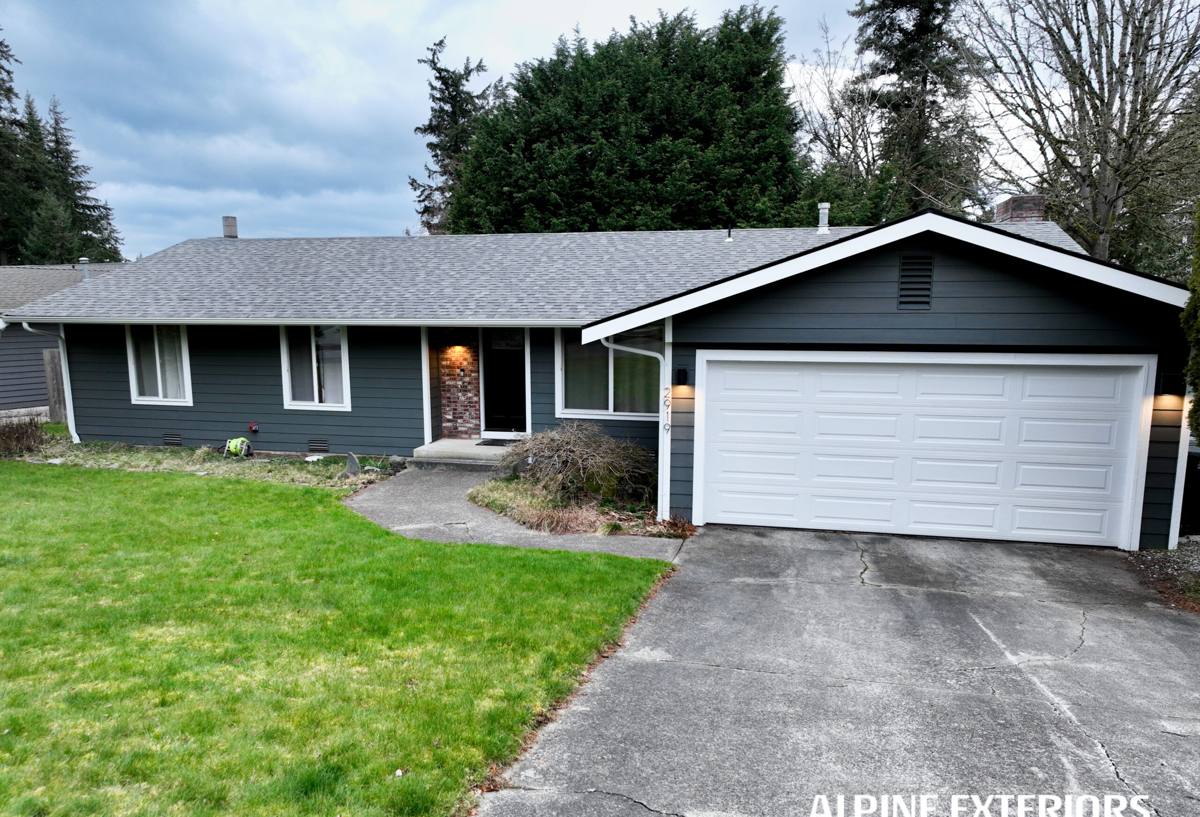
What Burlington's Climate Actually Does to Siding
Salt Air and Metal Fasteners
Proximity to the Sound means airborne salt is a real, if often underestimated, factor here. Salt air accelerates corrosion on exposed fasteners, flashing, and any metal trim that isn't properly coated or capped. Over years, corroding fasteners loosen their grip on siding panels, which opens gaps for water intrusion — a slow failure that's often invisible until a panel is pulled and the sheathing behind it is already compromised.
Driving Rain and Wind-Driven Moisture
Skagit Valley storms don't always drop rain straight down. Wind pushes it sideways and upward under laps, around window trim, and into any seam that relies on gravity alone to shed water. Siding systems and installation details that work fine in a drier, calmer climate can underperform here specifically because the water isn't falling the way the design assumes.
The Long Moss and Algae Season
Cool, damp, and shaded — that's moss weather, and Burlington gets a long stretch of it every year. Moss and algae hold moisture directly against the siding surface for extended periods, which is a problem for any material that isn't dimensionally stable or properly sealed. It's also a maintenance and curb-appeal issue on its own, independent of any structural concern.
Signs Your Burlington Home Needs Siding Replacement, Not Just Repair
- Soft, spongy, or crumbling spots when you press on the siding, especially near the bottom courses and around window and door trim
- Persistent moss or algae staining that returns within a season or two of cleaning
- Visible gaps, warping, or cupping in panels or boards
- Paint that's peeling, bubbling, or needing repainting more often than every 5-7 years
- Rust streaks around fasteners or trim, or fasteners that have backed out
- Musty odors, water stains, or soft drywall on interior walls that back up to exterior siding
- Siding that's original to a home built more than 20-25 years ago, particularly older wood, aluminum, or first-generation composite products
One or two of these on their own might mean a repair. Several at once, especially combined with visible water intrusion, usually means the whole wall system has been compromised long enough that patching won't hold.
What a Correct Siding Replacement Actually Involves
Siding replacement is often sold as a cosmetic upgrade, but the real work — and the real value — happens underneath the new panels, in details most homeowners never see once the job is done. Given what Burlington's climate does to a wall assembly, skipping any of these steps is how a brand-new-looking house ends up with the same rot problem in ten years.
1. Full Tear-Off and Inspection
We remove the existing siding down to the sheathing and inspect for rot, soft spots, and prior water damage. This is the point where problems that have been hiding behind the old siding finally get found and fixed — not covered back over.
2. Sheathing Repair
Any compromised sheathing gets cut out and replaced before anything new goes up. Installing new siding over damaged sheathing just locks the problem inside the wall.
3. Weather-Resistive Barrier
A proper drainage plane and weather-resistive barrier go on next, detailed to shed wind-driven rain rather than trap it. This layer matters more here than in drier climates precisely because of how much moisture Skagit Valley storms push at a wall sideways.
4. Flashing at Every Penetration
Windows, doors, hose bibs, vents, and any other wall penetration get properly flashed so water is directed out and away rather than sitting against the framing. This is the single most common corner cut in low-end siding jobs, and it's the one most likely to cause hidden damage.
5. Installation to Manufacturer Spec
Fastener spacing, panel clearance from grade and roof lines, joint treatment, and caulking all follow the manufacturer's published installation instructions — not shortcuts. This is also what keeps a manufacturer warranty valid if a claim is ever needed.
6. Trim, Caulking, and Paint or Finish
Final trim work and sealing close out the job, along with factory or field-applied finish depending on the product.
Why We Install Only James Hardie Fiber Cement
We don't install vinyl, LP SmartSide, cedar, primed spruce, or other fiber cement brands. That's a deliberate standard, not a lack of options, and it comes down to how those materials behave over time in exactly the conditions Burlington deals with.
Wood and primed spruce products look good going up, but they depend heavily on paint film integrity to resist moisture. In a climate with this much rain and this long a moss season, that paint film gets tested constantly, and the maintenance burden to keep ahead of it is real. Vinyl is low-maintenance in a different way, but it's a thinner, more flexible material that can warp, fade, and doesn't offer the same fire performance or resale positioning as fiber cement. LP SmartSide and other engineered wood products perform well in many climates, but wood-strand cores are more sensitive to sustained moisture exposure at cut edges and seams than fiber cement is.
James Hardie fiber cement is engineered specifically for regional moisture exposure — the HZ5 product line used in the Pacific Northwest is formulated for climates with sustained damp conditions like ours. It's non-combustible, holds paint and factory ColorPlus finishes far longer than wood, doesn't provide the organic material moss and algae feed on the way wood siding can, and carries a strong transferable warranty when installed to spec. We've standardized on it because, installed correctly, it's the product that holds up best against what Skagit County weather actually does to a house.
How Common Old Siding Materials Tend to Age Here
| Old Siding Material | Common Issue in Skagit Valley Climate |
|---|---|
| Cedar or wood lap | Paint failure, rot at laps and butt joints, ongoing maintenance to stay ahead of moisture |
| Aluminum | Denting, fastener corrosion from salt air, dated appearance |
| Vinyl | Warping in temperature swings, fading, cracking with age and impact |
| First-generation composite/hardboard | Swelling and delamination where moisture reaches the core |
Our Process for Burlington Siding Replacement
- Inspection and estimate — we walk the exterior, check for hidden damage where we can access it, and give you an honest read on what the job actually needs.
- Written scope and quote — clear line items, no vague allowances, so you know what's included before work starts.
- Material order — James Hardie panels, trim, and ColorPlus finish colors ordered to your selections.
- Tear-off and sheathing repair — old siding removed, sheathing inspected and repaired as needed.
- Weather barrier and flashing — the moisture-management layer that does the real long-term work.
- Installation — panels installed to manufacturer spec, with attention to fastener placement and clearances.
- Trim, caulk, and final finish — the details that make the job look finished and stay sealed.
- Walkthrough — we review the completed work with you before calling the job done.
What Affects the Cost of a Burlington Siding Replacement
| Factor | Why It Matters |
|---|---|
| Home size and number of stories | More square footage and taller walls mean more material and labor, plus added equipment for upper-story access |
| Condition of existing sheathing | Hidden rot found during tear-off adds repair scope that can't be fully known until the old siding is off |
| Trim and architectural detail | Homes with more corners, windows, gables, and trim require more cutting and detail work per square foot |
| Siding profile and finish selection | Lap width, shingle-style panels, and factory finish color all affect material cost |
| Access and site conditions | Tight lot lines, landscaping, or fencing can affect staging and add time |
We won't give a real number without seeing the house, but these are the factors that actually move a quote up or down — worth knowing before you start comparing bids.
Why It Matters That We Already Work in Burlington
A crew that regularly works Skagit County jobs already knows what local building departments expect for permitting, understands the housing stock common to this area, and isn't guessing at how a given wall assembly is likely to have aged given the climate. That familiarity shows up in fewer surprises mid-project and a faster, more accurate estimate up front. It also means material lead times and scheduling are handled by people who aren't learning the region on your project.
After Your Siding Is Replaced
- Rinse siding with a garden hose once or twice a year to keep salt residue and light debris from building up
- Keep an eye on shaded, north-facing sections for early moss growth and address it before it spreads
- Trim back vegetation and tree branches that keep siding shaded and damp longer than necessary
- Inspect caulking at trim and penetrations every couple of years and touch up as needed
- Address any impact damage promptly rather than letting it sit
James Hardie's factory ColorPlus finish is designed to reduce how often you need to think about any of this, but a little seasonal attention goes a long way in a climate like ours.
If your siding is showing wear, or you're just not sure whether you're looking at a repair or a full replacement, we're happy to take a look and give you a straight answer. Reach out for a free, no-pressure estimate using the form below.