 Mount Vernon
 Why Decking Built for Burlington Has to Be Different
Burlington sits in a stretch of Skagit County where three things work against an outdoor deck at the same time: moisture that never really lets up for half the year, a run of salt-tinged air moving in off Padilla Bay and the greater Puget Sound area, and long stretches of shade and dampness that turn any north-facing surface into a moss farm by late winter. None of these are exotic problems, but together they change what "correct" decking actually means here. A deck that would hold up fine in a dry inland climate can start showing rot, fastener corrosion, or slick moss growth within a couple of seasons in Burlington if it wasn't built with this climate in mind.
That's the lens we use on every composite decking project in this area: not "what's the newest product" but "what actually survives a Skagit County winter and looks right doing it."
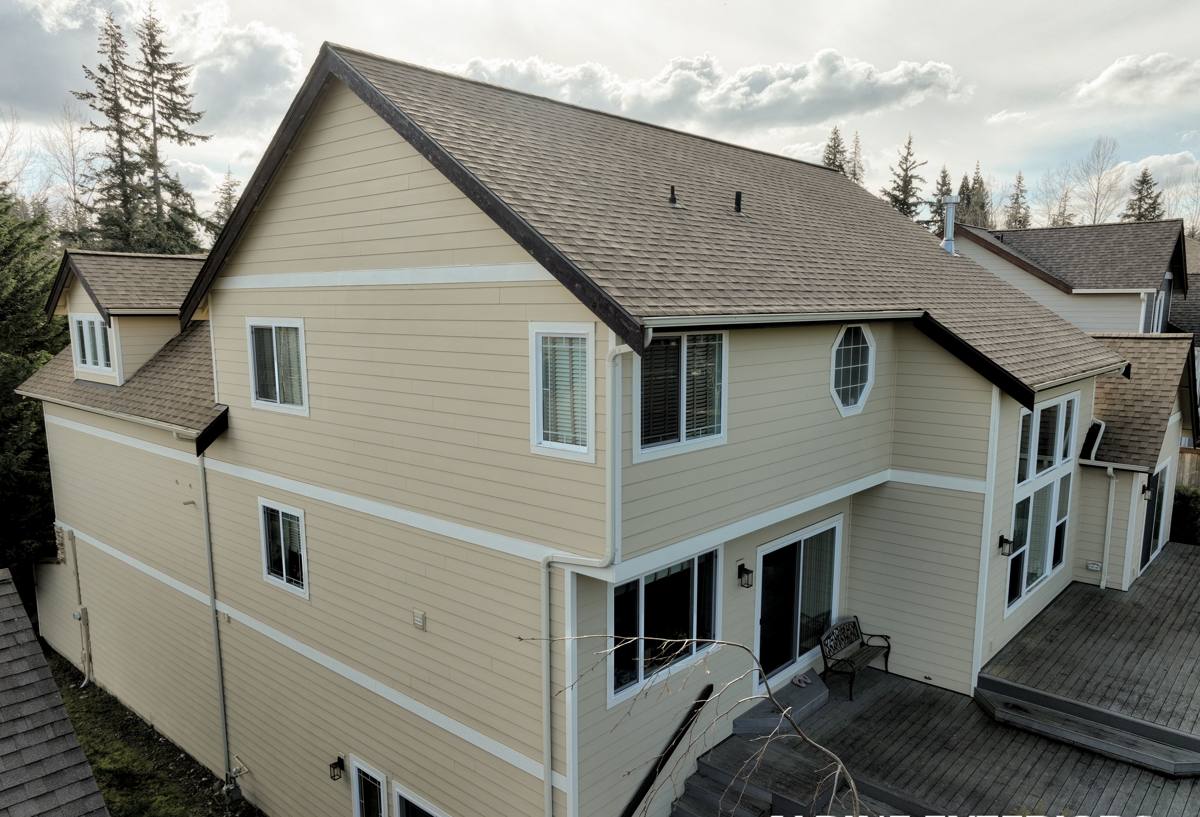
What Burlington's Climate Actually Does to a Deck
Driving Rain
Rain here rarely falls straight down. Wind off the water pushes it sideways into railings, fascia boards, and the gaps between deck boards. Over time, that means water finds its way into fastener holes, end cuts, and any seam that wasn't sealed or flashed correctly. On a wood deck, this is usually where rot starts. On a poorly installed composite deck, it's where the substructure underneath — which is almost always still wood — starts failing even while the composite boards on top look fine.
Salt Air
Burlington isn't oceanfront, but it's close enough to tidal water that airborne salt is a real factor, especially on homes with more open exposure. Salt-laden air accelerates corrosion on fasteners, brackets, and any exposed metal hardware. It also speeds up the breakdown of lower-grade composite decking that wasn't formulated with UV and moisture resistance in mind.
Moss Season
Shade, moisture, and mild temperatures are exactly what moss and algae need. On a deck, that shows up as green or black growth on boards that don't get much direct sun, and it's not just cosmetic — a mossy deck surface gets slick and dangerous, especially on stairs. Board profile, grain pattern, and drainage design all affect how fast moss takes hold and how easy it is to keep off.
Why Composite Makes Sense for This Area
Composite decking — a blend of wood fiber and recycled plastic, usually with a protective outer shell — was designed to resist exactly the conditions Burlington throws at it: moisture absorption, splintering, and surface degradation from constant wet-dry cycling. It won't rot the way solid wood decking can when water gets trapped against it, and a quality capped composite board resists the algae and mold staining that plagues wood decks in shaded, damp yards.
That doesn't mean every composite product performs the same way here, and it doesn't mean composite eliminates maintenance entirely — it shifts what maintenance looks like, from sanding and re-staining to periodic cleaning. We'll walk homeowners through that honestly rather than oversell it.
What a Correct Composite Deck Build Involves
The board itself gets most of the attention, but in a climate like ours, the parts you don't see determine whether the deck lasts. A correct build includes:
- Ledger flashing done right — where the deck attaches to the house, proper flashing keeps water from tracking behind siding and into the wall assembly, which is one of the most common sources of hidden rot on older decks in this region.
- Adequate joist spacing for composite — composite boards typically need tighter joist spacing than solid wood to prevent sagging over time, especially at angles or on stairs. Manufacturer spacing specs exist for a reason and skipping them shortens the deck's life.
- Corrosion-resistant fasteners and hardware — given the salt air exposure around Burlington, using the correct grade of coated or stainless hardware at every connection point matters more here than it would inland.
- Proper ventilation underneath — trapped moisture under a deck accelerates substructure rot even when the surface boards are composite. Airflow gaps and correct ground clearance are part of a durable build, not an afterthought.
- Hidden fastener systems installed to spec — these give a clean, screw-free surface, but they need to be installed with the correct clip spacing and expansion gaps, since composite boards expand and contract with temperature and moisture more than people expect.
- Picture-frame or end-cap detailing — exposed composite board ends can wick moisture if left uncapped, so finishing those edges correctly keeps water out of the board's core.
Composite vs. Other Decking Options in This Climate
| Material | Moisture Behavior Here | Maintenance Burden | Typical Lifespan Locally |
|---|---|---|---|
| Pressure-treated wood | Absorbs water; prone to splintering, warping, and rot in wet years without diligent upkeep | High — annual sealing/staining recommended | 10–15 years with good maintenance |
| Cedar | Naturally rot-resistant but still absorbs moisture; grays and can cup if not sealed | Moderate to high — periodic sealing | 15–20 years with upkeep |
| Capped composite | Resists moisture absorption; protective shell limits staining and swelling | Low — periodic cleaning, no sealing/staining | 25+ years, backed by manufacturer warranty |
| Uncapped/entry-level composite | More prone to surface staining and moisture wicking at cut ends over time | Moderate — more frequent cleaning | Shorter than capped composite; varies by product |
We install capped composite as our standard recommendation for Burlington projects specifically because the outer shell handles the moisture cycling and moss exposure better than uncapped boards or bare wood. That's a professional judgment based on how these products perform in this climate over years, not a knock on wood decking as a category — a well-built and well-maintained wood deck is still a legitimate option for homeowners who prefer that look and are willing to keep up with sealing.
How We Approach a Burlington Composite Decking Project
1. On-Site Assessment
We look at sun and shade exposure, drainage patterns around the foundation, existing framing condition (if this is a rebuild), and how exposed the site is to wind-driven rain and salt air. This tells us how aggressive we need to be on flashing, hardware grade, and board selection.
2. Structural Prep
Any existing substructure gets inspected for rot or undersized framing before new decking goes on top. Building a beautiful composite surface over a compromised frame just delays a much bigger repair — we won't do that, and we'll tell you plainly if the frame needs work first.
3. Installation to Manufacturer Spec
Joist spacing, fastener type, expansion gaps, and ventilation are set to the composite manufacturer's specifications, not shortcuts. This is what keeps the warranty valid and the deck performing as intended.
4. Finish Details
Board ends, stair nosings, and edges get properly capped or finished so moisture can't creep into cut surfaces — a detail that matters more in a wet climate than in drier parts of the country where a lot of composite marketing originates.
5. Walkthrough
We go over cleaning recommendations specific to a shaded, mossy Skagit County yard versus a sunnier, more open lot, since the two need slightly different care routines.
Living With a Composite Deck in Burlington: Realistic Maintenance
Composite decking cuts down maintenance significantly, but "low-maintenance" isn't "no-maintenance" here. In our climate, a reasonable annual routine looks like:
- Sweeping debris and organic buildup out of board gaps before it traps moisture
- An annual wash with a soft-bristle brush and a composite-safe cleaner to knock back early moss and algae growth, especially on shaded sections
- Checking railing posts and stair connections for any looseness after freeze-thaw cycles
- Clearing gutters and downspouts near the deck so runoff isn't dumping extra water onto the surface or substructure
- Trimming back overhanging vegetation that keeps sections of the deck shaded and damp longer than the rest
Skip the pressure washer on high settings — it can etch or damage the protective cap on composite boards. A garden hose and a brush handle most of what Burlington's climate throws at a deck.
Why a Crew That Already Works Burlington Matters
Decking specs written for a national audience don't account for the specific combination of salt exposure, rainfall volume, and moss pressure that shows up in this part of Skagit County. A crew that regularly works in Burlington and the surrounding Mount Vernon area already knows which fastener grades hold up, which board profiles shed water and resist moss best in shaded yards, and where flashing tends to get overlooked on this region's typical home construction. That experience shows up in fewer callbacks and a deck that still looks right five winters from now, not just on installation day.
Getting Started
If you're weighing a new composite deck or replacing an aging wood one, we're happy to take a look at your property, talk through what your specific site exposure calls for, and give you a straightforward, no-pressure estimate. There's a form below — reach out and we'll get a time on the calendar.