 Mount Vernon
 Board & Batten Siding for Bow Homes
Bow sits close enough to Samish Bay and the surrounding saltwater to feel it in the siding on local homes. Between the salt-laden air, driving rain off the water, and a moss season that stretches longer here than it does further inland, exterior cladding in this pocket of Skagit County works harder than most homeowners realize. Board and batten siding — with its bold vertical lines and deep shadow reveals — is a popular choice for the farmhouse and modern-farmhouse look that fits well in a semi-rural community like Bow. But the style only holds up if the installation underneath it accounts for what this specific stretch of coastline throws at a house year-round.
We're a Mount Vernon-based crew that already works this corridor between town and the water. This page covers what board and batten siding needs to succeed in Bow specifically, what a correct installation actually involves, and why we install it exclusively in James Hardie fiber cement rather than the wood or engineered wood products it's traditionally built from.
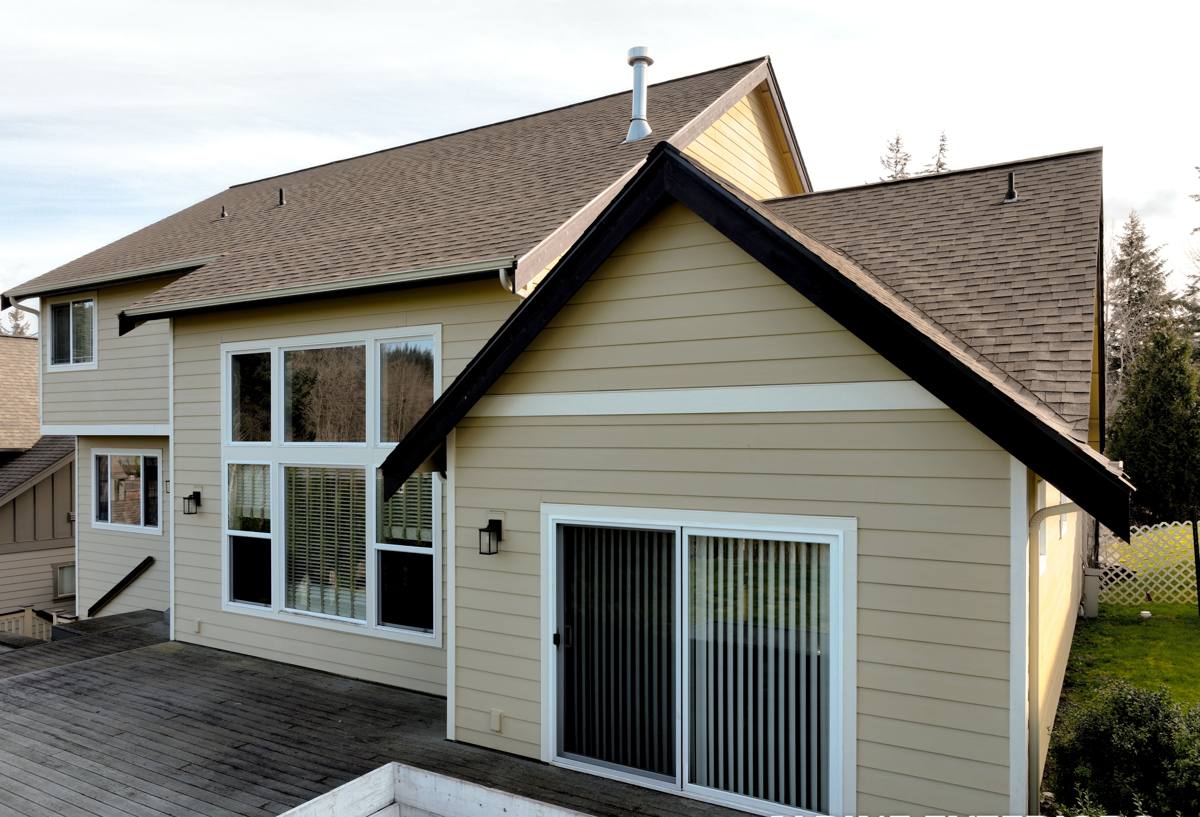
What Bow's Climate Does to Board and Batten Siding
Board and batten relies on vertical boards with narrow battens covering the seams. That seam-heavy design is part of the visual appeal, but it's also the part that fails first when the wrong material or a sloppy installation meets Bow's weather.
Salt Air and Metal Fasteners
Proximity to Samish Bay means airborne salt settles on siding, trim, and fasteners more than it would on a home the same distance from Interstate 5 but away from the water. Salt accelerates corrosion in exposed or improperly coated fasteners, and it can degrade certain paints and finishes faster than manufacturers' standard testing accounts for. Siding systems designed for generic climates don't always specify fastener coatings suited to this kind of exposure — but it matters here.
Driving Rain
Storms coming off the water tend to drive rain sideways rather than straight down, which pushes moisture into vertical seams, batten edges, and any gap around windows or corners. Board and batten has more linear feet of seam per square foot of wall than lap siding does, so every one of those seams needs to actually shed water rather than absorb or wick it.
Extended Moss and Algae Season
Shaded, north-facing walls and anything near tree cover in and around Bow stay damp longer into the year than siding in more open, sun-exposed areas. That extended damp window is exactly what moss and algae need to take hold. On absorptive materials, that moisture doesn't just sit on the surface — it gets pulled into the substrate, which is where long-term damage starts.
What a Correct Board and Batten Installation Involves
The visual style is simple, but the assembly behind it is not. A board and batten wall is really a layered moisture-management system with a decorative face.
- A code-compliant weather-resistant barrier installed shingle-style so water sheds downward and outward, not into the wall cavity
- Properly detailed flashing at every window, door, and roof-to-wall intersection
- A drainage plane or rainscreen gap where conditions call for it, so any moisture that gets past the outer layer can drain and dry rather than sit against the sheathing
- Correct board and batten spacing and fastening pattern, matched to the manufacturer's engineering — not just "what looks even"
- Fastener type and coating matched to the exposure, especially in a salt-air location like Bow
- Sealed, factory-finished cut edges wherever boards are trimmed on site
- Adequate clearance at the base of the wall so the bottom edge isn't sitting in splash-back moisture or buried against grade
Skip any one of these steps and the siding can still look right on installation day. The problems — trapped moisture, early paint failure, soft spots at the base — usually show up years later, after the crew that installed it is long gone.
Why We Only Install James Hardie, Not Traditional Board and Batten Materials
Board and batten has traditionally been built out of cedar, primed spruce, or engineered wood products like LP SmartSide. Each of those has real strengths — cedar looks and smells the part, engineered wood is lighter and often cheaper up front. We don't install any of them, and in a location like Bow the reasoning is worth spelling out honestly rather than glossing over.
Wood and Engineered Wood in a Salt-Air, High-Moisture Environment
Cedar and primed spruce are organic materials. They can perform well when maintained on a strict schedule, but they're also the products most sensitive to the exact conditions Bow delivers: sustained moisture, salt exposure, and long damp stretches that favor rot and moss growth. Engineered wood siding products use wood strand cores with a resin binder — durable in many climates, but wood-based cores remain vulnerable at cut edges and seams if moisture gets past the surface coating, which is a real risk on a seam-dense profile like board and batten in a wet coastal pocket.
What Fiber Cement Changes
James Hardie siding is fiber cement — sand, cement, and cellulose fiber, not wood. It doesn't have an organic core for moisture to travel through, and it's non-combustible, which matters given the dry-season wildfire risk that's become a bigger conversation across Western Washington in recent years. Hardie's HZ5 product line is specifically engineered for climates with significant moisture exposure, which fits Bow's profile better than a general-purpose product line would.
ColorPlus Factory Finish
Rather than relying on field-applied paint, Hardie's ColorPlus finish is baked on in a controlled factory process, which gives it better adhesion and UV resistance than most site-applied paint jobs — and it comes backed by its own finish warranty separate from the substrate warranty. In a salt-air environment where field-applied paint tends to chalk and fade faster, that factory finish is doing real work.
Warranty Structure
Hardie backs its siding with a substantial transferable limited warranty on the material itself, plus a separate warranty on the ColorPlus finish. That's a meaningfully different risk position for a homeowner than a shorter warranty window or one that leans heavily on maintenance compliance to stay valid.
None of this means cedar or engineered wood are bad products in the right application. It means that for the specific combination of style (board and batten's seam-heavy profile) and location (Bow's salt air, rain, and moss exposure), we've standardized on the material that gives homeowners the least to worry about over the next several decades.
Material Comparison for Bow's Conditions
| Factor | Cedar / Primed Spruce | Engineered Wood (e.g. LP SmartSide) | James Hardie Fiber Cement |
|---|---|---|---|
| Moisture resistance | Requires consistent sealing/painting | Coated strand core, edge-sensitive | Non-organic core, engineered for moisture |
| Salt air performance | Finish degrades faster near water | Coating can wear at exposed edges | Factory ColorPlus finish holds up well |
| Combustibility | Combustible | Combustible (treated) | Non-combustible |
| Typical maintenance | Regular repainting/staining | Periodic caulking and paint touch-up | Occasional wash, no repainting for finish life |
| Warranty structure | Varies, often shorter | Manufacturer-specific, often maintenance-dependent | Long-term transferable limited warranty |
Cost Factors for a Bow Board and Batten Project
Every home is different, but the variables that actually move the price on a board and batten project in Bow tend to be the same handful of things.
| Factor | Why It Matters |
|---|---|
| Wall complexity | More corners, gables, and cutouts mean more seams and more labor per square foot |
| Existing siding removal | Tear-off and disposal of old material adds time versus a straightforward re-side |
| Sheathing and moisture barrier condition | Water damage found underneath old siding needs to be repaired before new siding goes on |
| Board width and reveal spacing | Different board and batten profiles affect material quantity and labor |
| Site access | Rural Bow properties with long driveways, trees, or limited staging space can affect logistics |
| Trim and flashing detail | Windows, doors, and roof intersections requiring custom flashing add time to do correctly |
Why a Crew That Already Works Bow Matters
Board and batten in a location like Bow isn't a product you can spec once and install the same way everywhere. A crew that regularly works this stretch of Skagit County — from Mount Vernon out toward the water — already knows which walls take the worst of the driving rain, which sides of a house stay shaded and damp longest, and where salt exposure is worse than it looks on paper. That local pattern recognition shows up in small decisions: where to add extra flashing attention, which fastener spec to use, how to detail the base of the wall.
It also matters for accountability. A warranty is only as good as the contractor standing behind it years later. Working with a Mount Vernon-based crew that isn't disappearing after the invoice clears means someone local is answerable if a question comes up down the road.
Our Process for a Bow Board and Batten Project
- On-site assessment — we look at existing siding condition, wall orientation relative to weather exposure, and any signs of past moisture intrusion
- Material and profile selection — choosing the Hardie board and batten profile, reveal width, and HZ product line suited to the home and its exposure
- Tear-off and substrate inspection — removing old siding and checking sheathing for rot or damage before anything new goes up
- Weather-resistant barrier and flashing installation — the layer that does the real moisture-management work, installed before a single piece of visible siding goes on
- Board and batten installation — fastened and spaced to manufacturer specification, with attention to fastener coating given the salt-air exposure
- Final detailing and walkthrough — trim, caulking where appropriate, and a walkthrough so the homeowner understands what was done and why
Signs Your Current Siding Needs Attention
- Soft or spongy spots when you press on the siding, especially near the base of the wall
- Persistent moss or algae growth that returns quickly after cleaning
- Peeling, bubbling, or chalking paint, particularly on walls facing the water or prevailing weather
- Visible gaps or separation at seams and battens
- Staining or discoloration around window and door trim
- Warping or cupping boards, a common sign of moisture getting into a wood-based product
If you're weighing board and batten siding for a home in Bow, we're happy to take a look and walk through what it would actually involve for your specific property — no pressure, no obligation. Reach out for a free estimate using the form below.