 Mount Vernon
 Board & Batten in Alger: A Style That Has to Earn Its Keep
Board and batten siding has become one of the most requested looks on newer builds and remodels around Alger, and it's easy to see why — the vertical lines read as clean, modern, and a little more architectural than standard lap siding. But in this part of Skagit County, a siding style is only as good as how it holds up between now and twenty years from now. Alger sits close enough to Samish Bay and Puget Sound to catch salt-laden air, and it gets the same long, low-intensity rain seasons as the rest of the Skagit Valley, plus the shaded, damp conditions that let moss and algae take hold on north-facing walls. A board and batten job that looks sharp on installation day but wasn't detailed for this climate will show streaking, soft spots, and batten failure well before it should.
This page is about doing board and batten right, specifically for homes in and around Alger — what the climate demands, what correct installation actually involves, and why we install it in one material only.
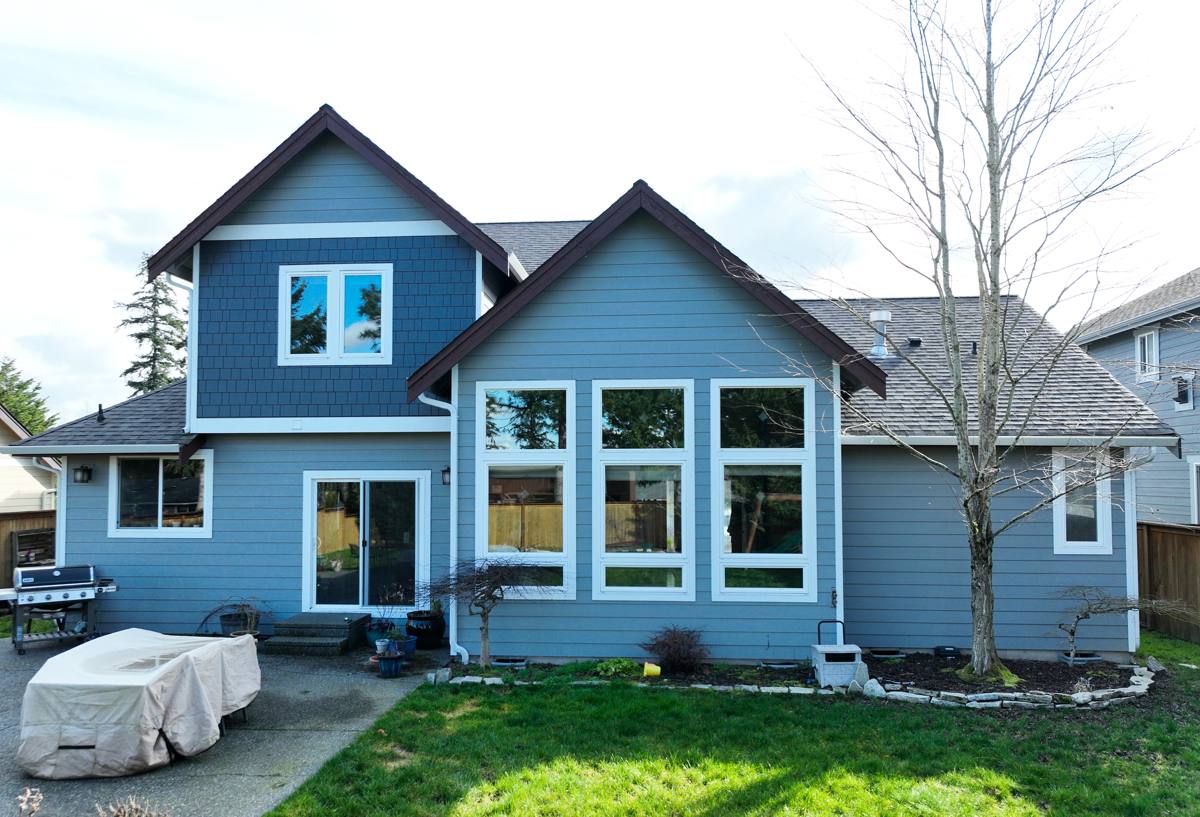
What Salt Air, Driving Rain, and Moss Season Actually Do to Siding
Salt Air
Homes closer to the water pick up airborne salt that settles on exterior surfaces and accelerates corrosion on exposed metal fasteners, trim flashing, and hardware. Over years, that corrosion can telegraph through paint and finish, especially on lower-quality or under-primed materials.
Driving Rain
Skagit County doesn't get flash-flood downpours as often as it gets sustained, wind-driven rain that pushes moisture sideways into wall assemblies. Vertical board and batten profiles have more seams per square foot than horizontal lap siding, which means more opportunities for water to find a path behind the cladding if the battens, flashing, and drainage plane aren't detailed correctly.
Moss Season
Shaded elevations, tree cover, and the region's extended damp months create ideal conditions for moss and algae growth on exterior walls. Porous or absorbent siding materials hold moisture longer and give moss more to grip onto, while a factory-cured, low-absorption surface sheds water and resists organic growth far longer.
Why We Only Install James Hardie Fiber Cement for Board & Batten
We get asked regularly about board and batten in wood, LP SmartSide, vinyl, and other fiber cement brands. We don't install any of them, and it's worth explaining why rather than just saying no.
- Primed wood or cedar board and batten looks great new but is the most climate-vulnerable option here — it absorbs moisture at cut edges and battens, and in a wet, mossy climate it needs frequent refinishing to avoid rot at the base and around penetrations.
- LP SmartSide is an engineered wood product with a resin-treated strand substrate. It performs reasonably when installed and maintained exactly to spec, but any breach in the factory coating (a deep scratch, an uncaulked cut edge, a failed sealant joint) gives moisture a path into the wood fiber core — a real risk in a region with this much sustained rain exposure.
- Vinyl board and batten is affordable and low-maintenance, but it's a thin, flexible plastic panel that can warp in temperature swings, fade over time, and simply doesn't hold the crisp, flat reveal that makes board and batten look intentional rather than like siding trying to imitate the style.
James Hardie fiber cement is cement, sand, and cellulose fiber, cured to be dimensionally stable and non-combustible. It doesn't rot, it isn't a food source for moss the way wood can be, and its ColorPlus factory finish is baked on under controlled conditions rather than field-applied, which gives it far more consistent resistance to fading and moisture intrusion at the surface. That's the combination we've standardized on for every board and batten job we do, including the ones in Alger.
Board & Batten Material Comparison
| Material | Moisture Behavior in Wet Climates | Maintenance Burden | Typical Longevity |
|---|---|---|---|
| Primed wood / cedar | Absorbs at cuts, battens, and joints; prone to swelling and rot | Repaint/refinish every few years | Shortest, highly dependent on upkeep |
| LP SmartSide (engineered wood) | Fine if coating stays intact; vulnerable once breached | Watch for coating damage, reseal cuts and joints | Moderate, install-sensitive |
| Vinyl | Doesn't absorb, but can warp/gap and trap moisture behind panels | Low, but limited repair options if damaged | Moderate; appearance degrades with UV exposure |
| James Hardie fiber cement | Non-combustible, dimensionally stable, low absorption | Periodic wash-down; factory finish holds color | Longest when installed to spec, backed by a transferable warranty |
What Correct Board & Batten Installation Actually Involves
Board and batten fails in wet climates almost exclusively because of installation shortcuts, not because the underlying material was wrong. The style has more vertical seams than lap siding, so every detail matters more.
- Drainage plane and rainscreen gap: A weather-resistant barrier behind the siding, with a ventilated air gap (furring strips) so any moisture that does get past the cladding can drain and dry instead of sitting against the wall sheathing.
- Batten spacing and fastening: Battens fastened into structural framing or properly blocked substrate, not just into sheathing, with fastener spacing that matches manufacturer specs for wind and moisture performance.
- Flashing at every horizontal transition: Window and door heads, water tables, and any horizontal trim need step or drip-cap flashing so driving rain can't work its way behind the panel.
- Cut-edge sealing: Every field cut on fiber cement needs to be primed or sealed per manufacturer instructions before installation — an exposed cut edge is the single most common failure point we see on other contractors' work.
- Clearance at grade and roof lines: Board and batten needs proper clearance from grade, decks, and roof-to-wall intersections so splash-back and roof runoff don't sit against the base of the panel.
Our Process for Alger Board & Batten Projects
- On-site walkthrough: We look at your home's exposure — how much salt air and wind-driven rain it takes, which elevations stay shaded and damp, and where the current siding (if any) is already showing moss or wear.
- Detailed estimate: A written scope covering the HardiePanel or board and batten line we recommend, the color and reveal, flashing details, and a clear cost breakdown — no vague allowances.
- Prep and drainage plane: Removal of failing siding, inspection of the sheathing underneath for hidden rot (common on older Skagit County homes with prior moisture intrusion), and installation of the weather barrier and rainscreen furring.
- Installation to spec: Battens and panels fastened, flashed, and sealed per James Hardie's published instructions for this climate zone.
- Final walkthrough: We go over the finished work with you before calling the job done, including care and cleaning guidance for the ColorPlus finish.
Cost Factors for Board & Batten in This Area
| Factor | Why It Matters Here |
|---|---|
| Existing wall condition | Homes near Alger with prior moisture intrusion may need sheathing repair before new siding goes on — this gets identified during tear-off, not guessed at upfront |
| Home elevation exposure | Sides facing prevailing wind and rain may warrant extra flashing detail versus more sheltered elevations |
| Trim and batten density | Board and batten uses more linear trim than lap siding, which affects material and labor |
| Access and site conditions | Wooded or sloped lots common in this area can affect staging and equipment access |
| Color and finish selection | Factory ColorPlus finishes vary slightly in cost by line and color depth |
We don't quote board and batten off a square-footage rule of thumb over the phone — every estimate comes from an actual look at your walls, because the condition underneath is what drives real cost more than the style itself.
Why a Crew That Already Works Alger Matters
Alger and the surrounding Mount Vernon area have their own mix of microclimate conditions — wooded lots that stay shaded and damp longer, open exposures that catch more wind off the water, and soil and drainage patterns that affect how moisture moves around a foundation. A crew that already works this area has seen how local homes actually age, which elevations tend to grow moss first, and which older builds are more likely to have hidden moisture damage behind the existing siding. That's the difference between a generic install and one detailed for how this specific climate treats a wall.
Questions Worth Asking Any Siding Contractor Before You Hire
- Do they install a rainscreen/drainage gap, or fasten siding directly to the weather barrier?
- Do they seal every field-cut edge on fiber cement before installation?
- Will they inspect and, if needed, repair sheathing before new siding goes up?
- Is the warranty from the manufacturer transferable if you sell the home?
- Can they show you the specific product line and color system they're quoting, not just "Hardie siding" in general?
Ready to Talk About Your Home
If you're weighing board and batten for a home in Alger, we're glad to come take a look, walk the exterior with you, and give you a straight, no-pressure estimate based on what your walls actually need. Use the form below to get started.