 Mount Vernon
 Siding Repair Built for Blanchard's Coastal Skagit County Climate
Blanchard sits close enough to the water and to the lowland weather patterns of Skagit County that homes here take a different kind of beating than houses further inland. Salt-laden air off the Sound, long stretches of driving rain coming off the water, and a moss season that can run most of the year all work on exterior siding in ways that are easy to underestimate until you're standing at the base of a wall looking at a soft, discolored panel. Siding repair in this part of Skagit County isn't cosmetic work — it's about catching moisture and organic growth problems before they turn into sheathing damage, and doing the repair in a way that actually holds up to the next few winters, not just the next few months.
We work throughout Mount Vernon and the surrounding Skagit County communities, and Blanchard's exposure is distinct enough that it deserves its own conversation. A repair approach that works fine on a sheltered lot in town can fail fast on a home that takes wind-driven rain and salt spray more directly.
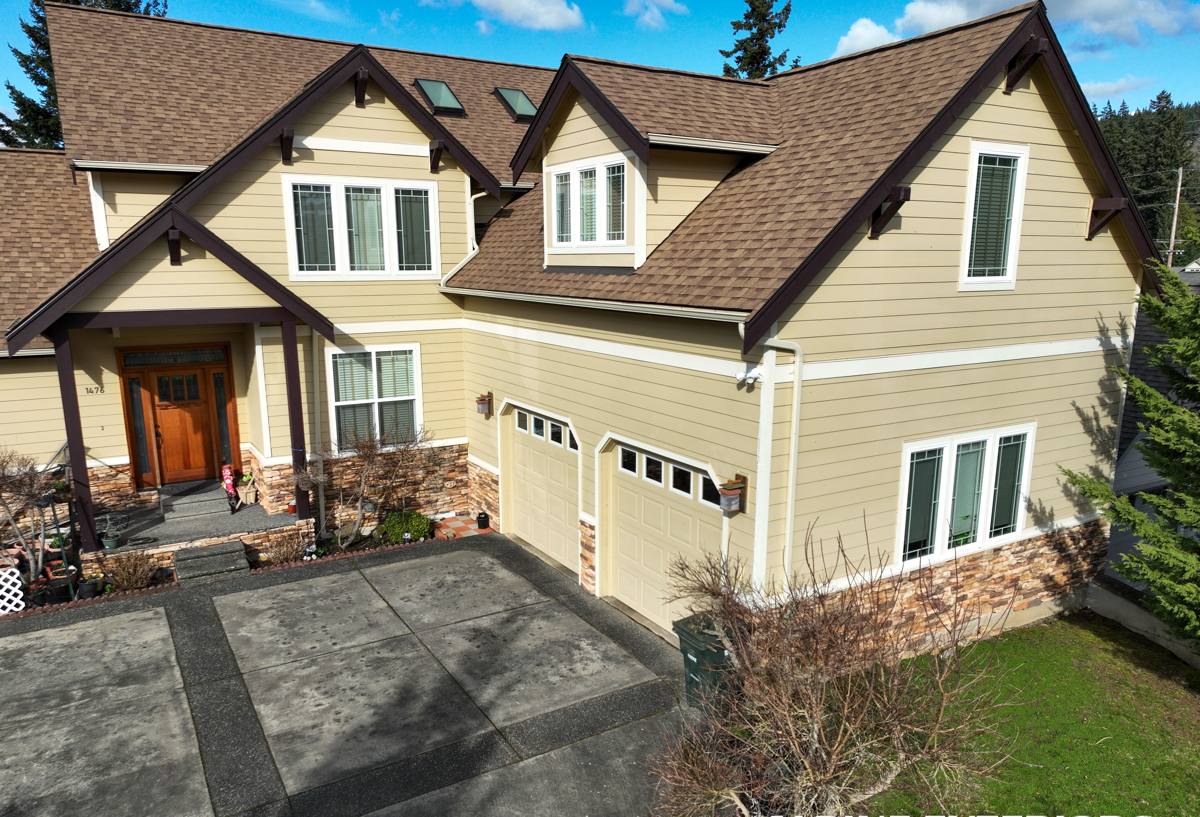
Signs Your Blanchard Home's Siding Needs Attention
Most siding failures don't announce themselves with a hole in the wall. They show up as small changes that homeowners notice but don't always connect to a moisture problem underneath. In our experience working this area, these are the warning signs worth acting on before they spread:
- Soft or spongy spots when you press on a panel, especially near the bottom courses and around window and door trim
- Paint that's bubbling, peeling, or failing faster than it should, even on siding that's been repainted recently
- Dark streaking or a persistent green-black film that keeps coming back within weeks of cleaning
- Visible gaps, cracked caulk joints, or panels that have pulled slightly away from the wall
- Warping, cupping, or panels that no longer sit flat against the sheathing
- A musty smell near exterior walls inside the home, which often means moisture has already worked past the siding
- Moss or algae growth thick enough that it's holding moisture against the surface rather than just sitting on top of it
Any one of these on its own might be minor. Several together, or any sign that's been ignored for more than a season, usually means water has already gotten past the surface layer.
What's Actually Damaging Siding in Blanchard
Salt Air
Proximity to saltwater means airborne salt settles on exterior surfaces continuously, not just during storms. Salt is hygroscopic — it pulls moisture out of the air and holds it against whatever it's sitting on. On siding, that means panels near the coast stay damp longer than they would from rain alone, even on days that look dry. Over years, that constant low-grade dampness accelerates paint failure, wood decay, and corrosion of exposed fasteners and trim hardware.
Driving Rain
Skagit County gets plenty of straight-down rain, but Blanchard's exposure means storms often come with real wind behind them, pushing water sideways into wall assemblies rather than letting it run straight off. Wind-driven rain finds every weak lap joint, every under-caulked seam, and every spot where flashing was skipped or installed wrong. It's this sideways-driving rain, more than simple rainfall totals, that turns a minor installation shortcut into years-later rot.
Moss Season
The region's cool, wet stretch runs long, and shaded or north-facing walls in Blanchard often stay damp for weeks at a time. Moss and algae don't just look bad — they hold water against the siding surface, block airflow that would otherwise let panels dry out between rain events, and their root structures can work into hairline cracks and seams. A wall that's constantly damp under a layer of moss is a wall that's decaying faster than the same wall kept clean and dry.
What a Correct Siding Repair Actually Involves
A repair that just covers the visible problem often makes things worse, because it traps whatever moisture is already in the wall assembly. A repair done right starts with figuring out how far the damage actually goes.
Inspection Before Anything Gets Touched
We check the moisture content of the siding and, where accessible, the sheathing behind it — not just the visible panel. We look at flashing above windows, doors, and any horizontal trim, since failed flashing is one of the most common hidden causes of "siding" damage that isn't really about the siding at all. We also check how the damaged section ties into surrounding panels, because a repair that doesn't match the existing lap and fastening pattern can create a new leak path even if it looks fine.
Removing Damaged Material — All of It
Rot and moisture damage spread further than they appear on the surface. Cutting out only the visibly bad section and patching over the rest is a shortcut that fails within a year or two. We remove material until we're back to sound, dry substrate, even if that means a wider repair than the homeowner initially expected.
Addressing the Cause, Not Just the Symptom
If the damage was caused by failed flashing, a bad caulk joint, or grade/drainage issues pushing moisture up from below, patching the siding without fixing that cause just resets the clock on the same failure. Part of doing this correctly is telling a homeowner honestly when the real issue is a flashing detail or a drainage problem, not the siding material itself.
Matching Materials and Finish
Where we're patching an existing Hardie installation, we match profile, exposure, and color as closely as the product line allows, and we follow James Hardie's own fastening and clearance specifications for the repair section — not just for appearance, but because those specs exist to keep water managed correctly at every seam.
Repair or Replacement: How We Make the Call
Not every damaged section needs a full re-side, and not every "small" repair should stay small. The table below covers the factors that usually decide which direction makes sense.
| Factor | Repair Usually Makes Sense | Replacement Usually Makes Sense |
|---|---|---|
| Extent of damage | Isolated to one or two wall sections | Recurring across multiple elevations |
| Age of existing siding | Newer installation, otherwise sound | Original siding nearing or past expected service life |
| Underlying material | Sheathing tests dry, structurally sound | Sheathing shows rot or repeated moisture intrusion |
| Cause of damage | One identifiable, fixable cause (flashing, caulk joint) | Systemic issue — original product, original install quality |
| Product match | Current material and color still available | Discontinued profile or badly faded existing siding |
Where the numbers work out close, we'll walk through both options honestly rather than defaulting to the bigger job. Plenty of Blanchard homes only need targeted repair to specific elevations that take the worst of the weather, while the more sheltered sides of the same house are still doing fine.
Our Repair Process
Once we've walked the property and diagnosed the cause, the process looks like this:
- Full exterior inspection, including moisture readings and a check of flashing, trim, and drainage paths near the damaged area
- A clear explanation of what we found and why it happened — including if the real fix is a flashing or drainage correction rather than new siding
- A written scope and estimate before any material is ordered or removed
- Careful removal of all compromised material, not just what's visible from the ground
- Repair or replacement of any damaged sheathing or water-resistive barrier found underneath
- Installation of matched siding material, fastened and flashed to manufacturer specification
- Final check of caulking, paint touch-up on ColorPlus finishes where needed, and a walkthrough with the homeowner
Why We Only Install James Hardie — Including for Repairs
When we're patching into existing siding or replacing a section outright, we use James Hardie fiber cement. It's non-combustible, it's engineered specifically for Pacific Northwest moisture exposure through Hardie's HZ10 product line, and its ColorPlus factory finish holds color and resists the kind of paint failure that salt air and constant damp accelerate on field-painted materials. That matters more on a repair job than people expect — a patch is only as good as its ability to survive the same conditions that damaged the original section, and in a place like Blanchard, that means standing up to salt air, sideways rain, and long wet stretches year after year, not just looking right on installation day. We don't install vinyl, LP SmartSide, or other fiber cement brands, which means every repair we do stays consistent with a product system built for this exposure rather than mixing in materials with different moisture behavior and a different warranty structure.
Why Local Experience in Blanchard Matters
A crew that's worked Blanchard homes before already knows how the wind tends to hit different elevations, which sides of a house typically hold moss longest, and how salt exposure shows up differently here than it does on a sheltered lot ten miles inland. That's not something you can fully account for from a general knowledge of siding — it comes from having actually stood on ladders in this specific stretch of Skagit County and seen which repairs held up and which didn't. It also means a faster, more accurate diagnosis: we're not guessing at how far wind-driven rain typically pushes water on a Blanchard-facing wall, we've seen it.
Keeping a Repair From Becoming a Repeat Repair
Once a repair is done, a little upkeep goes a long way toward making sure it's the last time you deal with that section of wall:
- Rinse moss and algae off siding at least once a year, more often on shaded or north-facing walls
- Keep gutters clear so overflow isn't running directly down the siding face
- Trim back vegetation that's holding moisture against the wall or blocking airflow
- Re-caulk seams and trim joints as soon as cracking or gapping shows up, rather than waiting
- Walk the exterior after major windstorms and check for loose or shifted panels
- Touch up any exposed cut edges or fastener heads promptly to keep water out
If you're seeing soft spots, persistent moss, or paint failure on your Blanchard home, we're happy to come take a look and give you a straight answer about what's actually going on — no pressure, no inflated scope. Reach out through the form below for a free estimate.