 Mount Vernon
 Blanchard's Siding Has a Harder Job Than Most
Blanchard sits in that stretch of Skagit County where the water is never far away and the weather off Samish Bay and the Sound gets a direct run at the hillside homes along this corridor. That combination — salt-laden air, wind-driven rain that hits walls sideways instead of just falling on roofs, and a wet season that stretches long enough to grow moss on nearly any north-facing surface — is a tougher environment for exterior siding than most manufacturers design around by default. It's also exactly the kind of environment James Hardie's climate-engineered product lines were built to handle, provided the installation is done correctly.
Homeowners in Blanchard often don't realize how much of their siding's lifespan comes down to two separate things: the material itself, and how well it was installed against this specific climate. Get either one wrong and you're looking at premature paint failure, trapped moisture, or soft spots within a decade. Get both right and you've got a wall system that can outlast the mortgage.
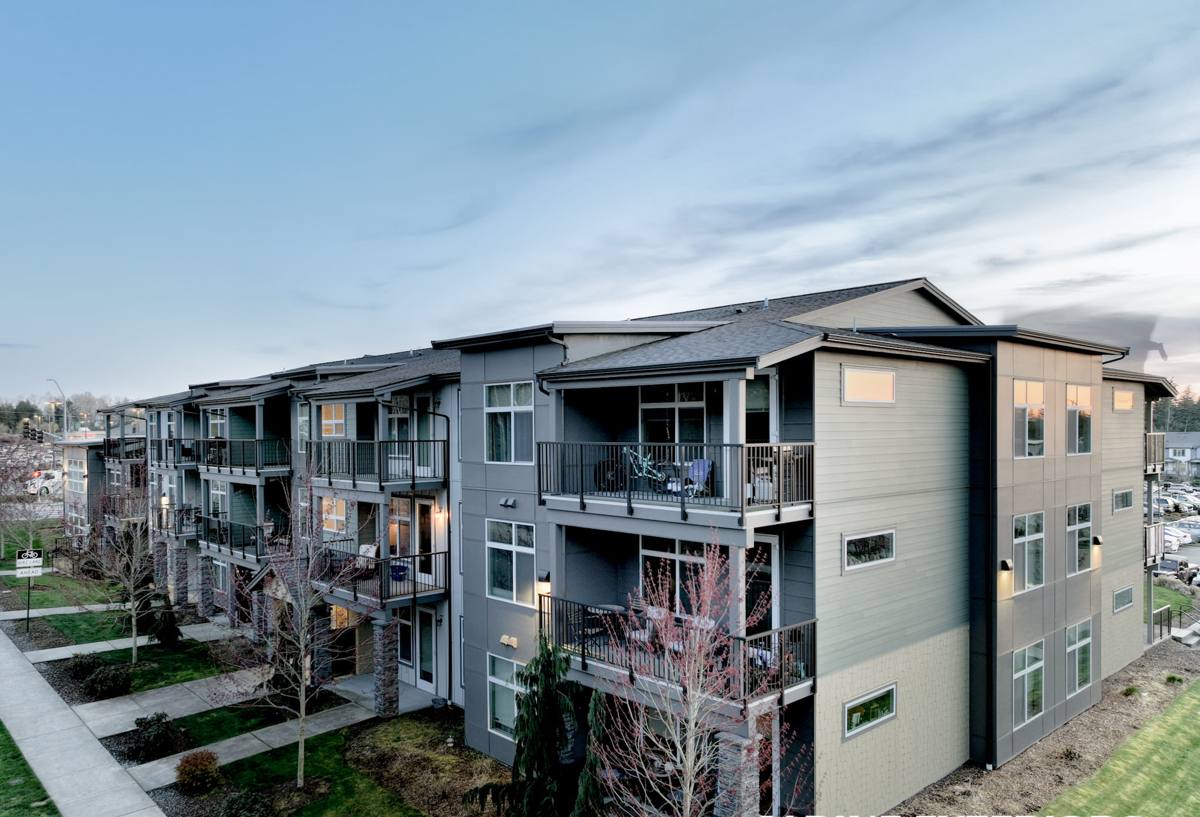
What Salt Air, Driving Rain, and Moss Actually Do to Siding
Salt Air
Airborne salt is corrosive to metal and hard on porous or absorbent surfaces. Fasteners, flashing, and any exposed metal trim take the brunt of it. Siding materials that rely on paint film alone for protection — rather than a factory-baked finish — tend to chalk, fade, and lose adhesion faster in a marine-influenced air than they would twenty or thirty miles inland.
Driving Rain
Wind off the water doesn't let rain run straight down a wall — it drives it up and under laps, around trim, and into any gap that isn't properly flashed or caulked. A siding system that depends on a perfect, unbroken paint seal to stay watertight will eventually fail somewhere. What matters more is how the assembly behind the siding — the water-resistive barrier, the flashing details, the drainage gap — handles the water that inevitably gets past the surface.
Moss and Prolonged Dampness
Skagit County's wet season runs long, and shaded or north-facing walls in Blanchard can stay damp for weeks at a stretch. Wood-based and wood-adjacent siding products are the most vulnerable here — sustained moisture against an absorbent substrate is the single biggest driver of rot, swelling, and coating failure. Fiber cement doesn't feed mold or moss the way wood fiber does, but even fiber cement needs a clean, ventilated wall assembly behind it to shed that moisture instead of holding it.
Why We Install James Hardie and Nothing Else
We standardized on James Hardie fiber cement for every job we do, including here in Blanchard, and we don't install vinyl, LP SmartSide, Cemplank, Allura, primed spruce, or cedar. That's not a marketing position — it's a decision based on what holds up in this specific climate over decades, not just years.
- Non-combustible core: fiber cement doesn't feed a fire the way wood-based products can, which matters for insurance and peace of mind alike.
- ColorPlus factory finish: baked-on, UV-cured coating that resists the fading and chalking that field-applied paint struggles with in coastal air.
- HZ5 engineering: Hardie's HZ5 product line is formulated for regions with more moisture and freeze-thaw exposure than the Southwest or Gulf Coast lines, which is the right baseline for Skagit County.
- Dimensional stability: fiber cement doesn't swell, cup, or warp with moisture cycling the way wood and some engineered wood products can over time.
- Transferable warranty: a real, honored warranty structure that follows the house, not just the original owner.
We're upfront that other products have their own strengths and their own fans. Vinyl is inexpensive and low-maintenance in mild climates; cedar has a look some homeowners love. Our reasoning for refusing to install them comes down to how they hold up specifically against salt air, driving rain, and sustained dampness over 20-plus years — not a claim that they're unusable everywhere.
What a Correct Installation Involves in Blanchard
James Hardie's own installation guidelines are detailed for a reason — most of the siding failures we get called to diagnose trace back to a shortcut taken during install, not a flaw in the board itself. In a wind-and-rain-exposed area like Blanchard, a few details matter more than usual.
Drainage and Moisture Management
We install a proper water-resistive barrier and maintain a drainage plane behind the siding so that any water that gets past the surface has somewhere to go besides your sheathing. Flashing at windows, doors, and every horizontal transition is treated as non-negotiable — this is the single biggest predictor of whether a wall stays dry over its lifetime.
Clearances and Gaps
Hardie specifies minimum clearances from grade, roofing, decks, and other trim for a reason: siding that sits too close to a hard surface stays wet longer and wicks moisture from splash-back. We hold those clearances even when it would be faster not to.
Fastening for a Salt-Air Environment
We use corrosion-resistant fasteners appropriate for the exposure, and we fasten to Hardie's specified pattern and embedment depth — not just "close enough." Under-driven or over-driven fasteners are one of the most common causes of siding that looks fine for a year or two and then starts telegraphing fastener heads or working loose.
Caulking and Sealants
Joints get sealed with the right sealant for the location, not caulked over indiscriminately in places that should actually be left to drain. Over-caulking is almost as common a mistake as under-caulking, and it can trap water instead of shedding it.
| Detail | Why It Matters More in Blanchard |
|---|---|
| Water-resistive barrier + drainage gap | Driving rain off the water pushes moisture past the surface more often than in sheltered inland areas |
| Corrosion-resistant fasteners | Salt air accelerates corrosion of standard fasteners and exposed metal |
| Proper flashing at penetrations | Wind-driven rain finds gaps that vertical-only rain wouldn't reach |
| Ventilation behind north-facing walls | Shaded, damp walls are where moss and sustained moisture do the most damage |
| Factory-cured ColorPlus finish | Resists the fading and chalking that field-painted surfaces see faster near the water |
Our Process, Start to Finish
Every Blanchard job follows the same sequence, whether it's a full re-side or a targeted repair section:
- On-site assessment: we look at the existing siding, sheathing condition, and problem areas — especially anywhere moisture has clearly been an issue — before quoting anything.
- Honest scope and estimate: we tell you what needs to happen, including if the sheathing underneath needs attention before new siding goes on. We don't upsell work that isn't needed.
- Tear-off and prep: old siding and any compromised sheathing or house wrap comes off, and the wall gets prepped properly rather than sided over.
- Weather barrier and flashing: the water-resistive barrier, flashing, and drainage details go in before a single piece of Hardie board is hung.
- Installation to spec: Hardie boards installed per manufacturer clearances, fastening patterns, and joint treatment.
- Final walkthrough: we go over the finished job with you before calling it done.
Why It Matters That We Already Work in Blanchard
Siding crews that mostly work drier, more sheltered inland towns don't always adjust their habits for a job on a water-exposed lot. A crew that already works the Blanchard area knows to plan around the wind direction the site actually gets, knows which wall orientations need extra attention to moss and shade, and doesn't treat flashing and drainage details as optional extras. It also means we're not learning Skagit County's permitting and inspection expectations on your project — we already know them.
Access matters too. Some Blanchard properties have tighter driveways, sloped lots, or limited staging space compared to a flat in-town lot, and a crew that's worked the area before shows up with a plan for that instead of figuring it out on day one.
Living With Hardie Siding in a Salt-Air, Moss-Prone Climate
Correctly installed James Hardie siding is low-maintenance, not no-maintenance. A little seasonal attention goes a long way toward getting the full lifespan out of the material:
- Rinse salt residue and grime off exterior walls periodically, especially on sides that face the water or prevailing wind
- Keep gutters clear so overflow doesn't run down and pool against siding at corners
- Trim back vegetation and tree cover that keeps a wall section shaded and damp longer than the rest of the house
- Check caulking at trim and penetrations every year or two and have gaps resealed before they become entry points
- Address any moss or algae growth on siding promptly with a gentle wash rather than pressure-washing at close range, which can force water behind the boards
- Have any impact damage or cracked boards repaired promptly — a small gap is how water gets a foothold
What Affects the Cost of a Blanchard Hardie Project
| Factor | Why It Changes the Price |
|---|---|
| Condition of existing sheathing | Hidden moisture damage found during tear-off adds repair scope |
| Home size and wall complexity | More corners, dormers, and trim details mean more labor and cut waste |
| Siding profile chosen | Lap, shingle, and panel styles differ in material and install time |
| Site access | Sloped or tight lots common in this area can add staging and labor time |
| Color and finish selection | Factory ColorPlus finishes vs. field-painted options affect material cost |
We give straightforward, itemized estimates rather than a single vague number — you should know what you're paying for and why.
If your Blanchard home's siding is showing its age, or you're planning ahead of the next wet season, we're happy to take a look and put together a free, no-pressure estimate. There's no obligation — just an honest read on where things stand and what it would take to get it right.