 Mount Vernon
 Why Decks Near Big Lake Wear Out Faster
Big Lake sits in a pocket of Skagit County that holds onto moisture longer than open, sunnier lots around Mount Vernon. Mature tree cover along the shoreline keeps decks shaded through much of the day, which sounds pleasant until you realize shade means slower drying. A deck that never fully dries between rains is a deck that's working overtime to fight rot, mold, and moss — and most decks in this area are losing that fight by the time they're 15 to 20 years old, sometimes sooner if they were built with lower-grade lumber or without proper flashing.
We're not describing a hypothetical. It's the pattern we see on almost every deck replacement call in this neighborhood: soft spots near the house where water backs up against siding, dark streaking on boards that face away from the sun, and joists that look fine from the top but are punky underneath. Skagit County's long wet season — driving rain from fall through spring, followed by a moss season that can stretch from October into May in shaded spots — doesn't forgive shortcuts in the original build.
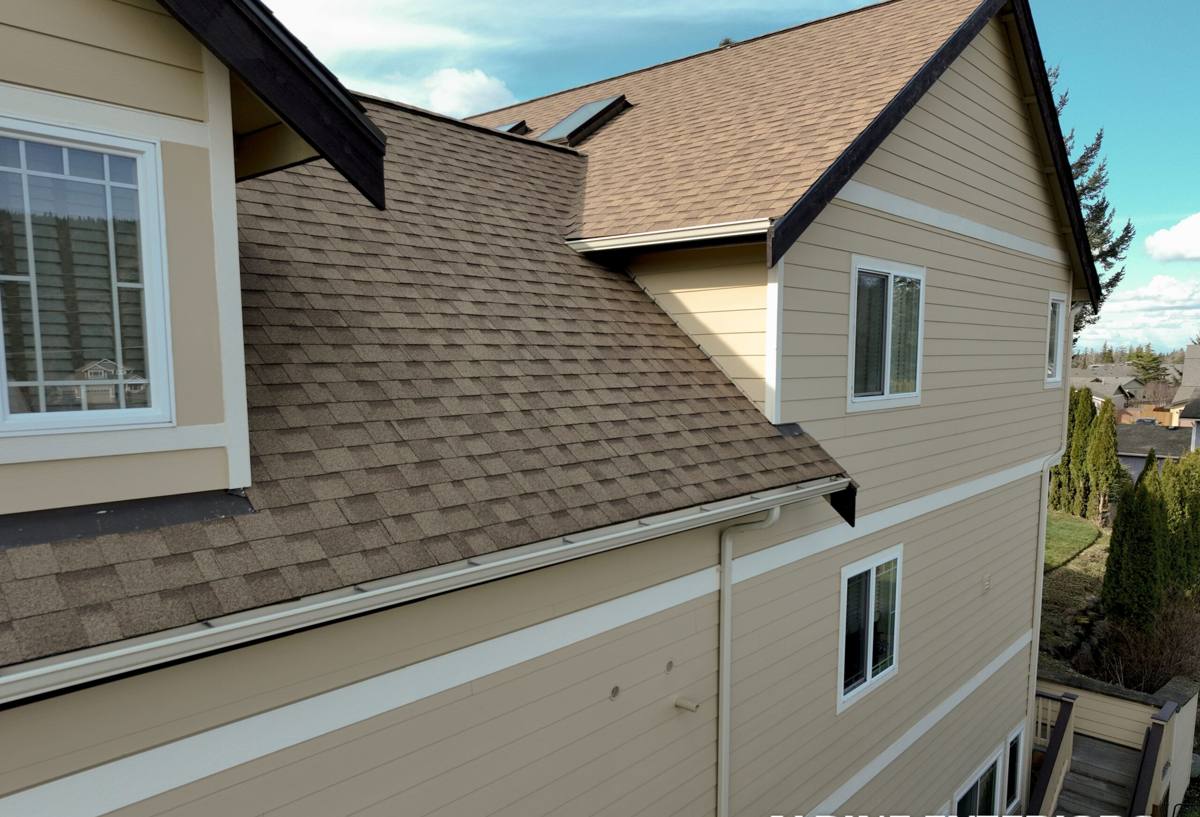
What Big Lake's Setting Does to a Deck Over Time
Shade and Slow Drying
Tree canopy near the water blocks direct sun on large sections of many decks for much of the day. Wood and even composite decking need airflow and sun exposure to shed moisture. Without it, organic debris — needles, leaves, pollen — sits on the surface and holds water against the boards, accelerating decay and giving moss a foothold.
Ground Moisture and Substructure Stress
Lake-adjacent lots often have higher groundwater tables and heavier clay or saturated soil than lots farther from the water. That affects footings and post bases. If the original deck was built with buried posts or undersized footings, you'll often see movement, settling, or a bouncy feel in the deck long before the visible decking looks bad.
Regional Weather Load
Beyond the lake itself, this whole stretch of Skagit County deals with driving rain that gets pushed sideways by wind off the Salish Sea and salt-tinged air that travels inland more than people expect. That combination attacks fasteners, flashing, and any exposed end-grain on lumber. It's a slower, quieter kind of damage than a big storm — but over a decade it adds up to the same result: a deck that looks tired and feels unsafe underfoot.
Signs a Deck Needs Replacement, Not Just Repair
Not every deck problem means starting over. But there's a point where patching individual boards is just delaying a bigger job — and spending more money to get there. Here's how we sort it out on a visit:
- Soft, spongy decking in multiple areas rather than one or two boards
- Rot or staining at the ledger board where the deck attaches to the house
- Posts or joists that show soft wood when probed with a screwdriver
- Persistent moss or algae that returns within weeks of cleaning
- Visible gaps opening up between railings and posts, or railings that flex
- A deck more than 20 years old with no record of the substructure being inspected
- Fasteners that are rusted, backing out, or leaving dark streaks on the wood
If you're only seeing one or two of these and the framing underneath checks out, a repair or partial board replacement may be the honest answer. We'll tell you that directly — replacing a sound structure just to sell a bigger job isn't how we operate.
What a Correct Deck Replacement Actually Involves
A deck replacement done right in this climate is a structural project first and a cosmetic one second. The decking boards you walk on are the last thing installed, not the first thing to think about.
Ledger and Flashing
Where the deck meets the house is the single most common failure point we find on tear-outs in this area. Proper flashing — installed so water sheds away from the house framing, not into it — matters more here than in drier climates because the ledger connection stays damp for so much of the year.
Footings and Posts
Given the moisture conditions common near the lake, footings need to be sized and set below frost depth with proper drainage, and posts need to be held up off the concrete rather than buried or sitting in standing water. This is the part of the job nobody sees once it's finished, which is exactly why it's the part most likely to get shortcut on a low-bid job.
Joist Spacing and Framing
Joist spacing affects both the feel of the deck underfoot and how well it supports composite decking, which generally needs tighter spacing than solid wood. We frame to the decking material being installed, not the other way around.
Drainage Under the Deck
On shaded, lower lots, water that pools under a deck keeps the framing damp long after a rain stops. Grading and simple drainage improvements under the structure go a long way toward extending the life of everything above it.
Decking Material Options for a Shaded, Wet Lot
Material choice matters more here than on a sunny, open lot. Some products that perform fine in drier parts of the county struggle with the extended damp exposure and moss pressure common around Big Lake.
| Material | Moisture Behavior | Maintenance | Typical Cost Range |
|---|---|---|---|
| Pressure-treated wood | Prone to moss and staining in shade without upkeep | Annual cleaning and periodic sealing | Lowest upfront cost |
| Cedar | Naturally rot-resistant but still needs airflow to perform | Regular cleaning, occasional oil or stain | Mid-range |
| Composite decking | Handles constant moisture well; some early products trapped moisture, current formulations shed water better | Periodic washing to prevent surface algae | Higher upfront, lower long-term upkeep |
| PVC decking | Fully moisture-resistant, unaffected by rot | Occasional cleaning only | Highest upfront cost |
We don't push one product on every homeowner. A shaded, lake-adjacent lot with heavy moss pressure is exactly the situation where spending more on composite or PVC decking usually pays off in reduced maintenance and a longer service life — but for a homeowner planning to sell in a few years or working with a tighter budget, a well-built wood deck with the right substructure is still a sound, honest choice. What matters most either way is the framing underneath, which we build the same regardless of what decking goes on top.
Our Process, Start to Finish
- On-site walkthrough: We check the substructure, not just the surface — posts, footings, ledger condition, and drainage.
- Honest scope and estimate: You get a clear picture of what's replacement, what's repair, and what material options fit your budget and the site conditions.
- Permit handling: Deck rebuilds of most sizes require a permit through the city or county depending on your lot; we handle that paperwork so you don't have to chase it down.
- Tear-out and structural rebuild: Old decking, framing, and any compromised posts or footings come out and get rebuilt to current code, not just replaced board-for-board.
- Decking, railing, and finish work: Installed to the manufacturer's spacing and fastening specs, which matters more for warranty coverage than most homeowners realize.
- Final walkthrough: We go over care and cleaning specific to your material and your lot's shade and moisture conditions before we consider the job done.
Permits and Local Code Basics
Most deck rebuilds in and around Mount Vernon require a building permit, especially if the footprint changes, the deck is attached to the house, or it sits above a certain height off grade. Guardrail height, baluster spacing, and stair requirements are governed by adopted building code and get checked at inspection. Requirements can differ slightly depending on whether your property falls under city or county jurisdiction, and shoreline-adjacent lots near Big Lake sometimes carry additional setback considerations worth confirming before design work starts. We pull the permit and manage inspections as part of the job so nothing gets built that has to be torn out later.
Maintenance That Actually Matters Here
Whatever material you choose, a few habits make the biggest difference in this climate:
- Clear leaves and debris off the deck surface and between boards before the fall rains set in
- Keep gutters and downspouts near the deck clear so runoff doesn't pool against the framing
- Wash off moss and algae early in the season before it gets established, rather than waiting until it's visibly thick
- Trim back overhanging branches where practical to let more light and air reach the deck surface
- Check the ledger flashing and any visible fasteners once a year for early signs of rust or gaps
Why Local Experience on Big Lake Actually Matters
A deck built for a sunny, open lot in Mount Vernon proper doesn't necessarily hold up the same way on a shaded, moisture-heavy lot near the water. Framing decisions, drainage planning, and even fastener choice should account for how much longer these decks stay wet after a storm compared to lots without tree cover. A crew that's replaced decks around Big Lake before already knows where the moisture problems tend to hide, what the local permitting process looks like, and which materials are worth the extra cost on this kind of site versus which ones are overkill. That's not something you can fully substitute with a generic spec sheet — it comes from having actually pulled apart failed decks in this specific setting and seen what went wrong the first time.
If your deck near Big Lake is showing soft spots, persistent moss, or just feels older than it should, we're happy to take a look. The estimate is free, there's no pressure, and you'll get a straight answer about whether you need a full replacement or something smaller — just fill out the form below to get started.