 Mount Vernon
 Roofing Built for Clear Lake's Particular Climate
Clear Lake sits inland from the Skagit River valley, tucked among trees and water that give the neighborhood its character — and its roofing challenges. Homes here deal with a specific combination of conditions: heavy tree canopy that shades roofs and slows drying time, proximity to water that keeps humidity high, and the same driving rain and salt-tinged marine air that moves through the rest of Skagit County off Puget Sound. None of that is dramatic on its own, but stacked together over years, it wears on asphalt shingle roofs in ways that a drier, more open site never experiences.
A roof in a sun-exposed subdivision a few miles away can go a decade with minimal attention. A roof under Clear Lake's tree cover, catching runoff and staying damp longer after every storm, needs a different approach — better ventilation, more careful flashing work, and a maintenance rhythm that accounts for moss before moss becomes a shingle problem.
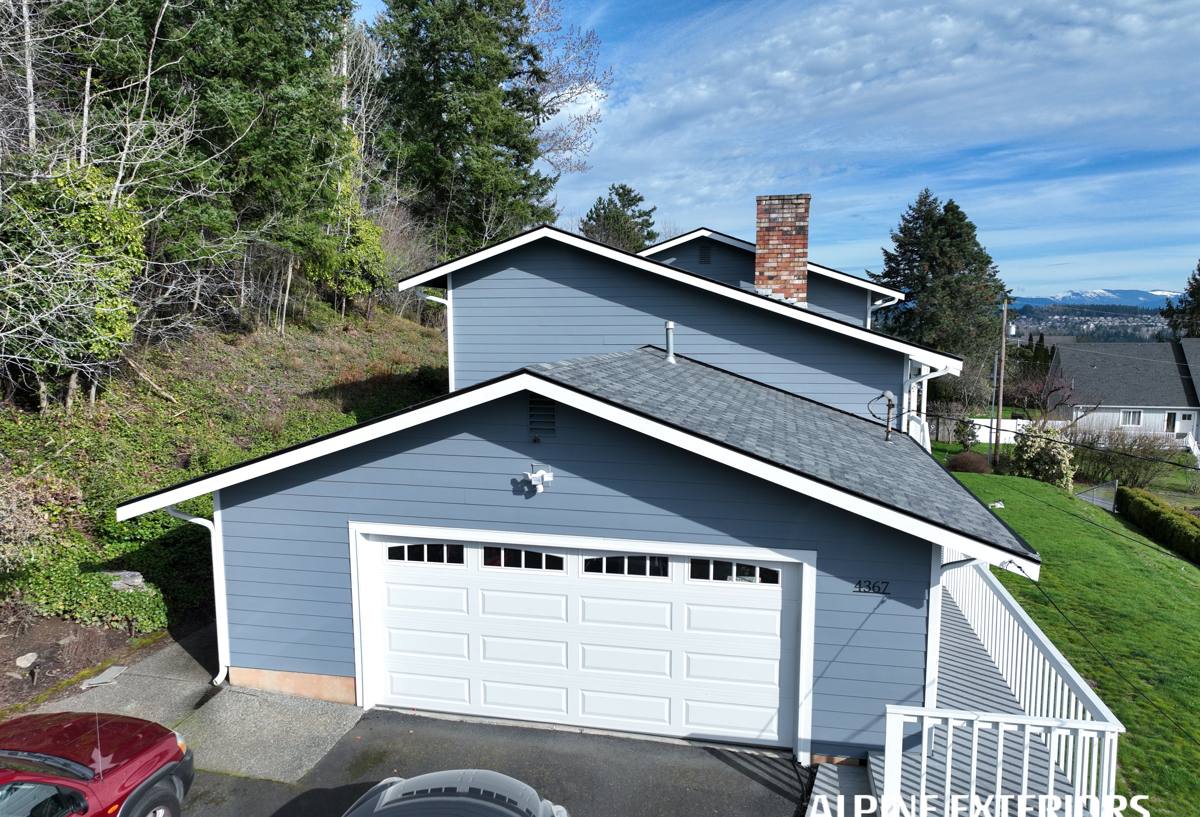
What Local Homes Actually Need From a Shingle Roof
We've worked enough roofs in and around Mount Vernon to know that "asphalt shingle roofing" isn't a single job — it changes based on the site. For Clear Lake specifically, three things matter more than they would elsewhere in the county:
Moisture Retention From Shade
Tree-shaded sections of roof dry out slower after rain. That extended dampness is exactly what moss and algae need to take hold, and it's harder on shingle granules over time than a quick soak-and-dry cycle would be.
Driving Rain and Wind-Driven Water
Storms moving through this part of Washington don't always fall straight down. Wind-driven rain finds gaps at flashing, valleys, and shingle edges that would stay dry in calmer weather. Roofs here need details — not just materials — that account for water moving sideways, not just down.
Debris Load
Needles, leaves, and organic debris from surrounding trees collect in valleys and behind chimneys or dormers faster here than on open lots. Left alone, that debris holds moisture against the shingles and accelerates everything else on this list.
Choosing the Right Asphalt Shingle for a Shaded, Moist Site
Not every asphalt shingle product performs the same way under these conditions. We look at moisture resistance, algae resistance, and wind rating as a package, not one spec in isolation.
| Shingle Type | Typical Lifespan | Best Fit For | Trade-Offs |
|---|---|---|---|
| 3-tab asphalt | 15-20 years | Budget-conscious projects, simpler rooflines | Lower wind rating, less algae resistance available, flatter appearance |
| Architectural (laminated) asphalt | 25-30 years | Most Clear Lake homes, especially shaded lots | Higher upfront cost, but better wind and moisture performance |
| Algae-resistant (AR) shingles | 25-30 years | Heavily shaded roofs, north-facing slopes | Slightly higher cost; resistance fades gradually over decades, not permanent |
| Impact-resistant (Class 4) asphalt | 25-30+ years | Homes wanting extra durability, potential insurance discount | Higher material cost; benefit is more about durability than moisture |
For most Clear Lake properties, we lean toward architectural shingles with algae-resistant granules as the practical baseline — not because it's the fanciest option, but because it matches what the site actually demands. A cheaper shingle isn't wrong for every budget, but we'll tell you honestly where it will show its age faster under tree cover.
What a Correct Installation Involves
The shingle itself is maybe a third of what determines how a roof performs. The rest is in details that aren't visible once the job is finished:
Underlayment and Ice-and-Water Protection
We use synthetic underlayment across the field of the roof and self-adhered ice-and-water membrane at eaves, valleys, and around penetrations — the spots where wind-driven rain and ice damming (on the rare hard freeze) are most likely to force water backward under the shingles.
Flashing at Every Transition
Chimneys, skylights, dormers, and sidewalls all need properly formed and step-flashed transitions, not just caulk. Caulk fails; correctly installed metal flashing doesn't need to rely on a sealant staying intact for twenty years.
Nailing Pattern and Fastener Placement
Manufacturer specifications on nail count and placement exist for a reason — under-fastened shingles are the single most common cause of early wind damage, and it's an invisible defect until a storm finds it.
Ventilation
Balanced intake and exhaust ventilation keeps the underside of the roof deck dry and regulates temperature. On shaded lots like Clear Lake, poor ventilation compounds the moisture problem rather than offsetting it.
Why Ventilation Deserves Its Own Conversation
Homeowners rarely ask about ventilation, but it's often the difference between a roof that lasts its full rated life and one that doesn't. Trapped attic moisture condenses against the underside of the roof deck, which can lead to rot, mold, and premature shingle failure from underneath — problems that show up years after installation and are much more expensive to fix than they would have been to prevent.
When we're on a Clear Lake roof, we check existing intake and exhaust venting as part of the estimate, not as an upsell added later. If the current setup is undersized or unbalanced, we'll explain what's needed and why, in plain terms — not just recommend an add-on.
Moss, Algae, and Ongoing Maintenance
Given the tree cover and lake-area humidity, moss and algae aren't a matter of if but when. The goal isn't to eliminate them entirely — it's to keep them from getting a foothold that lifts shingles or holds moisture against the roof deck.
- Keep gutters and valleys clear of needles and leaves, especially heading into fall and winter
- Trim back overhanging branches to reduce shade and debris drop where practical
- Have moss physically removed rather than pressure-washed, which can strip granules and shorten shingle life
- Check for granule buildup in gutters, an early sign of shingle wear
- Have a professional inspection every couple of years, not just after visible problems appear
- Address minor flashing or sealant issues early, before they become deck-level water damage
Zinc or copper strips near the ridge can help slow moss regrowth over time, and we'll talk through whether that makes sense for your specific roofline during an estimate.
Our Process for Clear Lake Roofing Projects
We keep the process straightforward because roofing decisions shouldn't feel complicated:
- On-site inspection — we look at the current roof, decking condition, ventilation, and any tree-cover or drainage issues specific to your lot.
- Honest scope and options — we explain what's actually needed versus what's optional, with shingle options that fit the site and your budget.
- Written estimate — clear line items, no vague allowances buried in the total.
- Installation — proper tear-off, deck inspection and repair as needed, underlayment, flashing, shingles, and ventilation work done to manufacturer spec.
- Final walkthrough — we review the completed work with you before considering the job done.
Cost Factors Worth Understanding Upfront
Every roof is priced on its own specifics, but these are the variables that move the number most:
| Factor | Why It Matters |
|---|---|
| Roof pitch and complexity | Steeper or multi-plane roofs take longer and require more safety setup |
| Number of existing layers | Tear-off of multiple old layers adds labor and disposal cost |
| Decking condition | Rotted or damaged sheathing found during tear-off requires repair before shingles go on |
| Shingle grade chosen | 3-tab, architectural, and impact-resistant options carry different material costs |
| Ventilation upgrades | Adding or correcting intake/exhaust venting affects both cost and long-term roof health |
| Tree access and site conditions | Limited access or heavy overhead branches can affect setup and cleanup time |
Why Hiring a Crew That Knows Clear Lake Matters
A roofing crew that mostly works drier, more open sites elsewhere in Skagit County will still do competent work — but they may not automatically account for the shade, debris load, and moisture patterns specific to a lake-adjacent, tree-covered property. Knowing to check ventilation more carefully, to plan for heavier debris accumulation, and to recommend algae-resistant granules as a default rather than an upsell comes from having actually worked these conditions before, not just reading a spec sheet.
We're a Mount Vernon-based crew, and Clear Lake is part of our regular service area — not a stretch assignment. That familiarity shows up in the details: where we pay extra attention during inspection, which flashing points we double-check, and how we talk you through maintenance realistically instead of generically.
Get a Straightforward Estimate
If your Clear Lake roof is showing moss, granule loss, or you're just planning ahead, we're happy to take a look and give you an honest read on what it needs — no pressure, no inflated scope. Use the form below to request a free estimate.