 Mount Vernon
 Siding Installation Built for Anacortes Conditions
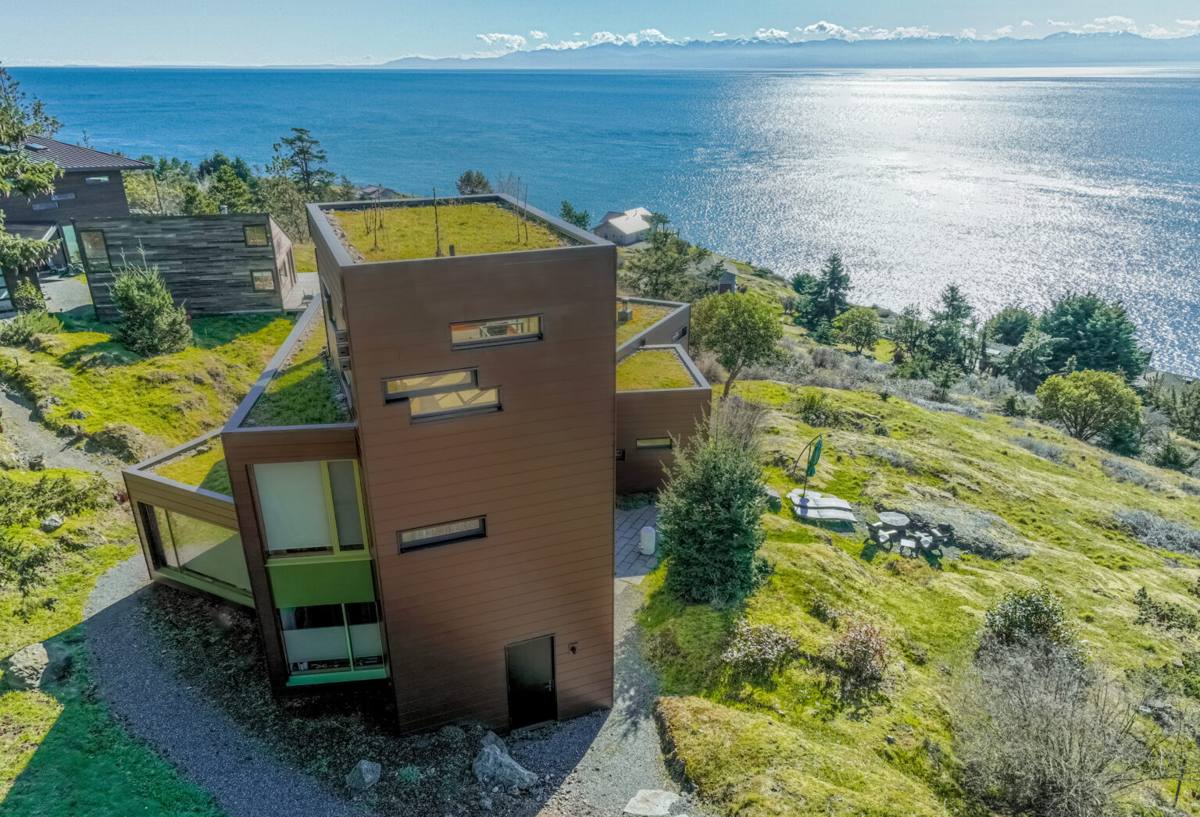
Anacortes sits at the edge of the Salish Sea, and that location shapes everything about how siding performs there. Homes here don't just deal with rain — they deal with rain carried on salt-laden wind, long stretches of overcast humidity, and a moss season that can run most of the year on shaded north and west walls. Siding that would hold up fine forty minutes inland in Mount Vernon can fail faster on a bluff-facing or waterfront-adjacent home in Anacortes. A correct installation here isn't just about nailing panels to a wall — it's about choosing a material and a detailing approach that accounts for salt exposure, wind-driven moisture, and near-constant dampness in shaded areas.
We install exclusively James Hardie fiber cement siding, and Anacortes is one of the clearest examples of why that standard matters. This page walks through what local homes actually need from a siding job, what correct installation looks like in this environment, and how our process is built around it.
Why Anacortes Is a Tougher Environment Than It Looks
Salt Air
Proximity to saltwater means airborne salt settles on exterior surfaces, especially on homes with west or water-facing exposure. Salt is corrosive to fasteners, trim hardware, and paint films, and it accelerates the breakdown of materials that aren't built to resist it. Over years, salt exposure without the right product and finish leads to premature fading, chalking, corroded fasteners, and finish failure at panel edges.
Driving Rain
Wind off the water doesn't just bring rain straight down — it drives it sideways into wall assemblies, laps, and trim joints. Siding systems that rely on caulk and paint alone to keep water out struggle in these conditions. What matters more is how the siding sheds water at laps, how it's flashed at penetrations, and whether the assembly behind it can dry out when moisture does get past the surface.
Moss Season
Skagit County's damp, mild climate supports moss and algae growth on shaded, north-facing, and tree-covered walls for much of the year. Organic growth holds moisture against the siding surface, and on materials that aren't dimensionally stable or that absorb water, that sustained dampness accelerates rot, swelling, and finish breakdown. It's a slow problem, which is exactly why it gets ignored until a wall needs major repair.
What This Means for Material Choice
These three factors — salt, driving rain, and moss — don't stress every siding material the same way. Wood-based products (cedar, primed spruce) absorb moisture and are a direct food source for the organisms that cause rot once moss and algae take hold. Vinyl doesn't rot, but it's a thin material with limited dimensional stability, and in coastal wind it can warp, crack, or blow off in gusts, plus its color is baked in — no repainting to refresh a faded, salt-dulled finish. LP SmartSide and similar engineered wood products perform reasonably in moderate climates but are still wood-based at the core, meaning cut edges and any moisture intrusion point are vulnerable in a wet, moss-prone environment.
James Hardie fiber cement is non-combustible, dimensionally stable, and doesn't feed rot or insects the way wood-based products can. Its ColorPlus factory finish is baked on and engineered to resist fading, which matters directly in a salt-exposed environment where lesser finishes chalk and dull faster. Hardie's HZ5 product line is specifically engineered for harsh, moisture-heavy climates like the Pacific Northwest coast — it's built for exactly the conditions Anacortes homes actually face, not a generic national average climate.
Material Comparison for Coastal Skagit County Conditions
| Material | Salt Air Resistance | Moisture / Moss Resilience | Finish Longevity |
|---|---|---|---|
| James Hardie Fiber Cement (HZ5) | Strong — non-combustible, stable material | Doesn't rot; engineered for wet coastal climates | Factory ColorPlus finish, long warranty |
| Vinyl | Can fade/chalk faster in salt exposure | Doesn't rot but can warp in coastal wind | No refinishing option once faded |
| Cedar / Primed Spruce | Vulnerable — absorbs salt-laden moisture | Weak — feeds rot and moss growth | Requires ongoing paint/stain maintenance |
| LP SmartSide | Moderate | Wood-based core, vulnerable at cut edges | Depends on field-applied or factory finish quality |
What a Correct Installation Involves
Weather-Resistive Barrier and Flashing
In a driving-rain environment, the siding itself is the second line of defense. The weather-resistive barrier underneath, along with correct flashing at windows, doors, decks, and roof-to-wall transitions, is what actually keeps water out of the wall assembly when wind pushes rain sideways. Skipping or shortcutting this step is one of the most common causes of hidden rot behind siding that looks fine from the street.
Fastener Selection
Salt air corrodes the wrong fasteners over time, and a corroding fastener eventually loosens or stains the siding around it. Correct fastener material and spacing, following Hardie's installation specifications, matters more here than in inland areas where corrosion isn't a daily factor.
Clearances and Drainage
Hardie siding needs proper clearance from grade, decks, roof lines, and other horizontal surfaces so water has somewhere to go and the bottom edge of the siding can dry. In a climate where walls stay damp for extended stretches, these clearances are what prevent the slow, moss-fed rot that shows up years later at the bottom of a wall.
Caulking and Joint Treatment
Every seam, joint, and penetration is a potential entry point for wind-driven rain. Correct sealant selection and application at trim joints and panel butts is a small detail with an outsized effect on how the wall performs in a coastal storm.
Our Process for an Anacortes Siding Installation
- Site assessment: we look at wall exposure — which sides face prevailing wind and salt spray, which stay shaded and moss-prone — before recommending a plan.
- Tear-off and inspection: removing existing siding lets us check the sheathing and framing underneath for any moisture damage that needs to be addressed before new siding goes on.
- Weather barrier and flashing installation: this is done to spec, not shortcut, because it's the layer that actually stops driving rain.
- James Hardie panel installation: installed per manufacturer specifications for fastening, clearances, and joint treatment, using the HZ5 product line suited to this climate.
- Trim and detail work: corners, window and door surrounds, and transitions finished to shed water rather than trap it.
- Final walkthrough: we review the completed job with the homeowner and explain what basic upkeep, if any, the new siding needs.
Why a Crew That Already Works Anacortes Matters
Siding installation looks straightforward from the outside, but the details that matter — flashing sequencing, fastener choice, clearance requirements — change based on what the wall actually faces. A crew that regularly works Anacortes and the surrounding Skagit County coastline already knows which walls take the worst of the wind and salt, what moss patterns to expect on shaded elevations, and how to detail a job so it holds up through a real Pacific Northwest winter, not just a mild one. That local pattern recognition is difficult to replicate with generic, one-size-fits-all installation practices.
Signs Your Current Siding May Be Struggling
- Persistent moss or algae staining on north- or west-facing walls that returns quickly after cleaning
- Soft spots, bubbling, or visible swelling near the bottom of wall sections or around trim
- Fading or chalking that's noticeably worse on the water-facing side of the home
- Corroded or staining fastener heads visible on the siding surface
- Gaps or separation at panel joints and corner trim
Any of these can be early indicators that the existing siding or its installation isn't holding up to Anacortes conditions, and catching them early is far less costly than waiting for wall sheathing damage.
What Influences the Cost of a Siding Installation Here
| Factor | Why It Matters Locally |
|---|---|
| Home size and wall complexity | More corners, dormers, and trim details mean more labor and flashing work |
| Current siding removal | Tear-off and any sheathing repair from prior moisture or moss damage adds scope |
| Wall exposure | Salt- and wind-exposed elevations may warrant extra attention to flashing and clearances |
| Trim and accessory selection | Hardie trim boards, soffit, and accent choices affect material cost |
| Access | Waterfront lots, steep grades, or limited access can affect staging and labor time |
We provide a detailed, itemized estimate after seeing the home in person — broad ranges without a site visit tend to be more misleading than helpful.
If you're planning a siding project in Anacortes and want a straightforward assessment of what your home actually needs, we're glad to take a look. Request a free, no-pressure estimate using the form below.