 Mount Vernon
 Decks in Anacortes Take a Different Kind of Beating
Anacortes sits closer to the water than most of the communities we work in around Skagit County, and that changes what a deck goes through year to year. Salt-laden air off the water accelerates corrosion on fasteners and hardware in a way that inland decks in Mount Vernon or Burlington simply don't experience at the same rate. Add in the region's long stretch of driving rain and the extended moss season that follows, and you have three separate stressors working on the same structure at once: corrosion, moisture intrusion, and organic growth that holds both against the wood.
Most deck problems we find in Anacortes aren't dramatic. They're slow — a fastener head rusting until it can't grip, a ledger board absorbing water it never fully sheds, a shaded corner growing a moss mat that keeps boards damp for weeks after everyone else's yard has dried out. By the time a homeowner notices soft decking or a wobbly rail, the underlying damage has usually been building for a season or two.
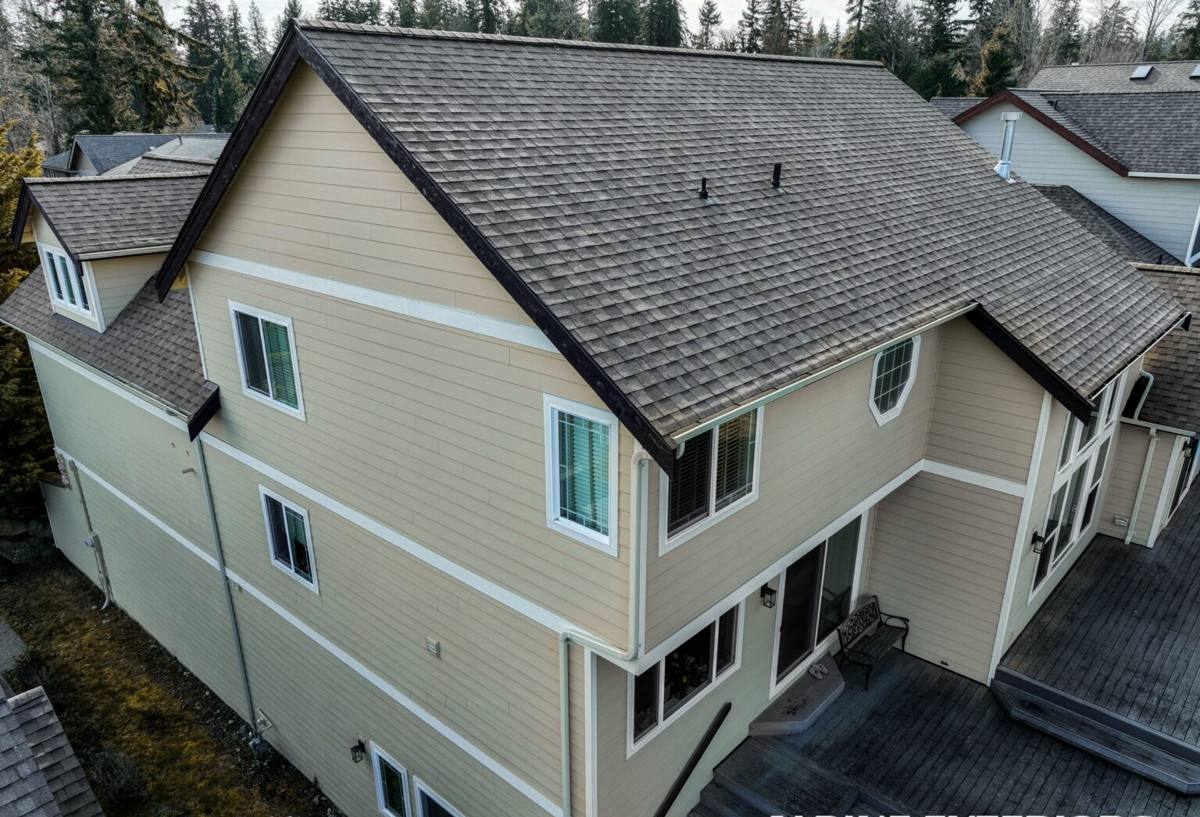
What Salt Air and Rain Actually Do to a Deck
Corrosion at the Connections
A deck is only as strong as its fasteners and connectors — the screws, bolts, joist hangers, and ledger attachments that hold the whole structure together. Standard hardware that's fine 15 miles inland can start showing rust streaks and pitting noticeably faster this close to the water. Once a fastener corrodes, it loses holding power long before it looks obviously bad from a few feet away, which is why a visual glance from the yard often misses what's actually happening at the joist level.
Moisture That Doesn't Fully Dry
Skagit County doesn't just get rain — it gets stretches of overcast, damp weather where surfaces stay wet longer than they would in a drier climate. Decking boards, especially where they meet a house or sit close to grade, can hold moisture at the joints and end grain far longer than the top surface suggests. That's where rot starts: not on the face of the board where you'd see it, but in the end grain, at fastener penetrations, and underneath where air doesn't circulate.
Moss as a Moisture Trap
Moss doesn't just look bad — it acts like a sponge sitting directly on your decking. A moss mat holds water against the wood surface well after a dry day would have let bare boards shed moisture normally. Shaded, north-facing, or tree-covered sections of a deck are the most common spots we find soft or spongy boards, and moss buildup is almost always part of the story.
How We Diagnose a Deck Before Touching Anything
Repair work only holds up if it's based on an accurate read of what's actually failed versus what's just cosmetic. Before we recommend anything, we walk the structure methodically:
- Probe decking boards and framing members with an awl or screwdriver at suspect spots — sound wood resists; rotted wood gives with little pressure
- Check every ledger board connection to the house, since this is the single most safety-critical joint on most decks and a common spot for hidden water intrusion
- Inspect joist hangers, post bases, and any galvanized or coated hardware for rust, pitting, or fastener backing-out
- Look underneath the deck where possible, since framing damage is often more advanced than what shows on the walking surface
- Check railings and posts for looseness, which often signals rot at the post base rather than a simple hardware fix
- Note moss and algae buildup patterns, since they point to the deck's chronic wet spots — often the same spots that will need repair again if drainage or airflow isn't addressed
We tell homeowners honestly what we find, including when a section is sound and doesn't need work. Not every deck with surface staining or a little moss needs board replacement — sometimes cleaning and resealing is the right call, and we say so.
What a Correct Repair Actually Involves
Fastener and Hardware Upgrades
Given the corrosion pressure from the salt air near Anacortes, any repair we do involves stepping up hardware quality where the original build used standard fasteners. That typically means corrosion-resistant, coated or stainless connectors at structural points — not because every fastener needs to be marine-grade, but because the connections doing the real structural work deserve hardware that won't be the first thing to fail again in a few years.
Framing and Ledger Repair
When we find rot at the ledger board or in joists, we don't patch around it. Compromised framing members get sistered or replaced, and we check the flashing behind the ledger — a poorly flashed ledger connection is one of the most common sources of hidden, ongoing water damage on any deck near the water.
Decking Board Replacement
Individual board replacement is common and usually the most visible part of a repair. The key is matching the replacement to what's actually causing the failure — if a board rotted because of poor drainage or ventilation underneath, replacing it without addressing that cause just resets the clock on the same problem.
Railing and Post Repair
Loose railings are a safety issue, not just a cosmetic one. We check post bases for rot and confirm rail connections meet current attachment standards, since older decks were sometimes built to lighter-duty rail connections than are considered adequate now.
Repair vs. Full Deck Replacement
Not every deck problem calls for the same scope of work. Here's how we generally think through it:
| Condition Found | Typical Approach | Why |
|---|---|---|
| A few soft boards, sound framing | Board replacement | Framing is the expensive, structural part — if it's solid, targeted board swaps solve the visible problem |
| Rusted or backed-out fasteners, framing otherwise sound | Hardware upgrade | Corrosion-resistant connectors address the root cause without disturbing sound wood |
| Rot at the ledger or multiple joists | Framing repair/sistering | Structural members need to be sound before anything else matters |
| Widespread rot across the substructure | Full or partial rebuild | Repairing board-by-board on failing framing is a short-term fix that costs more over time |
| Chronic moss and moisture with no structural damage yet | Cleaning, drainage fixes, resealing | Addressing the moisture source can prevent repair needs down the road |
We'll always tell you honestly which category your deck falls into rather than defaulting to the most expensive option.
Cost Factors Worth Understanding
Deck repair pricing varies enough from job to job that broad numbers aren't very useful without seeing the actual damage, but a few factors consistently drive cost up or down:
- Extent of framing damage — surface board replacement is far less involved than joist or ledger repair, which requires temporarily supporting the deck structure
- Access and deck height — a low deck close to grade is more straightforward to work under than an elevated deck
- Hardware condition — widespread corrosion means more connectors need replacing, not just the ones showing visible rust
- Decking material — matching an existing wood species or composite profile can affect material cost and lead time
- Railing code compliance — older railings sometimes need updated attachment methods to meet current standards, which adds labor beyond a simple board swap
Preventing the Next Repair
A repair that ignores the conditions that caused the damage tends to need repeating. For decks in this part of Skagit County, a few maintenance habits make a real difference:
- Keep gutters and downspouts clear so runoff isn't dumping extra water directly onto or near the deck
- Clean moss and algae off decking surfaces at least once a year, more often in shaded areas, before it has a chance to hold moisture against the wood
- Check fastener heads and visible hardware periodically for early rust, especially on decks facing open water or prevailing wind
- Make sure there's airflow underneath the deck — trimmed vegetation and clear ventilation gaps help boards dry out between rain events
- Reseal or refinish wood decking on a regular schedule appropriate to the product, since a failed finish is often the first domino in a chain that ends in rot
Why Hiring a Crew That Works Anacortes Regularly Matters
A contractor who mostly works drier, inland areas can miss what's routine knowledge for a crew that works this close to the water. Knowing which hardware grades actually hold up against Anacortes's salt air, recognizing moss-related rot patterns before they've spread, and understanding how local drainage and grading interact with deck framing all come from repeated exposure to the same conditions — not from a generic repair checklist. We work throughout Skagit County, including Anacortes, and we bring that local pattern-recognition to every deck we inspect, rather than treating it like a one-size-fits-all repair.
Our Process, Start to Finish
When you call us for a deck repair in Anacortes, here's what to expect:
- An in-person inspection where we probe and assess the deck rather than guessing from a distance
- A clear, written explanation of what's failing, what's sound, and why — no pressure toward the most expensive fix if it isn't warranted
- A straightforward scope and estimate before any work begins
- Repair work using hardware and materials appropriate for this coastal-influenced climate, not just whatever's standard elsewhere
- A final walkthrough so you can see and understand exactly what was done
If you've got a deck in Anacortes showing soft spots, rust streaks on the hardware, persistent moss, or a rail that's started to feel loose, it's worth having it looked at before the next wet season adds to the damage. We'd be glad to come take a look and give you a straight answer — reach out for a free, no-pressure estimate using the form below.