 Mount Vernon
 Building Decks for Anacortes' Coastal Conditions
Anacortes sits right on the water, and that changes what a deck has to survive. A deck built to a generic spec sheet might look fine for a season or two, but the combination of salt-laden air, near-constant fall and winter rain, and the shaded, damp conditions that grow moss on almost any exterior surface will find every weak point in a build within a few years. We work on homes throughout Skagit County, and the decks we see failing early almost always share the same story: fasteners that weren't rated for a marine-influenced environment, framing that never had a chance to dry out, or decking material that wasn't suited to the amount of standing moisture it was going to see.
This page is about doing deck building right for this specific area — not a generic overview of decks in general, but what actually holds up a short distance from Puget Sound.
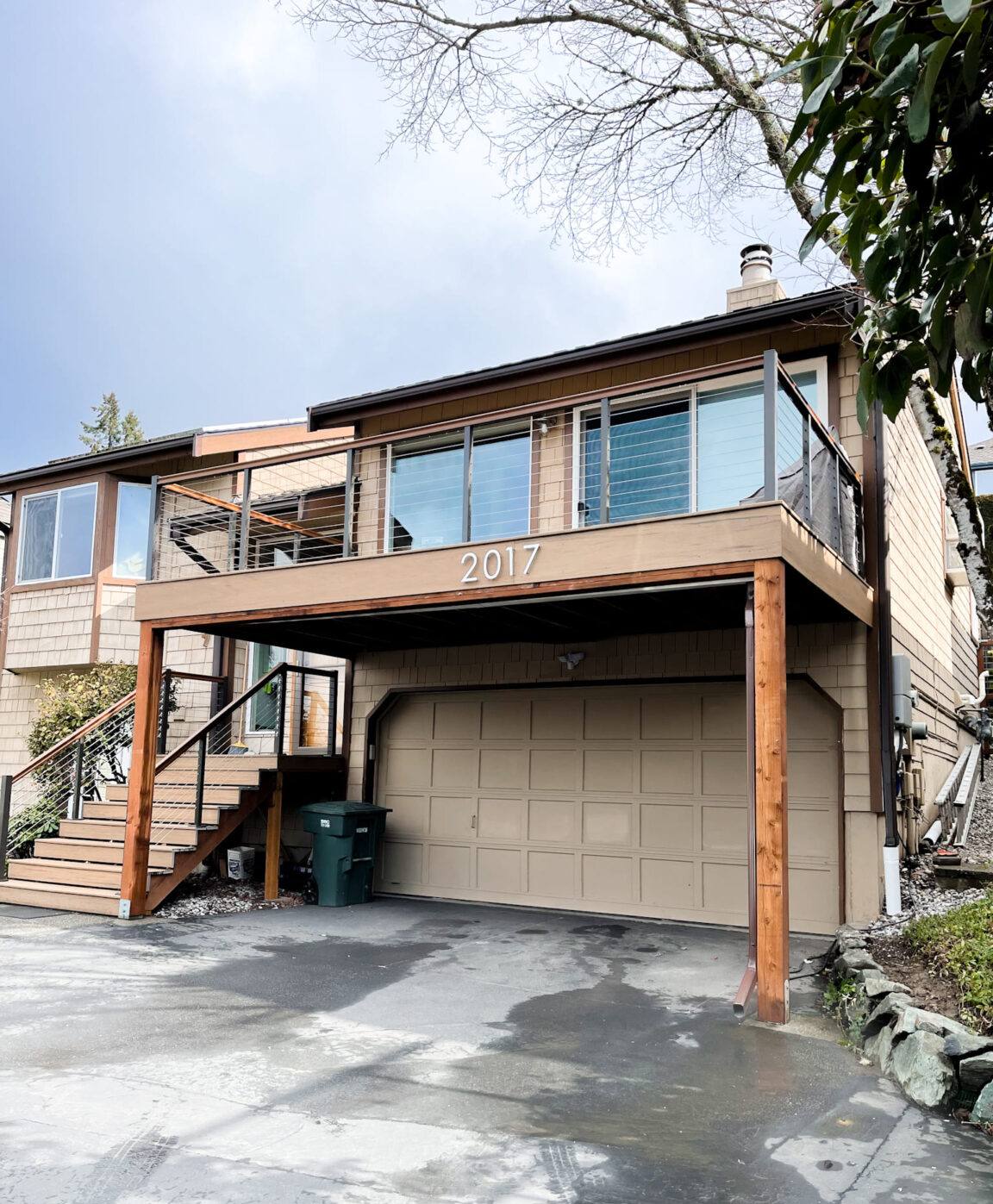
What Anacortes Homes Actually Need From a Deck
Salt Air
Airborne salt accelerates corrosion on anything metal — fasteners, joist hangers, railing brackets, and structural screws. It also breaks down lower-grade coatings and finishes faster than they'd wear in an inland climate. This isn't dramatic or sudden; it's a slow process that shows up years later as rust streaking, loosened hardware, or a railing post that's gone soft at the base.
Driving Rain
Rain here doesn't just fall straight down — wind off the water pushes it sideways into ledger boards, under poorly flashed connections, and into any gap where end grain is exposed. A deck that isn't detailed for that kind of water intrusion will trap moisture in exactly the places you can't see until there's a problem.
Moss and Shaded Damp
Long stretches of overcast, wet weather mean moss and algae find a foothold fast, especially on north-facing decks or those shaded by trees or the house itself. Beyond being slick and unattractive, moss holds moisture against the decking surface far longer than open air would, which shortens the life of the material underneath it.
What a Correctly Built Deck Involves
Framing and Fasteners
The structure under the decking does most of the work, and it's the part most likely to get shortchanged. For this area, that means:
- Structural screws and hardware rated for coastal or marine exposure, not standard interior-grade fasteners
- Joist hangers and connectors matched in metal type to the fasteners used with them, to avoid galvanic corrosion between dissimilar metals
- Pressure-treated framing lumber rated for ground contact where posts meet footings, even if the visible decking above is a different material
- Joist spacing tightened appropriately when composite or PVC decking is used, since those materials often have different span requirements than wood
Ledger Attachment and Flashing
Where the deck attaches to the house is the single most common point of long-term water damage on any deck, and it's especially unforgiving in a climate with this much sideways-driven rain. Proper ledger flashing — installed so water is shed away from the house rather than channeled behind the siding — isn't optional trim work. It's the difference between a deck that protects the structure behind it and one that slowly rots the wall it's attached to.
Decking Material
The right material depends on budget, maintenance appetite, and how exposed the deck is to sun, shade, and standing water. We'll walk through the honest trade-offs below rather than push one option.
Comparing Decking Materials for This Climate
| Material | How It Handles Rain & Moss | Maintenance | Typical Lifespan Here |
|---|---|---|---|
| Pressure-treated wood | Absorbs moisture; needs a clear path to dry between rain events | Annual cleaning, periodic sealing/staining | 10–15 years with upkeep |
| Cedar | Naturally rot-resistant but still needs to dry out; moss grows on shaded sections | Regular cleaning, refinishing every few years | 15–20 years with upkeep |
| Composite (capped) | Doesn't absorb water the way wood does; surface sheds moss more easily when cleaned | Periodic washing, no sealing or staining | 25+ years |
| PVC/vinyl decking | Fully water-resistant surface; least hospitable to moss growth | Occasional washing | 25+ years |
Wood costs less upfront and has a warm, familiar look many homeowners want, but it demands the most ongoing attention in a wet climate — skip a year of sealing and you're playing catch-up. Composite and PVC cost more initially but hold up with far less maintenance, which matters most on decks that get heavy shade or limited airflow, where moss and moisture linger longest. Neither choice is wrong; it's about matching the material to how much upkeep you actually want to do.
Drainage: The Part Nobody Sees Until It Fails
A deck that traps water underneath it is a deck that's decaying from the inside. Proper builds account for:
- Grading and gapping decking boards so water passes through rather than pooling on the surface
- Keeping ledger and rim joist areas flashed and ventilated so trapped moisture has somewhere to go
- Post bases set to avoid direct standing water contact, even in low spots of the yard
- Under-deck airflow, especially for decks built low to the ground or over patios, where stagnant damp air accelerates rot and moss growth
This is where a lot of framing lumber quietly fails years before the surface decking shows any wear. It's invisible until you're replacing joists that should have lasted decades.
Moss, Mildew, and Ongoing Care
Even a well-built deck in this area needs some seasonal attention. Moss and algae growth is normal here — it's not a sign of a bad build, it's a sign of the climate. What matters is whether the deck was built in a way that makes cleaning it straightforward instead of a losing battle. Boards with proper spacing and a surface that doesn't hold water make routine washing effective; boards installed too tight, or wood that's been left unsealed too long, turn moss into a recurring, worsening problem. We can talk through a maintenance rhythm that fits the material you choose, whether that's an annual wash-and-seal for wood or an occasional rinse for composite or PVC.
Permits and Local Code Considerations
Most deck projects in and around Anacortes and greater Skagit County require a permit, particularly once a deck is attached to the house, elevated beyond a certain height, or involves a guardrail. Requirements can vary depending on the specific jurisdiction and the deck's size and height, so we handle the permit process as part of the job rather than leaving it to the homeowner to sort out. Guardrail height, baluster spacing, and stair requirements are all code items that get checked during inspection — building to spec from the start avoids a failed inspection and rework later.
How We Approach a Deck Build
- On-site assessment — we look at sun/shade exposure, drainage on the lot, existing structure if it's a replacement, and how the deck will actually be used
- Material and layout conversation — honest trade-offs on wood versus composite or PVC based on your maintenance preference and budget, not a default upsell
- Permit handling — we prepare and submit what's required for the jurisdiction before work starts
- Build — framing and fastener choices matched to coastal conditions, correct ledger flashing, proper drainage and spacing
- Final walkthrough — we go over care and cleaning specific to the material installed, so you know what upkeep actually looks like
Why a Crew That Already Works This Area Matters
A deck built to a generic national spec sheet isn't necessarily built for a home a mile or two from Puget Sound. Knowing which fastener grades actually hold up against salt air, how to detail a ledger for sideways-driven rain, and which decking surfaces fight moss instead of feeding it comes from working on homes in this specific area repeatedly, not from a manual. We're a Mount Vernon-based crew that works Skagit County's coastal communities regularly, including Anacortes, and we build decks with this climate in mind from the framing up — not as an afterthought once the surface material is picked.
Signs an Existing Deck Needs Attention
- Soft or spongy spots underfoot, especially near the house or post bases
- Rust streaking around fasteners or hardware
- Persistent moss that returns quickly after cleaning
- Gaps or separation where the deck meets the house
- Railings or posts that feel loose or have movement at the base
If you're planning a new deck, replacing an aging one, or just want an honest read on whether your current deck is holding up the way it should, we're glad to take a look. Reach out for a free, no-pressure estimate — the form below gets you started.