 Mount Vernon
 Anacortes Roofs Work Harder Than Most
Anacortes sits out on Fidalgo Island, wrapped by saltwater on nearly every side, which puts homes there in a different climate bracket than roofs just a few miles inland in Mount Vernon. Salt-laden air corrodes exposed metal faster, wind off the water drives rain sideways into laps and flashings that would stay dry elsewhere, and the tree cover common in the area's older neighborhoods keeps north-facing slopes shaded and damp for months at a stretch. None of that is exotic weather — it's just Skagit County's marine climate doing what it does year-round — but it does mean a roof built to a generic spec often underperforms here.
We're based in Mount Vernon and have worked on Anacortes roofs long enough to know which failure points show up first: nail corrosion at exposed fasteners, granule loss on the west-facing slopes that catch the worst of the weather, and moss colonies that start in the shaded valleys and work outward. A roof that accounts for those realities from the start needs less attention later and holds its warranty better.
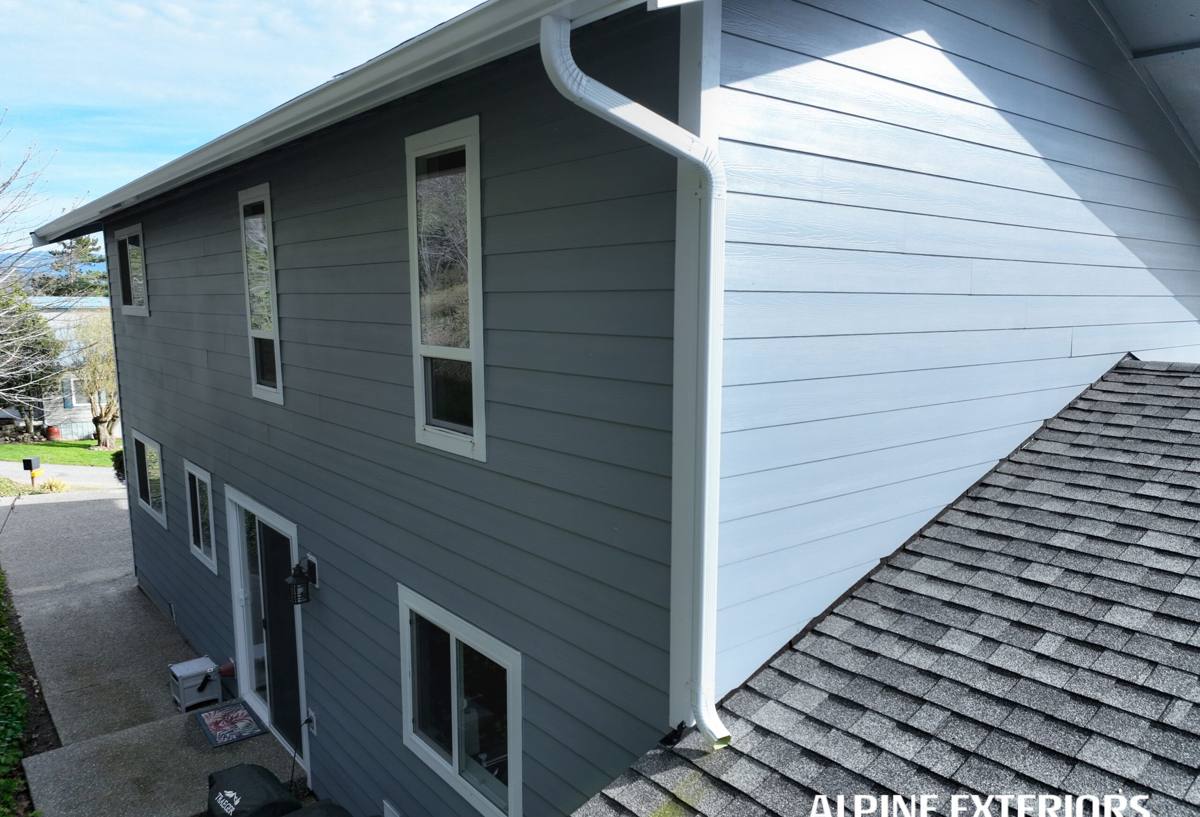
What Salt Air and Driving Rain Actually Do to a Shingle Roof
Corrosion at the Small Stuff
Asphalt shingles themselves handle salt air reasonably well, but the metal components around them don't. Nail heads, drip edge, step flashing, and vent housings are where problems start. Low-grade galvanized fasteners can rust through their coating within a few years this close to the water, and once a nail head corrodes, the seal around it fails and water finds a path underneath the shingle.
Wind-Driven Rain and Wall Transitions
Rain that comes in nearly horizontal off the water doesn't behave like rain falling straight down. It gets pushed uphill under shingle laps and into any flashing that was cut short or caulked instead of properly lapped. Roofs installed by crews unfamiliar with this kind of exposure sometimes look fine for a year or two before leaks show up at chimneys, skylights, or wall-to-roof transitions — exactly the spots where flashing detail matters most.
Extended Moss Season
Skagit County's moss season runs long, and Anacortes's damp, shaded lots stretch it further. Moss holds moisture against the shingle mat, lifts tabs as it grows, and shortens the life of even a well-installed roof if it's never addressed.
What a Correctly Installed Roof Needs Here
A roof built for this environment isn't a different product so much as the same asphalt shingle system installed with a few non-negotiable details:
- Corrosion-resistant fasteners and flashing — stainless or heavier-gauge coated metal in place of standard galvanized, especially on roofs with direct water exposure
- Ice-and-water shield or a comparable self-adhering membrane at eaves, valleys, and penetrations, not just where code minimums require it
- Properly lapped step and counter-flashing at every wall intersection, chimney, and skylight — never caulk substituting for a lap
- Balanced intake and exhaust ventilation so moisture from inside the attic doesn't add to what's already landing on the roof from outside
- Shingles with a algae-resistant (copper-infused granule) rating, which slows the growth that feeds moss colonies
Our Process on an Anacortes Roof
1. Inspection and Honest Scope
We start by walking the roof and the attic, not just looking from the ground. We're checking current flashing condition, decking integrity, ventilation balance, and how much of the roof's wear is normal age versus moisture damage that needs to be addressed before new shingles go down.
2. Tear-Off and Deck Check
We remove the existing roofing down to the deck rather than layering over it. This is the only way to actually see and replace any soft or water-stained sheathing, which is common on older Anacortes homes where a roof has been quietly holding moisture for years.
3. Underlayment and Flashing First
Before a single shingle goes on, the underlayment, ice-and-water membrane, and all new flashing get installed and lapped correctly. This layer is what actually keeps water out — the shingles are the visible finish, but the flashing and underlayment are doing the real work in wind-driven rain.
4. Shingle Installation to Manufacturer Spec
Nailing pattern, exposure, and starter course all follow the manufacturer's published specification, which is what keeps the warranty valid and the roof performing as designed in high-wind, high-moisture conditions.
5. Ventilation Check and Cleanup
We confirm intake and exhaust venting are balanced for the attic size before we call the job done, then do a full site and gutter cleanup so debris isn't left to wash into downspouts or landscaping.
Shingle Options for This Climate
Most homeowners are choosing between a standard three-tab shingle and a heavier architectural (laminated) shingle. Both are legitimate asphalt shingle products, but they perform differently in a marine climate:
| Factor | 3-Tab Shingle | Architectural Shingle |
|---|---|---|
| Wind rating | Typically lower (60-70 mph range) | Higher (110-130 mph range, product-dependent) |
| Moss/algae resistance option | Available on some lines | Widely available, often standard |
| Expected lifespan | Shorter | Longer |
| Upfront cost | Lower | Moderate to higher |
| Appearance | Flat, uniform | Dimensional, heavier look |
Given the wind exposure that comes with being close to open water, we generally recommend architectural shingles with an algae-resistant rating for Anacortes homes. The higher wind rating and thicker mat hold up better to driving rain and gusty conditions, and the extra upfront cost is usually offset by fewer repairs and a longer service life.
Our Standard on Cheaper Alternatives
We don't install builder-grade, no-name shingle lines even when a customer asks to save money on the front end. Our standard is straightforward: in this climate, a thinner mat and a weaker algae-resistance package translate into moss coming back sooner and granule loss showing up years ahead of schedule, which costs more in maintenance and early repair than the upfront savings are worth.
What Affects the Cost of a Reroof
| Factor | Why It Matters |
|---|---|
| Roof size and pitch | Steeper roofs take longer and require more safety setup |
| Number of layers to remove | Tear-off of multiple old layers adds labor and disposal cost |
| Deck condition | Rotted or soft sheathing found during tear-off needs replacement |
| Flashing complexity | Chimneys, skylights, and multiple roof planes add detail work |
| Shingle grade chosen | Architectural and algae-resistant lines cost more per square than basic 3-tab |
| Ventilation upgrades | Adding or rebalancing intake/exhaust vents if the current setup is inadequate |
We won't quote a number without seeing the roof, since deck condition and flashing complexity vary a lot even between similar-sized homes. What we can say honestly is that a full tear-off and reroof with proper flashing and ventilation work is a mid-range investment relative to other exterior projects, and it's not the place to cut corners on materials given how much this climate asks of a roof.
Why a Crew That Already Works Anacortes Matters
Roofing crews unfamiliar with marine exposure sometimes treat Anacortes jobs the same way they'd treat a roof in a drier, more sheltered part of the county — same fasteners, same flashing approach, same shingle grade. That's how avoidable failures happen. A crew that regularly works this stretch of Skagit County already knows which details can't be skipped: the fastener upgrade, the extra flashing lap, the ventilation balance that keeps moisture from building up in an attic that's already fighting damp air from outside.
We're a Mount Vernon-based crew, and Anacortes is part of our regular service area, not an occasional job we take on unfamiliar ground. That means we show up already knowing what this climate does to a roof over time, and we build accordingly instead of learning the hard way at the homeowner's expense.
Homeowner Maintenance Checklist
Between professional inspections, a few simple habits go a long way toward protecting a shingle roof in this climate:
- Keep gutters and downspouts clear so water isn't backing up under the eaves
- Trim back overhanging branches to reduce shade and debris buildup on the roof
- Have visible moss growth treated before it spreads across a full slope
- Check attic ventilation isn't blocked by insulation or storage items
- Schedule a roof inspection after any unusually severe windstorm
- Watch for granules collecting in gutters, which can signal accelerated wear
Get a Straightforward Look at Your Roof
If you're not sure whether your current roof is holding up the way it should, or you're planning ahead for a reroof, we're happy to come take an honest look. There's no pressure and no obligation — just a clear read on where things stand and what your options are, using the form below to set up a free estimate.