 Mount Vernon
 Siding Repair in Alger Isn't the Same as Siding Repair Anywhere Else
Alger sits in a stretch of west Skagit County where the weather doesn't do siding any favors. Homes here take on salt-laden air moving in off Samish Bay and the Sound, long stretches of driving rain through the fall and winter, and a moss season that can run for months under the tree cover common to the area. None of that is unusual for this corner of the Pacific Northwest, but it does mean that a siding repair done without accounting for it tends to fail again within a year or two. We've been called out to fix patch jobs that looked fine the day they were finished and were peeling, staining, or rotting again before the next summer.
A proper repair isn't just about matching color and covering a hole. It's about understanding why that section of siding failed in the first place, whether the damage is purely cosmetic or has already reached the wall assembly behind it, and choosing a repair method and material that will actually hold up to another Skagit County winter.
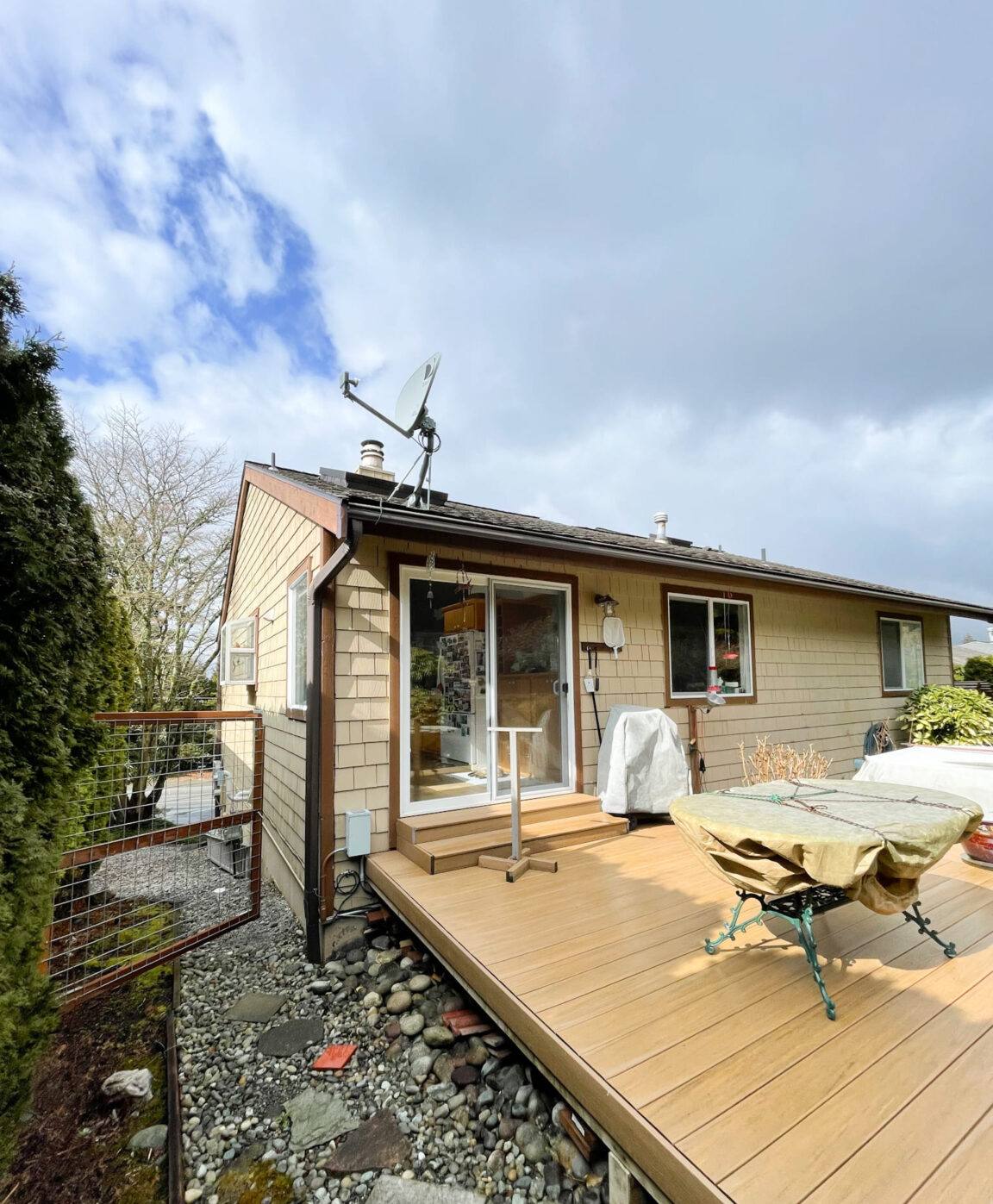
What Salt Air, Rain, and Moss Actually Do to Siding Over Time
Moisture Intrusion
Driving rain in this area doesn't just fall straight down — wind-driven storms push water sideways into every horizontal seam, corner, and trim joint on a house. Over years, caulking dries out and cracks, fastener heads back out slightly, and water starts working its way behind the siding instead of running off it. Once moisture gets behind the cladding, it doesn't dry out quickly in our climate, and that's when you start seeing soft spots, staining, and eventually rot in the sheathing underneath.
Moss and Algae Growth
Shaded, north-facing walls and anything near overhanging trees are especially prone to moss and algae buildup in Alger. Beyond the cosmetic green-black staining, moss holds moisture directly against the siding surface for extended periods, which accelerates whatever deterioration is already happening underneath. Moss growing in a seam or a damaged edge is often a sign that water has already been sitting there longer than it should.
Salt Air and Fastener Corrosion
Proximity to the bay means airborne salt settles on exterior surfaces and metal components — nail heads, flashing, trim fasteners — faster than it would further inland. Corroding fasteners can loosen their grip on siding boards, create small gaps where water intrudes, and leave rust streaks that stain the siding face itself.
Common Repair Needs We See Around Alger
- Cracked, split, or warped siding boards, often on the weather-facing sides of the house
- Soft or rotting sections near the bottom of walls, around windows, or at trim boards where caulking has failed
- Persistent moss or algae staining that keeps returning after cleaning
- Impact damage from storms, falling branches, or yard equipment
- Failed or missing caulking at joints, corners, and penetrations (hose bibs, vents, light fixtures)
- Rust staining or streaking from corroding fasteners or flashing
- Gaps or separation where old siding was never properly sealed against a window or door
What a Correct Repair Actually Involves
A repair that's done right starts before anyone touches the damaged board. We look at the full picture: what's causing the damage, whether it's isolated or spreading, and what's happening behind the siding itself.
Diagnosing the Cause, Not Just the Symptom
Replacing a stained or cracked board without figuring out why it failed just buys you a year or two before the same spot fails again. If a section is rotting because of a caulking failure at a window trim, that trim detail has to be corrected as part of the repair — not just the visible siding.
Checking What's Behind the Siding
Any time we open up a damaged section, we check the condition of the water-resistive barrier and sheathing underneath. If moisture has already reached the sheathing, patching over it without addressing that damage just traps the problem behind new material. This is the step that separates a real repair from a cosmetic one.
Matching Material and Finish
Mismatched replacement siding is one of the most common complaints homeowners have about past repair work — different profile, different texture, or a caulk-and-paint patch that never quite matches the factory finish next to it. Getting this right takes both the correct product and the patience to install it properly.
Repair vs. Replacement: How We Help You Decide
Not every problem calls for full replacement, and not every problem should be patched. Here's how we generally think about it:
| Situation | Usually Repair | Usually Replacement |
|---|---|---|
| Damage limited to one or two boards or a small area | Yes | No |
| Rot has spread into sheathing across multiple sections | No | Yes |
| Siding is otherwise sound and under 15-20 years old | Yes | No |
| Recurring moisture problems across most of the exterior | No | Yes |
| Original material is deteriorating as a whole system (widespread warping, delamination) | No | Yes |
| Damage is cosmetic (moss staining, minor cracking, one impact spot) | Yes | No |
We'll tell you honestly which category your home falls into. A repair-only house doesn't need a full re-side, and we're not going to sell you one — but we're also not going to patch a wall that's failing as a whole system, because that just costs you more money over a shorter timeline.
Our Alger Siding Repair Process
- On-site inspection: We look at the damaged area and the surrounding siding, check for soft spots by hand, and look for the underlying cause — not just the visible symptom.
- Assessment behind the surface: Where damage looks like it may have reached the sheathing or framing, we open the area enough to confirm what's actually happening before quoting the work.
- Honest scope and estimate: You get a clear explanation of what needs to happen, what it will cost, and why — including if the answer is "this is a small fix" rather than a bigger project.
- Repair or replacement, done to spec: Damaged material comes out, any compromised sheathing or barrier is corrected, and new material goes in following manufacturer installation requirements — not shortcuts.
- Finish and seal: Trim, caulking, and paint or factory-finish matching are completed so the repaired area holds up the same way the rest of the wall does.
Why We Repair and Replace With James Hardie Fiber Cement
When we're patching in new material next to existing siding, or replacing a full wall section, we use James Hardie fiber cement — it's the only siding product we install, on repairs and full projects alike. There are a few reasons that matters specifically for repair work in a climate like this one:
- It doesn't absorb moisture the way wood-based or wood-fiber products can, which matters directly on a coastline with this much driving rain and humidity.
- It's non-combustible, which is a meaningful consideration for insurance and long-term peace of mind.
- ColorPlus factory finish gives us a much better shot at matching new material to existing siding without a visible patch line, since the finish is baked on at the factory rather than mixed and brushed on site.
- Hardie's HZ5 product line is engineered for wetter, harsher climates, which fits the Pacific Northwest better than a general-purpose product.
- Manufacturer warranty coverage stays intact when installation follows Hardie's specifications, which protects you well beyond the day we finish the work.
We won't install vinyl, LP SmartSide, or other fiber cement brands as part of a repair, even as a quick patch. Mixing products or using something not engineered for this moisture load tends to create a weak point that fails again — which defeats the purpose of doing the repair at all.
Why It Matters That We Already Work in Alger
Siding repair is detail work, and the details that matter change with the climate and the housing stock of a specific area. A crew that regularly works Alger and the surrounding Mount Vernon and Skagit County area already knows which wall orientations take the worst of the weather, which trim details tend to fail first in this kind of exposure, and what Skagit County's permitting and code requirements look like for exterior repair work. That local familiarity means fewer surprises once a wall is opened up, and a repair that's built around how this specific climate actually behaves — not a generic approach.
Keeping Repaired Siding in Good Shape Going Forward
Once a repair is done correctly, a little regular attention goes a long way toward making it last, especially given how long moss season runs here.
- Rinse siding periodically to clear off moss spores and airborne salt buildup before they take hold
- Keep tree branches and shrubs trimmed back from exterior walls to reduce shade and improve drying
- Check caulking at trim, windows, and corners annually and re-caulk before it visibly cracks
- Look at fastener heads and flashing for early rust staining, which signals corrosion starting
- Address small cracks or chips in siding promptly, before moisture has a chance to get behind them
- Keep gutters clear so overflow isn't running down and pooling against siding sections
Ready to Get Your Siding Looked At?
If you're seeing staining, soft spots, cracked boards, or recurring moss on your Alger home's siding, it's worth having it looked at before the next rainy stretch makes it worse. We offer free, no-pressure estimates — we'll tell you honestly whether you're looking at a straightforward repair or something bigger, and what that actually involves. Fill out the form below to get started.