 Mount Vernon
 Why Alger Roofs Wear Out Differently Than Roofs Elsewhere
Alger sits in a stretch of Skagit County where heavy tree cover, close proximity to Samish Bay and the greater Puget Sound, and a long wet season all combine against a roof at the same time. It's not one problem — it's three working together. Salt-carrying air off the water accelerates corrosion on fasteners, flashing, and any exposed metal. Driving rain, especially in fall and winter storms that come in sideways off the water, finds every weak seam and worn flashing detail a roof has. And the shade from surrounding evergreens keeps roof surfaces damp longer after every rain, which is exactly what moss needs to take hold and spread.
None of that means an Alger roof is doomed — it means the roof needs to be built and maintained with those specific pressures in mind. A roof installed the same way you'd install one in a dry, open, sunny lot isn't going to hold up the same way out here.
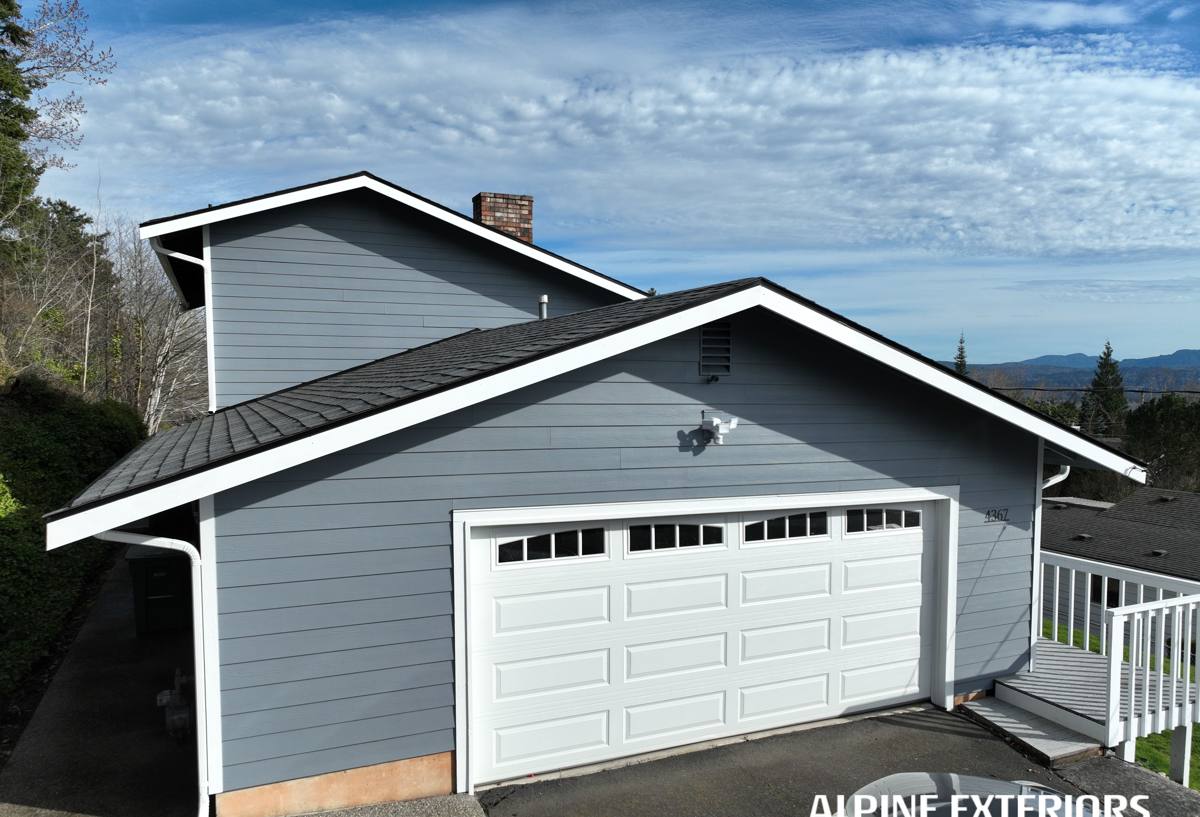
Signs Your Roof Needs Replacement, Not Another Patch
Homeowners often call us for a repair and end up learning the roof is past the point where patching makes sense. Some signs point clearly toward full replacement:
- Granule loss heavy enough that you can see bare asphalt on multiple slopes, not just one worn spot
- Leaks showing up in more than one location, especially near valleys or where roof planes meet
- Shingles that are cupping, curling, or cracking across large sections rather than a few isolated spots
- Soft or spongy decking felt underfoot during inspection, which means water has already gotten past the surface layer
- Moss that has been growing long enough to lift shingle edges, not just discolor the surface
- A roof original to the home and already at or past its expected service life
When Repair Still Makes Sense
A single damaged section, a flashing failure around one chimney or vent, or storm damage isolated to one area usually doesn't call for full replacement. The honest answer depends on the roof's age and overall condition, not just the symptom that got noticed first. We'll tell you straight if a repair is the right call — replacing a roof that has years of life left in it isn't good work, it's just a bigger invoice.
What a Correct Roof Replacement Actually Involves
Tear-Off and Deck Inspection
A proper replacement starts with removing the old roofing down to bare decking, not layering new material over old. That's the only way to actually see the plywood or plank sheathing underneath. In a climate like this, decking damage from long-term moisture intrusion is common enough that we plan for the possibility of replacing sections of sheathing, not just the roofing on top of it.
Underlayment and Water Protection
Underlayment is the roof's real waterproofing layer — the visible shingles or panels are the first line of defense, but the underlayment is what keeps the deck dry if wind-driven rain gets underneath them, which happens regularly during Skagit County storms. Ice and water barrier at eaves, valleys, and other vulnerable transitions matters more here than in drier regions.
Flashing Details
Flashing around chimneys, skylights, vent pipes, and roof-to-wall transitions is where most leaks actually originate, not out in the middle of a shingle field. Correct flashing work, tied properly into the underlayment and lapped the right direction, is what separates a roof that holds up through years of driving rain from one that starts leaking within a season or two.
Ventilation
A roof deck that can't breathe traps moisture from inside the home against the underside of the sheathing, which rots decking from below even if the outside is doing fine. Balanced intake and exhaust ventilation is a core part of any replacement we do, not an upsell.
Choosing the Right Roofing Material for an Alger Property
There isn't one right material for every home — it depends on tree cover, budget, and how much upkeep you want to take on. Here's how the common options compare for a property with Alger's conditions in mind:
| Material | Moss / Moisture Behavior | Upkeep | Considerations Here |
|---|---|---|---|
| Asphalt composition shingle | Can hold moisture and grow moss under heavy tree cover without periodic cleaning | Moderate — benefits from occasional moss treatment and gutter clearing | Good value, wide style range, reliable if installed with proper ventilation and flashing |
| Metal roofing (standing seam or panel) | Sheds water fast and resists moss far better than shingle since surfaces dry quickly | Low — occasional inspection of fasteners and coating | Strong fit for heavily shaded lots; higher upfront cost, longer service life |
| Cedar shake | Attractive but holds moisture against wood, making it more moss- and rot-prone in constant shade | High — regular treatment and inspection needed to avoid premature decay | We're upfront that this is a tougher match for deeply shaded, damp lots without a real maintenance commitment |
We install asphalt and metal roofing on most Alger-area homes because both hold up well when the rest of the roof system — ventilation, underlayment, flashing — is done correctly. Cedar can still be the right choice for the right homeowner; we just make sure you understand the maintenance commitment before you commit to it, not after.
Our Roof Replacement Process
- On-site inspection of the current roof, decking access points, and any problem areas you've already noticed
- A written estimate that spells out material, scope, and price — no vague allowances
- Material selection based on your budget, the home's exposure to tree cover and weather, and how long you plan to stay in the house
- Scheduling that accounts for the wet season rather than fighting it — we don't tear off a roof into an open forecast
- Tear-off to bare decking, with any damaged sheathing identified and replaced before anything new goes down
- Installation of underlayment, flashing, ventilation components, and the new roofing material in that order, done right the first time
- Full site cleanup, including magnetic sweep for stray fasteners and haul-away of old material
- Final walkthrough so you know exactly what was done and what the warranty covers
Timing a Replacement Around Skagit County Weather
Late spring through early fall is the most reliable window for roof replacement in this area, simply because there are more consecutive dry days to work with. That said, roofs don't wait for convenient weather to fail, and a genuinely urgent replacement can be done outside that window with the right precautions and a crew that knows how to manage it. What matters is not rushing a tear-off into a stretch of forecast rain — an open roof deck and a Skagit County storm are a bad combination, and a contractor who's worked this area long enough plans around that instead of around their own schedule.
Why It Matters to Hire a Crew That Already Works in Alger
A lot of roofing problems in this area trace back to work that was done correctly for a different climate. A crew unfamiliar with how moss builds up under tree cover, how salt air off the water treats exposed metal, or how driving rain finds weak flashing will make reasonable-looking decisions that don't hold up here. Working in and around Alger regularly means we've seen how roofs in this specific setting actually fail over time, and we build and detail accordingly — not by guessing, and not by applying a one-size-fits-all approach from a different region.
It also means practical familiarity with the area itself: typical lot access on wooded and rural properties, permitting through Skagit County, and realistic scheduling around this region's weather patterns rather than a generic install calendar.
What to Ask Before You Hire a Roofing Contractor
- Will you tear off down to bare decking, or install over the existing layer?
- How do you handle decking that turns out to be damaged once the old roof is off?
- What underlayment and ice/water protection do you use at eaves and valleys?
- How will you handle ventilation — intake and exhaust, not just one or the other?
- What's covered under workmanship warranty versus manufacturer warranty, and for how long?
- Can you walk me through how you'd detail flashing around my specific roof features?
A contractor who can answer these clearly and specifically, without vague reassurances, is one worth trusting with a job this size.
If your roof is showing its age or you just want a straight answer about whether it needs replacing, we're happy to take a look. Fill out the form below for a free, no-pressure estimate — we'll tell you what we actually see, not what's easiest to sell.