 Mount Vernon
 Custom Windows for Alger Homes
Alger sits in that stretch of Skagit County where wooded acreage, older farmhouses, and newer builds all sit side by side along the I-5 corridor between Mount Vernon and Bellingham. It's a place where "standard size" often doesn't apply — additions built decades apart, hand-framed openings, and homes updated in stages all mean the windows that fit don't always come off a shelf. That's where custom window work earns its name: it's not an upsell, it's what a lot of these houses actually need to get a window that seals correctly and lasts.
We install custom windows throughout the Alger area as part of our regular service territory out of Mount Vernon, not as a special trip. That matters more than it sounds like — a crew that already knows the housing stock, the weather pattern, and what tends to fail out this way makes fewer guesses on your job.
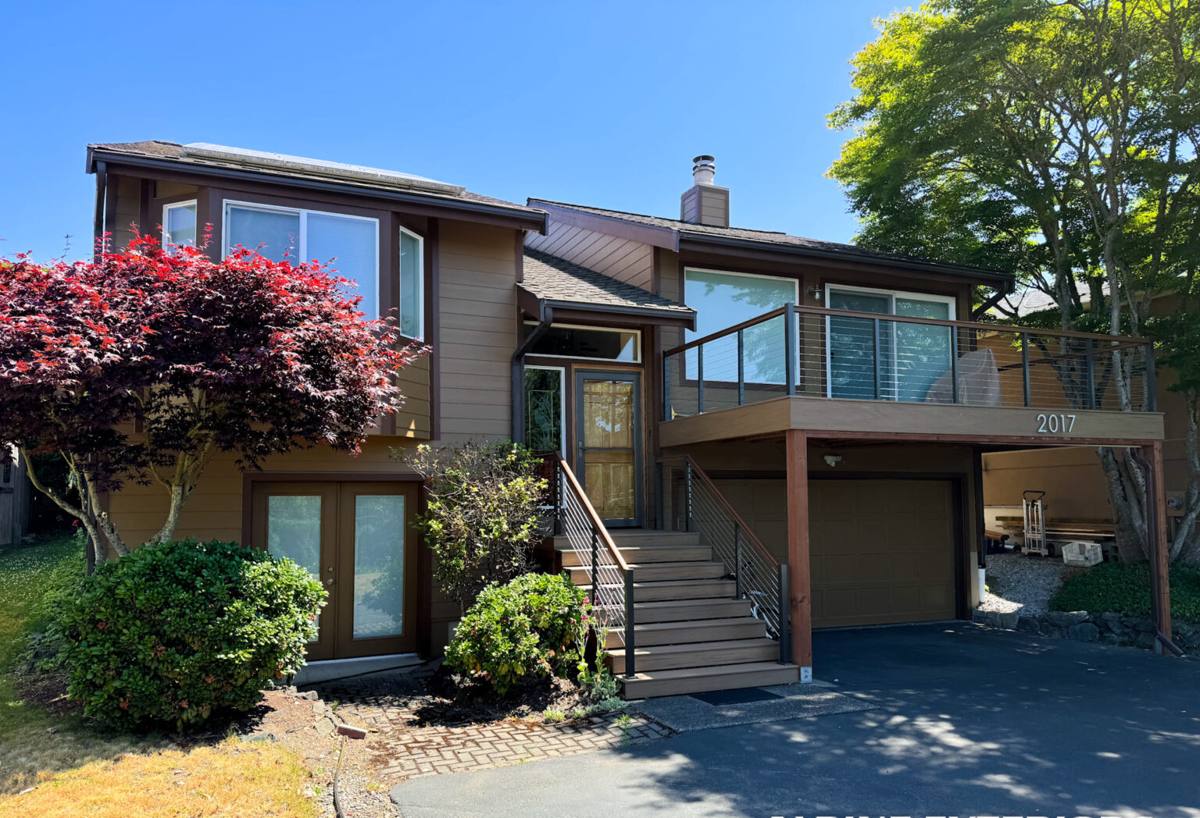
What Alger's Climate Actually Does to a Window
Skagit County's marine climate is mild compared to a lot of the country, but "mild" doesn't mean easy on building materials. Three things do most of the damage here over time:
- Salt-tinged marine air moving up from the Salish Sea corridor accelerates corrosion on hardware, screws, and lower-grade metal components — even at inland distances, it's present in the air moving through the valley.
- Driving rain — wind-driven, sideways rain rather than straight-down rain — finds gaps that a calm-weather install would never expose. This is the single biggest cause of window failure we see: not the glass, but water getting behind trim and framing.
- A long moss and mildew season, stretched out by shade from mature trees on many Alger lots, keeps wood sills, sashes, and exterior trim damp for months at a stretch instead of drying out between storms.
None of this is dramatic on its own. It's cumulative. A window that's a little bit wrong — a missed flashing detail, a caulk joint instead of a proper drainage path, a frame material that holds moisture — won't fail in year one. It fails in year eight or ten, usually as rot in the framing around it, which turns a window job into a framing repair.
Why Tree Cover Changes the Calculus
A lot of Alger properties have real tree cover — fir, cedar, alder — close to the house. That shade keeps siding and window trim from drying quickly after rain, which is exactly the condition moss and mildew need. It also means more debris landing in window tracks and weep holes over a season. None of that is a reason to avoid certain window styles, but it is a reason to prioritize drainage and low-maintenance frame materials over anything that depends on frequent upkeep to stay sealed.
What "Custom" Means in Practice
"Custom" gets used loosely in this trade. For us it means a few specific things:
- Site-measured, not catalog-sized — every opening is measured on your house, not assumed from a plan set or a previous window's label.
- Built to the actual opening — including out-of-square openings, which are common in older Alger farmhouses that have settled over decades.
- Matched to unusual shapes or placements — arched tops, odd bay configurations, or openings that were resized during a past remodel.
- Specified for the wall assembly — a window that's correct for a 2x4 wall with no house wrap behaves differently than one going into a modern 2x6 wall with a proper weather-resistive barrier, and the flashing detail has to match which one you actually have.
Custom sizing costs more than stock sizing, and we'll tell you that plainly. But installing a stock-size window into a non-stock opening — by packing out the gap with extra framing and trim — is exactly the kind of shortcut that creates the hidden gaps driving rain finds later.
Materials That Hold Up Out Here
We steer most Alger customers toward vinyl or fiberglass frames over bare wood, not because wood windows are bad, but because they carry a maintenance obligation — repainting, re-caulking, periodic sealing — that has to happen on schedule in a climate this damp, or the wood starts absorbing moisture at the joints. If you want the look of wood, a wood-clad window (wood interior, weather-resistant exterior cladding) gets you that appearance without leaving raw wood exposed to the weather side.
| Frame Material | Moisture Behavior | Maintenance | Best Fit |
|---|---|---|---|
| Vinyl | Won't rot; seams are the main weak point if welding quality is poor | Low — occasional cleaning | Most Alger homes, budget-conscious replacements |
| Fiberglass | Very stable; minimal expansion/contraction in temperature swings | Low | Larger openings, custom shapes, longer-term ownership |
| Wood-clad | Good if cladding is intact; failure point is the interior wood if a seal fails | Moderate | Homes prioritizing a traditional wood interior look |
| Bare wood | Absorbs moisture readily without upkeep | High — scheduled repainting/sealing | Historic-style restorations where owners commit to upkeep |
Glass and Coatings
Double-pane with a low-E coating is the practical baseline for this region — it manages heat loss without the added cost of triple-pane, which mostly pays off in colder inland climates rather than our milder, wetter one. Where we do recommend triple-pane or upgraded gas fills is on north-facing walls or rooms that run cold, and on homes right along tree-shaded lots where the extra insulating value offsets a room that never gets direct sun.
The Installation Details That Actually Matter
Most window failures we get called out to repair aren't glass failures — they're water management failures. Here's what a correct install actually involves:
- Remove the old unit and inspect the framing underneath for existing rot or moisture damage before anything new goes in.
- Repair or replace any compromised framing — installing a new window over damaged wood just hides the problem.
- Install flashing in the correct order (sill pan first, then side flashing, then head flashing) so water is directed out and down, never trapped behind the window.
- Set the window plumb, level, and square, shimmed correctly so it isn't relying on the frame to hold its shape.
- Seal and insulate the gap between window and framing with the right materials — not just a bead of caulk on the outside trim.
- Finish exterior trim and touch up siding so the whole assembly sheds water the way it did before the window was there.
Skipping the sill pan or shortcutting the flashing sequence is the single most common corner-cut in this trade, and it's invisible once trim is back on. It's also exactly the detail that determines whether driving rain stays out or works its way behind the window over the next few winters.
Signs Your Current Windows Are Already Failing
- Soft or discolored trim or drywall around the window frame
- Fogging or moisture between panes (a sign the seal has failed)
- Visible moss or dark staining on the sill or exterior casing
- Drafts you can feel with the window fully latched
- Difficulty opening, closing, or latching — often a sign the frame has shifted
- A musty smell near the window that wasn't there before
If you're seeing more than one of these, it's worth having the opening looked at rather than just replacing the glass unit — moisture that's gotten into the framing doesn't go away on its own.
How We Handle a Custom Window Job in Alger
The process is the same whether it's one window or a whole house:
- On-site assessment — we look at the existing opening, the framing condition, and how water currently moves around that part of the house.
- Precise measurement — every opening gets measured individually; nothing is assumed from a matching window elsewhere on the house.
- Material and glass selection — we walk through frame and glass options based on that specific wall's sun exposure, shade, and wind exposure, not a one-size answer for the whole house.
- Ordering and lead time — custom units take longer to arrive than stock sizes; we'll give you a realistic timeline up front.
- Installation — following the flashing and sealing sequence above, with framing repairs handled as part of the job if we find any.
- Walkthrough — we go over operation, locking, and any care notes specific to the material you chose before we consider the job done.
What Drives the Cost
| Factor | Why It Matters |
|---|---|
| Opening size and shape | Non-standard or oversized openings require true custom fabrication, not a stock unit |
| Frame material | Vinyl is generally the most economical; fiberglass and wood-clad cost more up front |
| Framing repair needed | Rot discovered during removal adds labor and material before the new window even goes in |
| Glass package | Upgraded coatings or gas fills add cost but can matter on cold or shaded walls |
| Access and site conditions | Second-story openings, tight lot access, or removing obstructions add time |
We give real ranges, not lowball numbers meant to get a foot in the door — a custom window job in this area typically lands anywhere from a modest per-window cost for a straightforward vinyl replacement up to several times that for larger fiberglass or wood-clad units with framing repair involved. The only way to get an honest number is to look at the actual opening.
Why Hiring a Crew That Already Works Alger Matters
A contractor who works this part of Skagit County regularly has already seen the common failure patterns in this housing stock — where moisture tends to collect, which older builds tend to have out-of-square openings, and how tree-shaded lots affect drying time after a job is finished. That's not something you can fully substitute with a general how-to guide or a crew driving in from outside the area for a single job. It also means we're a short drive away if something needs a follow-up look after the fact, rather than a company that isn't local to Mount Vernon and Skagit County at all.
If you're weighing whether your Alger home needs custom windows or could get by with stock sizing, we're happy to take a look and give you a straight answer either way. Reach out for a free, no-pressure estimate using the form below.